The widow of murdered Dutch businessman Herman Rouwenhorst, Riziki Ali Cherono, has been called to explain the circumstances surrounding his death at their matrimonial home in Mombasa five years ago.
The High Court in Mombasa has reviewed evidence from 27 witnesses, including crucial exhibits, and concluded that Cherono and her alleged accomplice, Timothy Omondi Ngowe, who also goes by several aliases, including Rashid, Tony Ochieng, and Mohamed Khalid, have a case to answer in connection with the double murder of Rouwenhorst and the home’s security guard, Evans Pole Bokoro.
“Having considered the evidence of the prosecution witnesses, the court is satisfied that a prima facie case has been established against Cherono and Ngowe to warrant them being placed on their defence,” the court ruled.
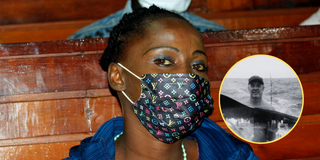
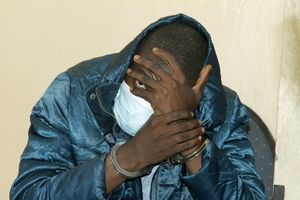
Mary Nekesa Ambani (right), who expressed remorse for her involvement in the murder of Dutch tycoon Herman Rouwenhorst during an earlier court appearance. Standing next to her is co-suspect Timothy Omondi Ngowe.
Photo credit: File | Nation Media Group
In determining whether there is a case to answer, the court must consider whether the prosecution’s evidence is sufficient to require the accused to respond. Courts have previously held that a case to answer exists where, if the accused remain silent, the prosecution’s evidence would be strong enough to sustain a conviction.
“In the foregoing, the court finds that the two accused have a case to answer and are accordingly placed on their defence,” the ruling stated.
Following this decision, Cherono and Ngowe are now required to give their account of the events surrounding the murders, including their whereabouts on the night of June 3, 2021, when Rouwenhorst and Bokoro were killed at the tycoon’s residence, which also housed rental apartments.
Among the evidence presented by the prosecution is a forensic analysis of a mobile phone stolen from Rouwenhorst on the night of the murder. Forensic investigations have provided critical digital and physical evidence linking the suspects to the killing.
A key breakthrough emerged from the analysis of a RealMe C11 mobile phone stolen during the attack. The device, which had originally been paired with SIM cards belonging to Rouwenhorst’s wife and daughter, was later activated the following day using a new SIM card registered under the name Mohamed Khalid.
Forensic experts identified the handset using its IMEI number. Investigators told the High Court that the phone was first used between 1:11pm and 1:46pm on June 4, 2021, shortly after the killings. The usage patterns, call logs, and geolocation data were traced to Ngowe.
While giving his testimony in court, Chief Inspector Raphael Wanjohi said the stolen phone was used to communicate with two women, Mary Ambani and Mercy Masika, before, during, and after the murder. He told the court that the communication pattern suggested coordination and prior knowledge of the attack, as the suspects remained in constant contact around the time of the killings.
Further digital tracing led investigators to a house in Kiembeni, where the stolen phone was eventually recovered. The premises belonged to Ngowe and Masika.
Detectives also recovered an Infinix handset containing an Airtel line that had been actively used in communication linked to the crime. The same Airtel line had previously been paired with the stolen RealMe device.
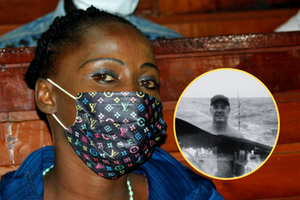
Riziki Ali Cherono (left ) and Timothy Omondi Ngowe appear before Mombasa High Court on March 10, 2025. They are charged with the murder of Herman Rouwenhorst on June 4, 2021 at Roco Apartments in Shanzu Mombasa.
Photo credit: Brian Ocharo | Nation Media Group
Investigators established that Ngowe used multiple SIM cards and false identities to conceal his movements. One of the lines was registered under the name Tony Ochieng, whose identity card was reportedly stolen during a burglary in Nairobi and later allegedly used by Ngowe to register Airtel lines.
Network analysis showed that the Airtel line remained active after the murder and helped trace Ngowe’s location, ultimately leading to his arrest. Authorities also found that another number registered under Khalid had frequent communication with Mary Ambani’s line, forming part of a broader call network involving several suspects.
Ambani admitted during interrogation that she had used a mobile phone purchased specifically for the operation and later disposed of it immediately after the murder to avoid detection. Her statements further linked her to the planning and execution of the attack.
Ambani, now serving a sentence after entering into a plea bargain with the State, described how she assisted in facilitating access to the victims’ residence, allegedly allowing Ngowe to enter the house in the dead of night before the fatal attack. She further alleged that Cherono had been involved in planning the killing, including events leading up to the attack.
Crime scene analysis indicated that there was no forced entry into the residence. The main door and reinforced metal gate were found unlocked, suggesting that access was granted from inside. Investigators also noted that none of the alarm systems were activated during the incident, despite the house being fitted with functional security devices, including panic buttons.
The deceased, described as physically strong, was found to have suffered head injuries and strangulation. Detectives concluded that he was overpowered inside his bedroom with assistance from someone familiar with the house.
Forensic comparison also linked multi-coloured ropes used to restrain the victims to similar ropes recovered from Ngowe’s residence. A laboratory report confirmed a mechanical match between the materials, further strengthening the prosecution’s case against him.