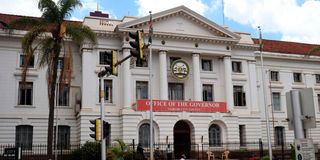
Garbage collection, parking and traffic control in Nairobi could be disrupted from today if City Hall fails to pay about 19,000 workers their July salaries.
The Kenya County Government Workers Union had warned that Nairobi County employees could stop reporting to work if they are not paid by the end of last week.
The threatened action could affect some of the most visible services in the capital, including garbage collection, parking management, traffic control, inspection and water services.
Calvince Okello, the Nairobi branch secretary-general of the workers’ union, said employees were under growing financial pressure after going without their July pay for about 15 days.
Kenya County Government Workers Union Nairobi branch Secretary-General Calvince Okello at Aluta House in Nairobi on January 27, 2026.
Photo credit: Evans Habil | Nation Media Group
“If this week ends without salary, we will definitely advise our members not to report to work from Monday,” Mr Okello said.
He said the county should have made arrangements to ensure salaries were paid on time despite delays in approving the 2026/27 budget.
Mr Okello said the delay had left workers struggling to pay rent, loans, transport and medical expenses, with some facing penalties and possible adverse credit listings.
“We are receiving desperate calls from our members in terms of landlords and house agents who don’t understand the current state of the matter,” he said.
The county administration has attributed the delay to the late approval and processing of the 2026/27 budget.
In a circular dated August 10, Acting County Secretary Godfrey Akumali said the delay in budget approvals had affected the processing and release of funds.
“We recognise that this delay may occasion financial hardship to employees and their families. We therefore appeal to all staff to remain patient, understanding and committed to the continued dis-charge of their duties as the County Government works diligently to resolve the matter,” Mr Akumali said.
Acting Nairobi County Secretary Godfrey Akumali.
Photo credit: Francis Nderitu | Nation Media Group
The county said it was expediting the necessary processes to release funds once the budget was up-loaded and approved.
Governor Johnson Sakaja has also sought to reassure workers, saying the money was being processed and would reach their accounts soon.
“We usually pay salaries on time, from 27 and towards the end of the month. There was a delay because it is a new financial year,” Mr Sakaja said in a local television interview.
Nairobi County Governor Johnson Sakaja during a past media briefing at City Hall.
Photo credit: Francis Nderitu | Nation Media Group
He said the delay was technical and involved the uploading and approval of the county budget by the Controller of Budget and the National Treasury.
“It is technical… the money is there,” he said, adding that he too had not been paid.
Earlier this year, Mr Sakaja sought approval from the Nairobi County Assembly for a Sh1.7 billion loan from Sidian Bank to address the county’s financial challenges.
A report by the Controller of Budget shows that the county has relied heavily on borrowing and overdrafts to meet its wage obligations.
As of March 31, 2026, the county executive had an overdraft balance of Sh1.54 billion with Sidian Bank. It also had a Co-operative Bank overdraft of Sh214.51 million and a long-standing KCB loan of Sh4.5 billion dating back to the defunct Nairobi City Council.
The county’s pending bills have also risen to Sh81 billion, further straining its finances.
Its annual wage bill is estimated at between Sh17 billion and Sh17.3 billion, even as the workforce has grown to more than 16,000 employees.
The county’s own-source revenue stood at about Sh11 billion by March 31, raising questions about its ability to meet a wage bill significantly higher than its locally generated revenue.
A strike by county workers would leave Nairobi facing another layer of disruption. Garbage collection, parking operations, water services, traffic control and enforcement by county inspectors could all be affected if workers fail to report.
Three years ago, Governor Sakaja promised that salary delays that had characterised previous administrations would become a thing of the past, pledging timely payment of workers. That promise is now under renewed scrutiny.
Nairobi was recently ranked among the five worst-performing counties in the inaugural Senate County Fiscal Performance Measurement Index.