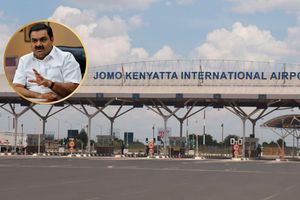
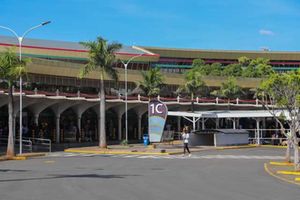
Kenya Airports Authority (KAA) will begin an 18-month upgrade of Jomo Kenyatta International Airport’s Terminal 1A and construction of a new terminal to raise passenger handling capacity from 7.5 million to 22 million, even as it rolls out a far larger, long-term master plan to rebuild the country’s main aviation gateway into a modern dual-runway hub.
The interim expansion, confirmed by KAA Acting Managing Director Mohamud Gedi in an exclusive interview, is part of an urgent capacity optimisation programme recommended by Sidara, an international aviation consultancy commissioned by KAA to assess JKIA’s future needs.
The study forms the backbone of the Integrated JKIA Master Plan unveiled last week, which projects sharp growth in passenger traffic and warns that both terminal and runway capacity will be overwhelmed within a few years without immediate intervention.
“There is a need to build a new terminal building, and it is very urgent and very critical,” Mr Gedi said. “But at the same time, we had to ask: what can we do in the short term to stretch the life of the current facilities as we prepare for construction of the new terminal?”
According to the Sidara study, JKIA is already operating beyond its declared terminal capacity, a finding that echoes a recent International Air Transport Association (IATA) technical mission that described the airport’s infrastructure as being in a “poor and deteriorating state.”
IATA inspectors flagged congestion, ageing facilities, and operational inefficiencies that pose safety and reliability risks if left unaddressed.
To bridge the gap, KAA will digitise and reorganise Terminal 1A, introducing automated passenger processing, upgraded baggage handling systems, modern security screening equipment and improved immigration controls. The upgrade will also reconfigure passenger flows, with all departures consolidated into one terminal and arrivals handled separately, a move aimed at reducing congestion and improving turnaround times.
The optimisation project, Mr Gedi said, will take a maximum of 18 months and will modernise the existing terminal enough to “buy time” as the authority prepares to build an entirely new passenger terminal.
A major part of the short-term plan involves phasing out Terminal 1E, a temporary tented structure erected after the 2013 airport fire. Designed to last just 10 years, the terminal has now been in use for 13. Mr Gedi said Sidara has advised that the tent has outlived its useful life and will likely be replaced with a permanent parking structure, integrated with redesigned terminal access.
“The tent was never meant to be permanent,” he said. “Kenyans don’t deserve a tent. They deserve a proper airport facility.”
Beyond the immediate upgrade, the master plan lays out a two-phase construction of a new passenger terminal with a total capacity of 15 million passengers — 10 million in the first phase and an additional 5 million in the second. The optimisation of existing terminals and construction of the new terminal will run concurrently and be packaged under a single tender to accelerate delivery.
The consultant’s traffic projections show that JKIA’s passenger numbers are set to grow rapidly in the coming years, driven by tourism, trade, regional connectivity and Nairobi’s expanding role as a diplomatic and conference hub.
KAA says it is already receiving frequent requests from airlines seeking to launch new routes into Kenya, a demand the current infrastructure cannot sustainably support.
The study also warns that airside capacity constraints are looming, with the existing single runway expected to face saturation in the early 2030s.
While construction of a second runway is not immediate, Sidara recommends it be delivered around 2030–2031 to avoid serious operational bottlenecks. In the interim, KAA plans to introduce rapid exit taxiways and additional taxiway links to improve runway efficiency and create short-term breathing space.
“Terminal capacity is our most urgent constraint; we are already behind schedule,” Mr Gedi said. “The runway will come in a later phase, but we must act now on the terminal.”
Financing for the project, he said, will come from the Government of Kenya, distinguishing it from the controversial Adani public-private partnership (PPP) proposal that collapsed last year amid public backlash and presidential intervention.
He said the new approach is entirely different, with government funding and public procurement processes.
“We learned from the past,” he said. “This time, we have engaged staff, unions, airlines, ground handlers and aviation stakeholders. The project is in the public domain, and the tender will be openly advertised as an international tender.”
KAA expects to float the tender as early this month, underscoring the urgency of the intervention.
The redevelopment push comes amid growing pressure on JKIA’s reputation as a regional hub. While Ethiopia has positioned Addis Ababa as a major transit gateway and Rwanda is building the new Bugesera International Airport, KAA argues that Kenya’s strength lies in being a destination market, anchored by tourism, trade, and global conferences.
“Aviation contributes about 5 per cent of Kenya’s economy,” Mr Gedi said. “If we modernise this airport, we unlock more tourism, more trade, more investment. This is the airport Kenyans deserve.”
The master plan also aligns with President William Ruto’s directive to modernise JKIA, reiterated in his recent State of the Nation address and New Year speech, where he acknowledged that piecemeal repairs were no longer sufficient to sustain safe and competitive operations.
According to the master plan, the proposed 10-million-passenger terminal will be a fully digitised, state-of-the-art facility designed to meet modern international aviation standards.
It will feature expanded check-in halls, automated boarding gates, high-capacity baggage handling systems, enhanced security screening lanes and reconfigured passenger circulation to minimise congestion during peak hours.
Once the first phase of the new terminal is complete — projected for 2029 — JKIA’s total passenger-handling capacity will rise to about 22 million annually, combining the optimised 12-million capacity of the existing terminal with the new 10-million facility. A second construction phase, adding a further five million passengers, will be delivered later as traffic demand increases.
The master plan also introduces the concept of an airport city, transforming JKIA into a mixed-use economic zone. The proposal includes hotels, logistics and cargo parks, office complexes, conference facilities, retail zones and a Special Economic Zone intended to attract investment linked to aviation, trade and services.
Improved landside access is central to an international airport. Expanded parking facilities, redesigned access roads and future integration with commuter rail and bus rapid transit corridors are meant to ease congestion and connect the airport more efficiently to Nairobi and its satellite towns.
The scale of the modernisation, particularly its reliance on automation and technology, has raised concerns among airport workers about potential job losses. KAA dismissed those fears.
“Our staff, no one will lose their job. In fact, from the consultant report, we'll employ more staff. “No one will lose their job. There's no fear of anyone losing their job.”
He said KAA has consulted extensively with employees and labour unions and that support for the plan is growing.
The urgency of the redevelopment has been sharpened by IATA’s recent technical assessment, which warned that JKIA’s ageing infrastructure and congestion present growing safety and reliability risks. While the airport remains operational, the findings added weight to arguments that incremental fixes are no longer sufficient.