On the warm afternoon of June 3, the backstreets of Migingo Estate in the Kitengela township presented a troubling picture of despair and neglect.
A few metres from an illicit brew den hidden within a residential plot; a woman was sprawled on the bare ground, heavily drunk and oblivious to her surroundings. Nearby, several other women, equally drunk, sat on wooden benches, deep in conversation, while business continued uninterrupted at the illegal drinking spot.
Over the years, the neighbourhood, popularly known as 'Migingo', has gained notoriety as a hub of crime, drugs and illicit alcohol, despite being tucked away in the densely populated Noonkopir area of Kitengela Township.
According to residents, the once-quiet, middle-class estate has steadily transformed into a lawless enclave where illegal activities thrive openly, despite the presence of a police post only a short distance away.
According to local residents, the name Migingo originated from a pioneer land broker who settled in the area more than two decades ago. Hailing from the Lake Victoria region in Nyanza — home to the infamous Migingo Island — the nickname eventually stuck.
Here, life moves slowly, according to locals. Informants, who are strategically positioned by illicit brew operators within residential plots to monitor any suspicious visitors, closely watch strangers.
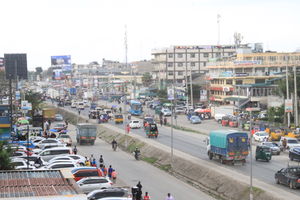
A section of Migingo area in Kitengela township, Kajiado County.
Photo credit: Stanley Ngotho | Nation
Clement Njunge, a Nyumba Kumi elder, told the Nation that undercover spies, some riding motorcycles, closely monitor strangers to establish their intentions, in case they are police officers targeting the illicit but lucrative trade.
"Strangers are monitored closely until the spies ascertain their motive; otherwise, the illicit brew and drug dens are closed in a huff at the snap of a finger," he said.
Most pubs selling illicit brew and second-generation liquor are located within residential areas. Some are disguised as general stores or hardware shops, while others are in occupied residential houses. Residents describe the manner in which these outlets operate as the most cavalier, with the outlets reportedly operating around the clock and transforming the neighbourhood into a 'drinking haven'.
At one such outlet, which operates from a temporary residential shanty where tenants pay Sh600 rent per month, at least eight women appeared heavily intoxicated when the Nation visited. A few young men with shaggy hairstyles lingered during the brief visit.
The outlet is barely 200 metres from the Noonkopir Sameri police post, which opened two years ago after construction stalled for at least eight years. An earlier spot check found the report desk open with a police officer on duty.
The estate is engulfed by the overpowering smell of illicit brew, and its conditions fall far below acceptable human living standards. A pit latrine stands at the edge of the unfenced compound. A tattered piece of cloth hangs loosely where a wooden door should have been. Despite the foul smell and deplorable conditions, the women continued to drink undisturbed.
Mary* was the youngest among them. A single mother of one, she was only 25 years old, and years of heavy drinking had taken a visible toll. Her speech was slurred and she mumbled some words. Fresh bruises were visible on her face and arms. Her eyes appeared weary, as though she had experienced far more than her age would suggest.
"My first boyfriend left me because of my heavy drinking habits. I can barely survive without alcohol and sometime drugs. I have an equally drunk man but he takes care of me," she said while staggering to maintain her standing position. "I come from Kenol in Murang'a County but I can't remember which village."
A few yards away, Jane*, a middle-aged woman, sat on the ground spitting carelessly. Her words were few but revealing, painting a grim picture of alcohol's impact on family life.
"I was kicked out of my matrimonial home in Mlolongo (Machakos County) by my husband due to my high appetite of alcohol. I left him with four children. Whoever buys me alcohol for the night is my husband. The man who will pay my rent at end month will be my husband that night," she said unapologetically.
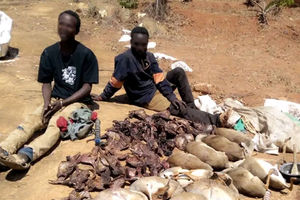
A residential plot operating as a selling outlet for illicit brew at Migingo area in Kitengela Noonkopir estate, Kajiado County in this photo taken on June 3, 2026.
Photo credit: Stanley Ngotho | Nation
An elderly woman, whose legs appear weakened by age, sat along the path leading to the illicit brew den, sniffing tobacco. Revellers identified her as the owner of the outlet and the person who called the shots. She refused to speak when approached by the Nation . Residents claimed she also uses some of the women to distribute illicit brew to homes.
Michael Muthama, one of the few men at the bar, told the Nation that the only thing you couldn't get in Migingo was life itself. He claimed that crime sustains the neighbourhood's prevalent carefree drinking culture.
"We are served a cocktail of illicit brew around the clock. Bhang and hard drugs are sold in open daylight. Ask for anything and it will be delivered immediately as long as you have money. Only life you can get here," he said.
Mr Njunge told the Nation that the number of women frequenting the illicit brew dens was alarming and had destroyed many families.
"We have seen cases of women get pregnant from their fellow drunkards, give birth and tag their children along to the same spot. These children do not attend school despite free education programme," said Njunge. "Normally a woman holds together the fabric of a family, but in our neighbourhood they break the same fabric forcing men to abandon them."
Less than 100 metres from the first outlet stands what locals describe as a notorious illicit brew and drug outlet allegedly owned by an "untouchable" man known only as "Omosh".
Residents claim he has had numerous run-ins with police and frequent appearances in court but always leaves unscathed.
Dozens of stern-looking young men sat on rocks outside the building said to house several pubs, illicit liquor stores and tenants. Several boda-bodas, which residents claimed served as getaway motorcycles, remained on standby.
Mr Joel Kiminda, a boda-boda rider who insisted he was not part of the getaway network, alleged that the operator enjoyed protection from rogue police officers who collected weekly protection fees.
"It's so unfortunate that the owner of the outlet is always tipped by some police officers whenever there is a swoop. In several instances when he had been unlucky and arrested, he always comes back in full throttle," said Kiminda. "We see them (police officers) enter the premises and come out, allowing the business to flourish. Our new police post was meant to help us."
Cases of insecurity in the estate have reportedly increased over the past six months, with youth gangs allegedly terrorising residents between 9pm and 2am, according to victims who spoke in confidence for fear of reprisals from the knife-wielding criminals.
The gangs, usually comprising four to five members, are said to roam the area, leaving behind a trail of theft, injuries and hopelessness. Residents say cases of mugging, robbery with violence and burglary have become commonplace.
Mr Njunge added that illicit brews and drugs sold in the area have fuelled criminal activities, although he acknowledged that the deployment of officers at Sameri Police Post had helped to scare away some notorious criminals, particularly around the dumping site.
"Youthful criminals takes parts of the neighbourhood captive at night. Also, petty crime like break-ins are common. We hope that the police post will be commissioned to a full police station with enough officers and a vehicle for night patrols," he added.
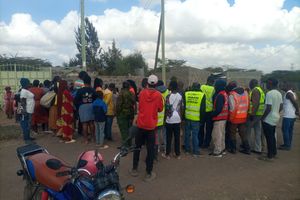
Sameri Police post at Migingo area within Noonkopir estate, Kitengela. The police post was opened two years ago after stalling for eight years.
Photo credit: Stanley Ngotho | Nation
The police post, which is intended to serve the densely populated Noonkopir Estate, lacks essential furniture. Visible cracks in the mini-cell walls raise concerns about the quality of construction. The facility has also been without electricity for the past year, having been disconnected by Kenya Power over unpaid bills.
"We usually grapple in darkness to serve residents. We survive on candles that comes in handy and sometimes torch or portable light. We (officers) dig deep in our pockets for the candles," an officer, who requested anonymity, said in an earlier interview. "The same predicaments follow us to our quarters attached to the police post. It’s a life of squalor for police officers."
Isinya Sub-County Police Commander Simon Lokitari told the Nation that police operations had been intensified in the area, although operators continued devising new ways to evade arrest.
"I don't deny that there might be rogue officers who collude with the illicit brew operators but we have intensified crackdown within Migingo and individuals taken to court. It is high time the county reviews liquor licences for pubs in residential buildings,” he said while assuring locals that there will be more police swoops.
Locals remain hopeful that the dignity of their neighbourhood will be restored through sustained action by security agencies.