Nairobi City County is now collecting more than 4,000 tonnes of garbage daily, four times the amount previously removed, but the city continues to grapple with powerful waste cartels that have for years thrived on illegal dumping, extortion and manipulation of the county's waste management system.
A new county government report shows that City Hall has significantly expanded its waste collection operations, clearing dozens of illegal dumpsites and removing thousands of truckloads of waste from estates, markets and informal settlements across the capital since April.
Yet despite the high garbage collection figures, officials acknowledge that criminal networks and rogue operators remain a major obstacle to efforts aimed at streamlining waste management and restoring order in the sector.
The county attributes the increase in collection capacity to the deployment of more than 100 garbage collection trucks operating around the clock and partnerships with private sector players as part of an ambitious citywide clean-up campaign.
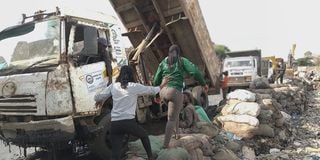
Private trucks waiting to offload garbage at Dandora dumpsite in Nairobi.
Photo credit: Frankline Akhubula | Nation Media Group
Governor Johnson Sakaja said the campaign has enabled the county to reclaim several areas that had become notorious dumping grounds.
"Since the commencement of the citywide clean-up campaign in April 2026, we have successfully cleared more than 40 major waste collection points and illegal dumping sites across various sub-counties," Mr Sakaja said.
Among the areas cleared are major dumpsites in Kasarani, Embakasi, Kibra, Mathare, Korogocho, Ngomongo, Waithaka and parts of Mukuru, which have historically struggled with waste accumulation due to rapid population growth and inadequate collection services.
According to the report, one of the largest operations was undertaken in Kasarani, where 679 truckloads of waste were removed from St Francis, Gituamba, Mawe Mbili, and Kamulu 26 collection points. In Embakasi East, approximately 1,170 truckloads were cleared from Kianda and Mihango, while Kware Bridge in Embakasi South accounted for more than 1,000 truckloads.
County Executive Committee Member for Green Nairobi, Maureen Njeri, said the city's waste collection capacity has risen sharply in recent months.
"During peak operations, we can collect up to 6,000 tonnes of waste daily compared to the 1,000 tonnes previously collected. This coordinated waste collection programme will continue as we work towards a cleaner and healthier city," she said.
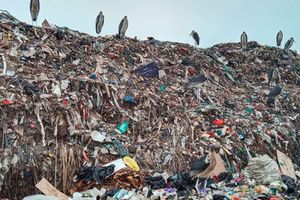
Traders walk past a heap of uncollected garbage at Muthurwa Market on Sunday, November 2, 2025.
But despite the sharp increase in waste collection, Nairobi continues to battle powerful garbage cartels that have for decades entrenched themselves in the city's waste management chain, from neighbourhood collection points to the sprawling Dandora dumpsite.
Previous studies and investigations have shown that criminal gangs and politically connected operators control waste collection routes in some estates and informal settlements, forcing residents to pay collection fees while intimidating those who resist.
At the Dandora dumpsite, the city's only official disposal site, criminal groups have historically controlled access, scavenging activities and the movement of garbage trucks, turning waste into a lucrative underground economy.
The dumpsite has previously been the scene of violent clashes between rival groups competing for control of recyclable materials and dumping rights.
In other instances, private operators allegedly billed residents for waste collection and later received payments from the county government for the same truckloads, creating opportunities for double payment and loss of public revenue
Auditors have, in previous years, flagged irregularities in waste collection contracts, including instances where companies were allegedly paid for trips that could not be verified.
County officials argue that the ongoing clean-up campaign and the closure of illegal dumpsites are part of a broader effort to dismantle parallel waste management networks that have denied the county revenue while undermining efforts to establish an efficient collection system.