For decades when dusk settled over Nakuru city, Kanu Street in the outskirts of the business hub came alive.
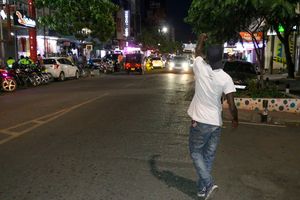
Neon lights flickered to life one by one as if on cue and within minutes, the street transformed into a glowing corridor of sound and motion.
Music spilled into the night from almost every doorway, a mix of swahili songs, Lingala tunes and the latest hits of all genres blending into a chaotic but familiar rhythm.
It was loud, crowded, and electric. For years, Kanu Street was the heartbeat of the town’s nightlife, a place where sleep was optional and business never stopped.
Inside the night clubs, dance floors stayed full until dawn while outside, the overflow spilled onto the pavements where laughter, arguments, conversations and fights carried deep into the night.
Many eateries lined the street with kitchens running nonstop, feeding a diverse crowd among them club-goers, taxi drivers, night workers and those simply drawn to the energy of the place.
Lodgings also operated around the clock offering rooms by the hour or night, rarely lacking customers and Kanu street was an ecosystem in constant motion where every business depended on the other.
One of the once famous Klub Mexico, located along Kanu Street, in Nakuru City, on April 13, 2026. Now dilapidated and inoperative after business moved uptown.
Photo credit: Boniface Mwangi | Nation
It was, in many ways, the clearest expression of Nakuru County’s ambition for a 24-hour economy as some guests from as far as Nairobi would arrive to enjoy what the popular but notorious Kanu Street offered.
By midnight, Kanu Street would be jam-packed with money changing hands rapidly and continuously, a good night meant profit for nearly everyone, from bar owners and food vendors to security guards and street traders.
Commercial sex workers were also a visible part of the street’s economy, openly seeking clients.
Then came COVID-19 and everything changed. The pandemic silenced Kanu Street almost overnight and has remained shut like music stopping all of a sudden.
Following the epidemic, then President Uhuru Kenyatta ordered the indefinite closure of all bars in the country saying that it had emerged as one of the weakest links in the fight against the spread of coronavirus.
The curfews emptied the roads and fear kept people indoors. What was once Nakuru’s busiest nightlife strip became a ghost of itself.
At first, many believed it would be temporary. Business owners locked up, hopeful they would soon reopen..
And when the country reopened, the street never truly recovered. For those who depended on it, the loss is deeply personal.
Mr Peter Mwangi, a former club owner, says he once ran one of the biggest establishments on the street, employing more than 20 people at its peak.
Before the pandemic, the area was so crowded at night that movement was difficult but after the pandemic, he closed the business hoping it would be temporary.
He said after the pandemic he tried opening up but the customers never returned, forcing him to shut down permanently two months later.
“I had one of the biggest clubs here, before COVID, you couldn’t even walk through this street at night, it was full. When the pandemic came, we closed thinking it was temporary. But business never came back. I had to shut down completely,” recalled Mr Mwangi.
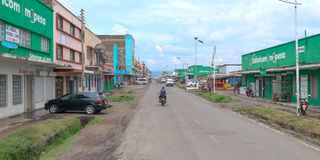
Hotel Summerland, the only left standing and operational along Kanu Street in Nakuru City on April 13, 2026.
Photo credit: Boniface Mwangi | Nation
Ms Jane Wanjiku, a food vendor, who operated a food stall along the street for years, recalls serving customers until the early hours of the morning, including club-goers, drivers and security officers.
In the aftermath of the pandemic, foot traffic declined sharply, pushing her to scale down operations and close much earlier due to dwindling demand.
“I used to sell food here until 3am, customers were many, club-goers, drivers, even police officers. After COVID, people stopped coming. Now I close by 9pm because there is no business. It’s like the street just died.” said Ms Wanjiku.
For transport operators, the shift was equally devastating.
Mr David Kiptoo, a taxi driver, told the Nation that Kanu Street was once a reliable source of clients at all hours of the night, from midnight to dawn.
However, after COVID-19, the steady stream of passengers disappeared, leaving him with little choice but to relocate to Nakuru town center to try his luck.
“I used to park here every night, you could get customers anytime, midnight, 2am, even 4am. But after COVID, the clients disappeared. I had no option but to move. Staying here meant going home empty -handed.” He said
Today, Kanu Street stands quieter, it tells a different story.
At its peak, the street boasted more than 200 entertainment joints packed into a relatively small stretch, only a handful remaining. The music is gone, crowds are gone and the energy that once defined Kanu street disappeared.
Clubs that once drew hundreds each night shut their doors or relocated, signboards hang faded, some buildings sit abandoned, and the few businesses still open close much earlier than they once did.
Lodgings that operated at full capacity now sit half-empty, their corridors quiet. Eateries that once stayed open until dawn now close early, no longer seeing the need or the business to keep going.
A section of Kanu Street, once the heartbeat of Nakuru’s nightlife, has lost its vibrancy. Previously packed with over 200 entertainment joints, lodgings, and eateries operating around the clock, the street supported a thriving 24-hour economy, not anymore.
Photo credit: Boniface Mwangi | Nation
The street that once roared now whispers with commercial sex workers, once openly visible, shifted to other parts of town.
A handful of businesses remain, stubbornly holding on, serving a much smaller, quieter crowd. Some hotels have been set up, trying to revive the once vibrant street.
Mary Atieno, a resident, observes that the nights are now significantly quieter compared to the past when loud music and crowds stretched into the early morning hours.
While the silence has brought a sense of calm and improved sleep, she notes that the area also feels less secure and less lively than it once was.
Another resident, John Kamau, says the transformation has altered the character of the neighborhood entirely.
He explains that while the decline of nightlife has reduced disturbances, it has also slowed down economic activity, leaving many buildings underutilized and the area less attractive to both business and visitors.
"Kanu Street has not just changed; it has in many ways, “died.” I do not know what will be done to bring it back to its glory," said Mr Kamau.