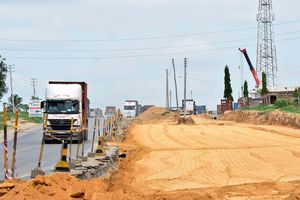
Most of the 4,400 kilometres of Low Volume Seal Roads (LVSR) that President William Ruto’s administration inherited from his predecessor Uhuru Kenyatta are in a sorry state of disrepair.
A combination of factors, including poor workmanship, frequent use by overweight trucks and floods, has left many of the roads eroded and impassable, particularly in the South Rift Valley.
Some of the projects, which former Roads Cabinet Secretary Kipchumba Murkomen (now Interior CS) once described as “orphaned roads”, deteriorated even before contractors completed and handed them over.
Former President Kenyatta’s government launched the LVSR programme in 2013 with the goal of constructing 10,000 kilometres of rural roads to open up all 290 constituencies to investors.
The Kenya Rural Roads Authority (KeRRA) was tasked with implementing the programme, which was widely lauded for reducing travel times and improving connectivity in long-neglected regions.
However, planners appeared to overlook a crucial element – maintenance.
Parliament and the National Treasury failed to allocate funds for upkeep, leading to rapid deterioration.
The LVSR initiative, also known as the R2000 programme, was meant to bring rural Class D, E, special-purpose and unclassified roads to maintainable standards and incorporate them under the Kenya Roads Board’s Road Maintenance Levy Fund (RMLF).
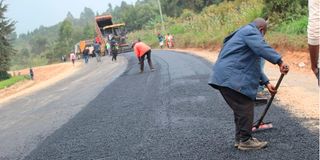
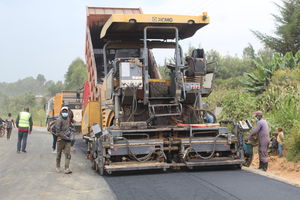
Ongoing works at the 75km Low Seal Volume Road (LSVR) in Bomet East constituency on September 16, 2025.
Photo credit: Vitalis Kimutai | Nation
Although designed to last 15 years, many of the roads have deteriorated in less than five.
“Unfortunately, heavy commercial vehicles have been allowed to use LVSRs, especially in agricultural zones. These vehicles exceed the design capacity of the roads, damaging them severely. Sections of the roads, particularly in rural constituencies, are now riddled with defects, potholes, cracks, and washouts. KeRRA has done nothing to maintain them,” said youth leader Peter Kiprotich.
Roads and Transport Cabinet Secretary Davis Chirchir recently told Parliament that the government would rehabilitate the dilapidated roads, admitting that a lack of funds had hampered previous repair efforts.
Last year, Mr Murkomen pledged that future budgets would tap into the road fund to address the issue.
The LVSR technology was adopted under an annuity programme because it was 60 percent cheaper than conventional high-volume seal roads. But the cost savings have come at a steep price.
In 2023 alone, floods destroyed roads and bridges worth Sh41 billion, according to the Ministry of Roads.
The Kenya Urban Roads Authority (Kura) valued affected bridges at Sh15 billion, the Kenya National Highways Authority (KeNHA) estimated damage to its roads at Sh17 billion, and KeRRA put losses under its docket at Sh9 billion.
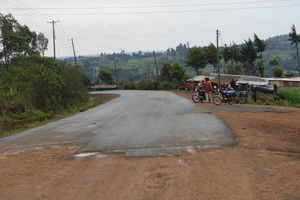
The 30-kilometre Chebole–Siongiroi–Chebunyo road in Bomet County, a flagship project of the Kenyatta administration, has been impassable for four years. Residents say repeated promises of repairs have not been fulfilled.
“We have an assurance from the President and the CS for Roads that the road will be re-tarmacked to end the suffering of motorists forced to use longer alternative routes,” said Chepalungu MP Victor Koech.
Similarly, the 50-kilometre Silibwet–Kiptagich road, which links Bomet, Narok and Nakuru counties through the Mau Forest, has been impassable for five years. Motorists are forced to divert through Kericho County, incurring extra costs and delays.
“It is a nightmare to drive on the Olenguruone–Kiptagich–Silibwet road. It beats logic that successive governments promise to repair it during campaigns but abandon it once in office,” said Joseph Kebenei, a resident of Kuresoi South in Nakuru County.
Other projects, such as the 75-kilometre Silibwet–Merigi–Kaporuso–Tegat–Chemaner–Kimuchul–Matecha and Chemaner–Kembu–Longisa–Kapkimolwo–Mulot road, are already showing signs of failure before reaching even 25 percent completion.
Bomet East MP Richard Yegon during the launch of the second batch of equipment for the construction of the 75km Low Seal Volume Road on September 16, 2025.
Photo credit: Vitalis Kimutai | Nation
Bomet East MP Richard Yegon admitted that earlier works on the 14-kilometre Tenwek–Merigi section did not meet standards, but insisted that subsequent sections now comply with specifications.
“Residents of Bomet East have repeatedly raised concerns about quality. I wish to confirm that with engineers from KeRRA and the Government Delivery Unit (GDU) on site, we have ensured standards are now being met as directed by the President,” Mr Yegon said during the launch of new construction teams.
President Ruto acknowledged the challenges facing the LVSR programme while presiding over the relaunch of the 75-kilometre Merigi road on April 28, 2023. He directed KeRRA to ensure the road sets a new benchmark for durability.
“I would not want the mistakes of the initial LVSR phase repeated. High standards must be maintained at all costs,” he said.
“I will return to inspect this particular road to see the standards that have been maintained by the contractor and those charged with supervising its construction. High standards must be maintained at all costs”