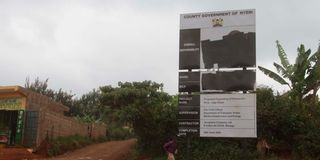
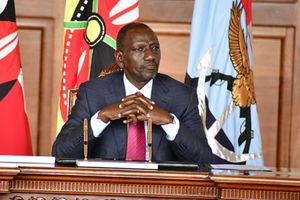
Their smiling faces stare down from billboards, signposts and project plaques with their names are emblazoned on classrooms, roads, dispensaries, water projects, books, calendars and market sheds built using public funds.
Across Kenya, politicians have increasingly turned taxpayer-funded projects into personal branding platforms, attaching their portraits, names and political colours to developments financed by the public purse.
To supporters, the branding is a visible sign of leadership and delivery but to critics, it is an unethical appropriation of public resources for political gain.
Now, anti-corruption and electoral authorities are moving to stop the practice.
In what appears to be a major crackdown on the growing culture of political self-promotion, the Ethics and Anti-Corruption Commission (EACC) has warned politicians that they risk prosecution and possible disqualification from elections if they continue branding publicly funded projects with their images, names or political symbols.
The warning targets a wide range of elected leaders including governors, Members of Parliament and Members of County Assemblies, many of whom have become synonymous with projects carrying their personal identities despite being financed by taxpayers.
“The commission’s attention has been drawn to an emerging trend of branding public projects and programmes with names, images or symbols of specific individuals, political parties or leaders,” EACC Chief Executive Officer Abdi Mohamud said in a public notice.
“Various reports received by the commission indicate that certain political leaders have consistently branded publicly funded projects and programmes with their personal names, images and/or symbols. Such leaders face prosecution and disqualification from vying in elections.”
Ethics and Anti-Corruption Commission CEO Abdi Mohamud.
Photo credit: Wilfred Nyangaresi | Nation Media Group
The anti-graft agency argues that claiming personal credit for projects financed through public resources violates both ethical standards and the law.
According to Mr Mohamud, the Constitution sets clear principles on leadership and integrity, requiring state and public officers to place public interest above personal or political gain, uphold accountability in the management of public resources and maintain high standards of integrity in the discharge of their duties.
The commission has directed implementing agencies and public entities to ensure that any recognition associated with projects reflects only the responsible government institution and clearly indicates whether the initiative is funded by the national or county government, without personal identifiers or portraits.
A senior Independent Electoral and Boundaries Commission (IEBC) official told the Nation on Wednesday that the commission is working closely with the EACC and other agencies to ensure candidates comply with leadership and integrity requirements before being cleared to run for office.
“The trend of politicians naming and putting their portraits and images on public projects after using taxpayers' money is unethical and against the principles of good leadership,” the official said.
Under Kenya's legal framework, candidates seeking elective office, including the presidency, must satisfy integrity requirements overseen by both the EACC and the IEBC before being cleared to contest.
The warning comes as civil society groups intensify pressure on Parliament to enact stricter laws to curb the branding of public projects by politicians.
Nakuru-based civil rights activist Laban Omusundi has petitioned the Senate to amend the County Governments Act, 2012, to expressly prohibit governors and MCAs from using their names, images or portraits on publicly funded projects.
Instead, he proposes that all taxpayer-funded projects carry a standard inscription reading: “Courtesy of the Taxpayers of Kenya.”
“I petition the Senate to come up with regulations that will ensure all projects funded by taxpayers' money in counties and wards across the country do not have portraits and images of politicians such as governors or MCAs,” Mr Omusundi said in his petition.
According to the activist, public projects belong to taxpayers and should not be personalised by political leaders.
“The images and names make it seem as if the projects were funded by the leaders themselves and not the taxpayers. It should not appear like they are doing a favour to citizens. Kenyans have a right to development because they pay taxes,” he said.
Mr Omusundi further argues that Article 231 of the Constitution, which prohibits portraits of individuals on Kenyan currency, provides a useful principle that should also apply to public projects.
His petition has received support from lobbies Midrift Hurinet and People's Power Watch both of which are advocating for all taxpayer-funded projects to be labelled "Funded by Taxpayers" or "From Kenyan Taxpayers."
“We the people are sovereign; we the people are the taxpayers. The least we expect is prudent use of our taxes, recognition and respect. Leaders should not personalise our taxes and appear to be using public resources as charity or for political dividends,” said Midrift Hurinet Executive Director Joseph Omondi.
“It is wrong for politicians to use spaces on projects funded by taxpayers' money to popularise themselves. The names and images are placed on billboards, banners, posters and signposts. This must stop,” he said.
Governance expert David Ngugi, however, argues that the culture did not begin at the county level.
He says successive national administrations have contributed to the trend by prominently associating government projects with sitting presidents.
“The projects in various counties and constituencies have become avenues of political self-promotion an ego-driven branding exercise.This reveals how low we have sunk as a country in building personality cults,” Mr Ngugi said.