Hello

Your subscription is almost coming to an end. Don’t miss out on the great content on Nation.Africa

Ready to continue your informative journey with us?

Hello

Your premium access has ended, but the best of Nation.Africa is still within reach. Renew now to unlock exclusive stories and in-depth features.

Reclaim your full access. Click below to renew.

Maureen Zablon
Caption for the landscape image:

Kenyan graduates in the US: It’s harder to get jobs here but…

Scroll down to read the article

Maureen Zablon (left), Emmy Napao and Lucy Atieno.

Photo credit: Pool

 Daily Nation Correspondent,

New York

Kenyan graduates in the United States are reflecting on how changing times, including harsh immigration and economic policies, are making it harder to secure jobs.

On the back of this graduation summer season, some say 2026 presents Kenyan graduates with a tough job market, constrained by a weak economy, harsh immigration policies and few opportunities to fall back on in Kenya.

The American Dream, they say, is not as rosy as it once was. Traditionally, strong academic networks and historical ties between the US and Kenya have heavily influenced many young Kenyans to seek higher education in the US.

Kenya is third in Africa after Nigeria and Ghana in terms of the number of students in the US. Despite challenges, recent US-based Kenyan graduates remain hopeful.

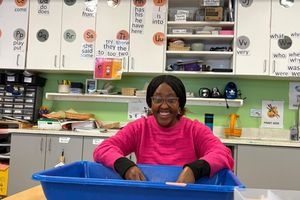
Maureen Zablon

Maureen Zablon who pursued a Master’s degree in Applied Statistics at Bowling Green State University in Ohio and graduated in late 2025

Photo credit: Pool

Maureen Zablon came to the U.S. in December 2023 and began her studies in January 2024. She pursued a Master’s degree in Applied Statistics at Bowling Green State University in Ohio and graduated in late 2025. “Things have been good overall since graduation, although the transition from school to work wasn’t easy. I was able to find a job as a Financial Analyst at an automotive company, and I’ve been focused on gaining experience and building my career,” Maureen says.

For Lucy Atieno, who came to the US in September 2024 to pursue a Masters in Civil Engineering, with a focus on transportation, at New York University, things have not been as rosy.

“I graduated in May 2026. The job search was a tough one. The competition for entry-level positions is intense. I had to apply to over 300 jobs just to get a handful of interviews. I eventually got a full-time job offer two weeks before my graduation. At the same time, I’ve seen that many of my classmates who were not able to secure jobs are now exploring starting their own startups as an alternative path,” says Atieno.

Emmy Napao graduated with an Economics degree from Middlebury College in Vermont on May 24, 2026.

“Since graduation, the job search has been challenging. The market is already competitive for recent graduates. Being an international student adds another layer of difficulty. I have applied to over 300 positions in both the United States and Kenya,” says Napao, who travelled to the US in September 2022.

“However, like many graduates, I am still looking for the right opportunity,” Emmy says, adding that as an Economics graduate on a STEM-designated pathway, she hopes to make use of her Optional Practical Training (OPT) period to secure a position in the U.S.

OPT allows F-1 international students to work in the U.S. in a job directly related to their field of study, typically for up to 12 months, with possible extensions for STEM degrees.

“At the same time, I am keeping an open mind and exploring opportunities in Kenya as well. For now, I am continuing my job search and remaining flexible about where the next opportunity may come from.”

For Maureen, an Applied Statistics major in Ohio, the uncertainty around immigration policies makes some employers more cautious about hiring non-Americans.

Even though OPT allows Kenyan students to work without sponsorship initially, she feels that some companies are already thinking ahead and prefer candidates who won’t need sponsorship later.

“The job market feels more competitive than many of us expected. There are opportunities, but hiring processes seem longer, and companies appear to be more selective when filling positions. At the moment, I plan to continue working in the U.S. and gain as much experience as possible,” explains Maureen.

Lucy Atieno, a Master’s graduate in Civil Engineering, says current US immigration policies have impacted the job market.

 Lucy Atieno

 Lucy Atieno.

Photo credit: Pool

 “Most companies send an automatic rejection if you indicate that you will need visa sponsorship in the future. Employers (even the ones who were okay with sponsoring work visas previously) stopped sponsoring after the H-1B fees policy. Because they will not sponsor H-1B visas, they see no need to hire students on OPT. Although OPT does not require employer sponsorship, many employers are hesitant to hire candidates whom they may not be able to retain long-term without an H-1B visa.”

In addition, Lucy states that many companies have reduced hiring. “They have become more selective or delayed filling positions. In some cases, I applied for roles only to find that hiring was suspended or that the company was undergoing layoffs. As an international student, I have also found that many employers are hesitant about immigration-related processes, which further limits opportunities. The current job market requires you to be more proactive in networking. I'm planning to work in the US short-term to gain some practical experience. My goal is to return to Kenya and potentially start my own consultancy.”

Emmy Napao.

Emmy Napao.

Photo credit: Pool

“In my experience, the current immigration environment has added uncertainty for international students entering the job market. For example, my OPT application has taken significantly longer than what many students I know experienced in previous years. This means I cannot begin working until it is approved, even if I receive a job offer,” explains Napao. “I have also noticed that many employers are cautious about hiring international students because of future sponsorship requirements and uncertainty around immigration policies. As a result, international students often have a smaller pool of opportunities to apply to and have to be much more strategic in their job search.”

Emmy adds that the current job market has made the search process much more competitive. Many positions receive hundreds of applications. Companies appear to be hiring more cautiously than before. Consequently, recruitment processes are often longer, and even qualified candidates may spend months searching before securing an opportunity.

”I am currently open to opportunities in both the United States and Kenya. While I would like to gain professional experience through the OPT program if possible, I have always seen Kenya as an important part of my long-term future. At this stage, I am focused on finding the best opportunity to grow professionally, regardless of location.”

Maureen advises Kenyan students looking to study and work in the US to come with a clear plan and realistic expectations. “Focus on building skills, networking, and gaining practical experience while in school. Finding a job after graduation can take time and effort. I think the Kenyan government can do more to provide opportunities for Kenyan graduates wishing to return to Kenya.”Creating more graduate programs, strengthening links between universities and employers, and supporting entrepreneurship would make it easier for returning graduates to contribute their skills back home.”

Despite the challenges, Lucy says she still believes the US remains a highly valuable study destination. “It is important to research universities early, identify programs that align with their future goals, and apply for all the scholarships that they are qualified for. Developing strong English communication skills and building relationships with professors and mentors who can provide recommendation letters is also important. Studying in the United States opens up a wide range of global opportunities.”

She thinks the Kenyan government can create policies that encourage industrialization and investments from the private sector. “Expanding industries such as manufacturing, transportation, technology, and renewable energy would create more meaningful employment opportunities for graduates, particularly those in my field, engineering. The government should also support entrepreneurship, especially among recent graduates, through grants and startup funding for diasporans looking to move back to Kenya.”

“My biggest piece of advice would be to start applying for internships early and do so aggressively. Internships often open doors to full-time opportunities,” says Napao.

“I would also encourage students to keep an open mind and not put all their eggs in one basket. While many Kenyan students hope to stay and work in the U.S., immigration policies and job market conditions can be unpredictable. It’s important to explore opportunities broadly, including in Kenya and other countries, rather than limiting yourself to a single path.”

Follow our WhatsApp channel for breaking news updates and more stories like this.