Breakthrough malaria drug offers hope for Kenya's tiniest patients
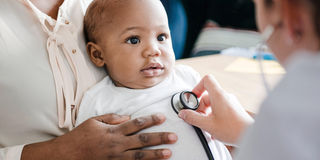
Novartis has unveiled 'Coartem Baby', the first malaria treatment specifically approved for infants.

Kenyan parents no longer have to watch helplessly as their newborns battle malaria with adult-strength medicines that could prove toxic to their developing bodies.
Swedish pharmaceutical giant Novartis has announced that 'Coartem Baby' has become the first malaria treatment specifically approved for infants weighing less than 4.5kg, ending a dangerous treatment gap that has persisted for decades.
The breakthrough comes as a lifeline for families across Kenya, where approximately 70 percent of the population remains at risk of malaria, and where counties such as Kakamega and Migori report infant mortality rates as high as 73 deaths per 1,000 live births.
"Until now, there has been no approved malaria treatment for infants weighing less than 4.5kg, leaving a treatment gap," explained Vas Narasimhan, chief executive of Novartis. "They have instead been treated with formulations intended for use in older children, which may increase the risk of overdose and toxicity."
The Swiss drug regulator Swissmedic approved the treatment following extensive Phase II/III clinical trials that investigated new ratios and doses of the antimalarial compound artemether-lumefantrine, specifically accounting for how babies' immature organs process medicines differently from older children and adults.
Dr Nekoye Otsyula, global medical affairs director at Novartis, said the company had spent a decade developing the infant-specific formulation after discovering that traditional dosing approaches were inadequate.
"Ten years ago during a study, we established that these babies don't handle medicine as older children or even adults do - their organs are still maturing," she said. "We had to go back and model a dose that works because we firmly believe that babies are not small adults and should be treated with the best evidence-based medicines."
The new treatment, which will also be known as 'Riamet Baby' in some countries, comes as two dispersible tablets that dissolve easily in water or breast milk. The medicine has been given a sweet cherry flavour to make administration easier for parents and caregivers.
"There will be two dispersible tablets which are put on a normal teaspoon of water and given by mouth, which is very simple to administer and very similar to what has been used for 25 years now," Dr Otsyula added.
The medicine is designed to treat infants and neonates weighing between two and five kilograms who have acute, uncomplicated infections caused by Plasmodium falciparum or mixed infections including P. falciparum.
A welcome development
Prof Umberto D'Alessandro, director of the MRC Unit at The Gambia and the London School of Hygiene and Tropical Medicine, welcomed the development, noting that previous malaria treatments had only been properly tested in children aged at least six months.
"That matters because neonates and young infants have immature liver function and metabolise some medicines differently, so the dose for older children may not be appropriate for small babies," he said.
The need for such a treatment is stark. According to the World Health Organisation, there were 263 million cases of malaria and 597,000 deaths globally in 2023, with almost all fatalities occurring in Africa. Children under five years old accounted for about three in four malaria deaths across the continent.
In Kenya, the Ministry of Health's 2023-2027 malaria strategy highlights the disease as a significant public health problem. The 2022 Kenya Demographic and Health Survey showed that counties with high malaria endemicity consistently reported the highest under-five mortality rates over the preceding decade.
Recent surveillance data reveals that 76 percent of Kenyan children aged six months to 14 years who tested positive for malaria had Plasmodium falciparum infections, with northern counties including Isiolo, Mandera, Turkana, Marsabit, and Wajir increasingly reporting cases of Plasmodium vivax.
The scale of the challenge is immense. Some 30 million babies are born in malaria-risk areas across Africa each year, with surveys across West Africa reporting infection rates ranging from 3.4 per cent to 18.4 per cent in infants younger than six months old.
Martin Fitchet, chief executive of Medicines for Malaria Venture, which collaborated with Novartis on the development, described the approval as a crucial step forward.
"Malaria is one of the world's deadliest diseases, particularly among children. But with the right resources and focus, it can be eliminated," he said.
"The approval of Coartem Baby provides a necessary medicine with an optimised dose to treat an otherwise neglected group of patients and offers a valuable addition to the antimalarial toolbox."
Novartis plans to make the treatment available on a largely not-for-profit basis to increase access in malaria-endemic areas. The company expects rapid approvals in eight African countries under a special global health scheme operated by Swissmedic.
The pharmaceutical giant has committed nearly $490 million to global health research and development since 2021, building what it describes as the industry's largest pipeline of treatments to control or eliminate malaria and neglected tropical diseases.
Since 1999, Novartis has delivered more than 1.1 billion treatment courses of antimalarial, mostly at no profit, including 500 million treatments of child-friendly formulations for babies weighing at least five kilograms.
The new infant-specific dose was developed with scientific and financial support from Medicines for Malaria Venture as part of the PAMAfrica consortium, which receives funding from the European & Developing Countries Clinical Trials Partnership and the Swedish International Development Cooperation Agency.