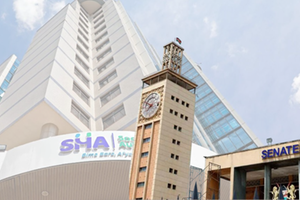
Cancer patients bear the brunt as SHA system outage enters day 4
The Social Health Authority building in Nairobi.

What you need to know:
- Across Kenyatta National Hospital (KNH) and other public health facilities, patients have spent days stranded.
- Among those hardest hit are cancer patients, for whom delays are not merely an inconvenience, but a clinical threat.
For three days, patients in public hospitals across Kenya have been stranded in corridors, turned away from treatment rooms and told to either pay cash they do not have or wait for a system whose restoration nobody can guarantee.
The Social Health Authority’s (SHA) platform went down on Sunday and with it went the promise that no Kenyan would be denied care because of inability to pay.
For one week, Mildred Awuor had been admitted at Kenyatta National Hospital (KNH) with abdominal pain. She expected to be discharged on Sunday. Days later, her discharge still cannot be processed and every additional day she spends in a hospital bed adds hundreds of shillings to a bill that is already beyond her means.
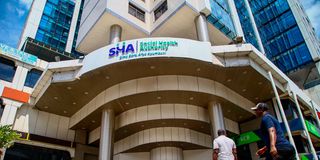
The Social Health Authority building in Nairobi.
“The longer I stay, the more the bill grows. Since I used my SHA cover for admission, the system has to be back up before the discharge is processed. I do not have the money. I do not know how much I will be asked to pay by the time this is over,” she said.
Mildred is not alone.
Across KNH and other public health facilities, patients have spent days stranded thanks to a system that promised affordable healthcare but has instead left them trapped between a malfunctioning digital platform and hospital administrators who can neither discharge them nor absorb the cost of their care.
Among those hardest hit are cancer patients, for whom delays are not merely an inconvenience, but a clinical threat.
On Sunday, dozens of cancer patients lined up at KNH for hours waiting to be cleared through the SHA system so they could access chemotherapy, review appointments and other oncology services. Many waited the entire morning. By afternoon, some had still not been cleared. Others spent the night on pavements outside the hospital. Many eventually went home without treatment.
For cancer patients, a missed treatment session is not something that can simply be rescheduled without consequences. Chemotherapy cycles are designed around precise intervals.
“Missing a session can reduce the effectiveness of a treatment protocol, allow tumours to progress and, in some cases, alter the entire course of a patient’s care. The patients who left KNH on Sunday without being seen did not just lose a day. They may have lost ground in a fight they are already struggling to win,” said Phoebe Ongadi, Executive Director of the Kenya Network of Cancer Organisations.
The SHA system failure has forced some of the country’s most vulnerable patients to bear a burden that should rest with the institution.
“On Monday, I went for my review, which was supposed to determine whether I should continue with the drugs I have been taking. Unfortunately, I was unable to see a doctor who was to decide on the way forward. We have been told the system is down. I will have to continue taking these drugs as I wait for the system to be restored and for the doctor’s review,” said one patient.
Another patient who spoke to the Nation had been referred for an MRI scan. She was told by hospital staff that she needed SHA pre-authorisation before the procedure could proceed. However, the system could not process the request.
She was then informed that her only alternative was to pay Sh38,000 in cash to undergo the scan immediately. She did not have the cash. Even if she had the money, she said, paying out of pocket made little sense because SHA would not reimburse expenses incurred outside the system.
“I cannot pay cash because SHA will not pay me back. And SHA cannot clear me because the system is not working. So I just sit here and wait,” she said.
Unable to clear patients
And wait she did, with no clarity on when or whether the system would come back online in time for her scan. She remained stuck in limbo.
Her situation captures the cruelty of a digital-only healthcare financing system with no functional backup. When it fails, patients do not merely face inconvenience; they face an impossible choice between paying money they do not have for services the system should cover, or waiting indefinitely for a solution.
The outage has not only affected those seeking treatment. Kenyans attempting to remit their SHA monthly premiums have also been locked out.
Several people who contacted the Nation said they had been unable to make their contributions and, as a result, their parents and dependants registered under their SHA cover could not access drugs and services at public facilities.
With the SHA pre-authorisation module unable to clear patients, hospitals have been telling people to either pay cash or wait but most cannot afford to pay cash.
And most have no idea how long the wait will be.
For one Nairobi family, transferring the body of a deceased relative has been delayed for three days because the SHA system is down and the hospital will not release the body until the bill is cleared.
For days, the family has lived in the shadow of a mortuary, unable to transfer the body, unable to settle the bill, and unable to get answers on when the system will be restored. Every hour they wait, mortuary charges continue to accumulate.
“We have been told the system is down and we have to wait,” a family member said. “We do not know for how long. We have simply been told to wait.”
When the Nation reached SHA Chief Executive Officer Mercy Mwangangi for comment, she confirmed there had been a system issue but said it had since been resolved.
“The Social Health Authority confirms that there was an earlier system issue affecting access to the Pre-Authorisation module, where the Pre-Auth tab was temporarily unavailable to some users. This affected access to pre-authorisations and related billing processes at facility level. The issue has since been resolved, and facilities should now be able to access the Pre-Authorisation module and proceed with billing as expected,” Dr Mwangangi said.
“Any facility still experiencing challenges would therefore need to be reviewed as a specific or isolated case for prompt follow-up and resolution,” she added.
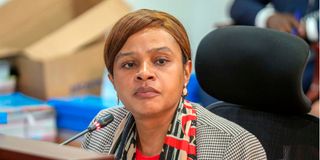
Social Health Authority (SHA) CEO Dr Mercy Mwangangi.
She asked that the names of affected facilities, the time the issue occurred and screenshots or descriptions of error messages be shared with SHA to help trace and resolve pending cases.
However, long after SHA issued its statement, patients and hospitals were still reporting the same challenges that Dr Mwangangi said had been resolved.
“Kenya has invested heavily in the idea that digital infrastructure can deliver Universal Health Coverage. That investment is not without merit. But a digital system that covers millions of people and has no credible contingency plan for downtime is not a safety net, it is a single point of failure,” said Dr Brian Lishenga, chairperson of the Rural Private Hospitals Association.
“And this week, it failed.”
In a subsequent statement, SHA reiterated that facilities experiencing difficulties should submit the details.
“This will help establish whether the challenge relates to user access, facility connectivity, system workflow, or another specific issue. SHA continues to monitor the system and respond to reported access challenges to ensure facilities are supported and patients are served without unnecessary delays,” the authority said.
Follow our WhatsApp channel for breaking news updates and more stories like this.