Dancing away the pain: Inside Kenya's unique back school where patients heal through rhythm
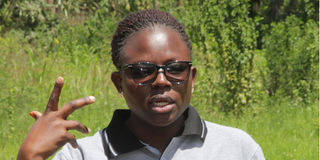
Physiotherapist Nancy Ogenga, who conducts the aerobic sessions at the Nanyuki Level Five Hospital in Laikipia County on November 19, 2025.

What you need to know:
- At Nanyuki Level Five Hospital, patients with chronic back and joint pain are finding relief through an innovative group physiotherapy programme known as Back School, where music-led exercises replace surgery and long-term medication.
- Founded in 2022, the programme has helped hundreds of patients regain mobility, reduce painkiller dependence, and avoid surgery, proving that structured physical activity can successfully treat many non-critical orthopaedic conditions.
Every Wednesday morning, a building at Nanyuki Level Five Hospital in Laikipia County transforms into something unexpected. Rhythmic music reverberates within its walls as about 50 people move in unison, their bodies swaying to carefully selected beats, each tune ushering in a new choreograph.
This is no ordinary fitness class. The participants, ranging from 22 to 74 years old, are patients suffering from joint pains and other orthopaedic conditions. They have come not to burn calories but to heal.
Welcome to Back School—a pioneering physiotherapy programme believed to be the only one of its kind in Kenya, where group therapy is producing remarkable results. The testimonies of those who have passed through its doors reveal phenomenal achievements after years of agony.
Florence Muthoni, 65, had been taking pain relievers for three years due to recurring back and leg pains. An X-ray revealed an abnormality on her spinal cord, and she was referred to Mathari Consolata Hospital in Nyeri for an MRI scan. The results presented her with two options: surgery or weekly physical exercises at the Back School.
"I had the option of being operated on after an X-ray test established an abnormality on the spinal cord," she says. "When I brought in the results, the physiotherapist recommended that I join the Back School. Today is my eighth session, and I think surgery is no longer necessary."
Her progress has inspired the next generation. Precious Muthoni, 22, was so amazed by her mother's healing that she decided to join as well, eager to reap the benefits of healthy living.
John Mithamo had endured unrelenting back pains for three years and was on the list of patients scheduled to see an orthopaedic surgeon. Seven sessions later, he has healed completely.
"I did seven sessions and the pain disappeared," he says. "However, I still join my colleagues every Wednesday because I always experience a refreshing feeling, both in body and mind."
Physiotherapist Nancy Ogenga, who conducts the aerobic sessions, says hundreds of patients have benefited since Back School was founded in December 2022. Some continue attending long after their pain has subsided, drawn by the broader health benefits.
She attributes the high number of patients seeking physiotherapy to the nature of work in the region—tilling land with hand tools, carrying heavy loads on their backs, maintaining poor posture, and leading inactive lifestyles in urban areas.
The concept originated from Future Health Africa, a UK-based team that conducts annual orthopaedic camps in Kenya. During these camps, the overwhelming number of patients with back pains prompted the medics to explore group therapy as an alternative.
"Initially, it was purely a physiotherapy session for our patients with back pains," Ms Ogenga explains. "But it has now morphed into a wellness centre where the vigorous exercises ensure not only physical fitness but also psychological healing for those suffering from mental conditions such as depression."
Consultant orthopaedic surgeon Samuel Ndanya, with nearly three decades of practice, confirms that exercise offers a reliable pathway away from the operating theatre. Science, he says, has demonstrated that physiotherapy through vigorous physical activity leads to full recovery for cases that have not reached a critical stage.
"There are many ways of management, but science has shown us that a lot of these mechanical low back pains will heal," Dr Ndanya explains. "This is because most of them have been caused by mechanical problems and hence they heal through physical methods, not medical methods."
The statistics are sobering. Back pain is the most prevalent condition that orthopaedic surgeons attend to worldwide. Research indicates that regardless of location, there is a 90 per cent likelihood that anyone between the ages of 20 and 60 will experience significant back pain at some point in their life. Currently, 30 per cent of the world's population is affected.
Ndanya notes that group therapy carries additional benefits. Chief among them is reducing the use and misuse of painkillers, most purchased over the counter with far-reaching consequences. The systematic physical exercises also lower the risk of other medical conditions such as diabetes, hypertension, and heart disease.
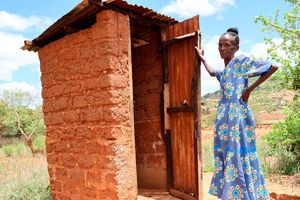
For Samuel Maina, 71, the transformation has been nothing short of miraculous. The workout sessions have freed him from what he describes as self-imposed fasting—he had been afraid to eat, dreading visits to the pit latrine where squatting was required.
"That I can now squat to relieve myself is like a miracle to me," he says, his face breaking into a smile of satisfaction. "For two years, I starved myself, only taking a small portion of a meal to sustain my body—too afraid to visit the small room due to excruciating pain."
Maina recalls how his first days at the Back School were torturous. The agonising pain would send him sprawling on the floor. But under the systematic guidance of the physiotherapist, he overcame the challenge. Today, he squats easily, and the fear of visiting the pit latrine is gone.
Nanyuki Level Five Hospital CEO Sammy Kilonzo says the Back School programme has benefited more than 500 people, most of them patients who had been dependent on painkillers for years.
"As a facility, we have helped to address the large number of patients who used to turn up at our weekly clinics," says Dr Kilonzo. "We have three physiotherapists, and with one attending to 60 patients at a go, the workload for staff is greatly reduced."