Explainer: Why mosquitoes are the most studied insects
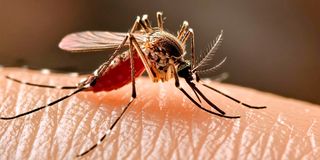
Globally, there are about 3,500 to 3,700 different species of mosquitoes and out of those, it is only about 40 to 45 of them that transmit malaria.

What you need to know:
- The mosquitoes that transmit malaria are known as anopheles mosquitoes and it is the female ones that are responsible for malaria.
- Scientists are working on targeted approaches that are aimed at eradicating specific species of mosquitoes that are dangerous to human beings.
At some point, almost everyone has declared war on a mosquito. It might be after a sleepless night spent swatting at it or after discovering yet another itchy bite. At that moment, you may have questioned their existence or even wondered why this tiny insect is one of the most studied insects.
Climate action poses this question, and more, to Dr Eric Ochomo, an entomologist with the Kenya Medical Research Institute (KEMRI) and who studies mosquitoes for a living. The answers, it turns out, are far more complicated than many would expect.
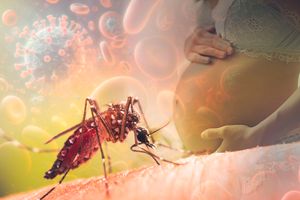
They are studied like this because they are the deadliest animals on earth. They are responsible for more human deaths than any other creature every single year. Mosquitoes transmit diseases like malaria, dengue fever, zika virus, chikungunya, yellow fever and west nile virus among others which kill thousands of people every year.
As scientists, we try to understand how they detect, how they acquire and how they pass on these disease causing organisms called pathogens and understand the biology of transmissions. So how do the pathogens then move from mosquitoes unto human beings, and from human beings to mosquitoes and then to other human beings?
How many species are there?
Globally, there are about 3,500 to 3,700 different species of mosquitoes and out of those, it is only about 40 to 45 of them that transmit malaria. So it’s not all mosquitoes that you see will transmit malaria. It is only a small fraction of them.
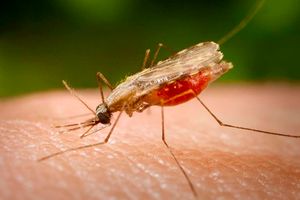
The mosquitoes that transmit malaria are known as anopheles mosquitoes and it is the female ones that are responsible for malaria. And this is because only them feed on human blood. All mosquitoes feed on sugar and they can live all of their lifetime only feeding on sugar.
However, for the female to be able to lay eggs, it needs a protein that is only found in blood and this is any mammalian blood. Some have adapted that they feed much better on humans others feed better on animals.
The mosquitoes that have adapted to feed on humans are the ones responsible for the transmission of pathogens to humans. For example, like anopheles mosquitoes, within the anopheles family there are species like Anopheles funestus,Anopheles gambiae, and Anopheles coluzzii which are very efficient vectors of malaria.
They transmit malaria at a very high rate and the reason why they do that is because they have a strong preference to feed on humans instead of other animals.
When an infectious mosquito bites you, the parasite undergoes certain development inside of your body and that usually takes a week or two depending on your immune system.
How do mosquitoes know where to find you?
Mosquitoes have adapted so that they exploit a complex mechanism whereby they respond to certain cues so one of those cues is carbon dioxide, which is what you exhale when you breathe. So carbon dioxide is an indicator of where the host is. The second indicator is body heat.
The human body core temperature is at 37 degrees. Usually the environmental temperature, and especially at times when most mosquitoes are host-seeking, is usually much lower and so they are able to find the host by the difference in temperature.
Then there’s skin odour and it’s quite complicated. It’s not that they like sweaty people but there is a complex odour system that is unique to every individual. Mosquitoes find some humans more attractive than others.
It’s not that the ones that are more attractive smell, no. But there are certain specific odours that mosquitoes have adapted so that some people will tend to be more attractive to them than others. And some of the speculation around this has been, for example, that pregnant women tend to be more attractive to mosquitoes.
And that is why one of the main ways in which you can protect yourself from being bitten is by applying a topical repellent.
What other interesting facts about mosquitoes have you learned or discovered through your work as an entomologist?
Mosquitoes do not need a lot of water to lay their eggs. One single mosquito lays between a hundred and three hundred eggs at a time and during the lifetime of a mosquito, which is usually about 40 to 45 days, they will lay as many as 3,000 eggs.
Also, they are very efficient in their egg-laying nature and they need very little water. In fact If it’s not for evaporation even a small little bottle top is enough water for mosquitoes to lay eggs there and therefore fly around.
Different mosquitoes prefer different types of habitats. The most common ones like the Aedes mosquito, the one that has a very painful bite and will even bite you during the day is an urban breeding mosquito. It’s a very lazy mosquito and likes to breed around a compound usually inside or outside the house.
Something else interesting is that mosquitoes are very adaptable. This means that they change with the change in their host. For example, before bed nets came in, they used to bite humans at night when they were asleep. But when people started using bed nets at night, mosquitoes changed their behaviour so now they have moved to either biting people early in the evening before they go to bed or in the morning when you are nice and fresh.
As their behaviours evolve, as entomologists we have to constantly innovate and constantly think of new ways to be able to target them in order to be able to kill them and that is why you will always hear us publishing new ways of killing mosquitoes, trapping mosquitoes or repelling them.
What is the role of mosquitoes in our ecosystem?
I think that nature is very balanced in the sense that without human disturbance, nature is able to thrive on its own and every single organism has its place and this includes mosquitoes. So mosquitoes are actually pretty important as sources of food for animals like lizards, bats, birds and some fish.
I think it’s really important that we consider this role as we think about large scale eradication efforts. Remember only like 100 mosquitoes transmit diseases to humans, you still have more than 3,000 species that don’t transmit diseases.
Scientists are currently working on targeted approaches that are aimed at eradicating specific species of mosquitoes that are dangerous to human beings but not affecting the rest of the species because then you would end up saving millions of lives every year, but in return, you would not have a loss in biodiversity.
Follow our WhatsApp channel for breaking news updates and more stories like this.