Forgotten by SHA: Teenage mothers detained in hospitals over bills they cannot afford to pay
Behind every unpaid hospital bill is a girl navigating the trauma of unwanted pregnancy and a broken system.

What you need to know:
- Last year, the government acknowledged the problem and launched a fix.
- SHA introduced a health coverage programme specifically designed for teenage mothers, allowing girls aged 13 to 19 to register and receive special identification numbers that would enable them to access maternal care without using their parents’ cover.
- But on the ground, it is not working.
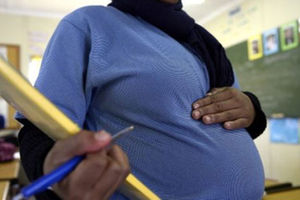
Nasimiyu* was 16 years old when she walked into Bungoma District Hospital on August 31, 2025, carrying a pregnancy she did not choose.
She had been defiled the year before by a 32-year-old man who threatened her into silence. Weeks after the assault, she discovered she was pregnant. The man was arrested and charged at the Bungoma Law Courts. Nasimiyu was left to navigate a pregnancy, a health system, and a country that had no clear place for her.
Her antenatal journey was stop-start from the beginning. Without a national identification card, she could not register for the Social Health Authority (SHA) cover. Each clinic visit cost Sh200 in service fees, plus Sh100 for transport.
“On the days when my mother had nothing, I would skip the routine clinics until a time when she had enough money to fund my Sh100 fare and the Sh200 service fee,” she says.
She managed just three of the eight recommended antenatal visits advised by the World Health Organization.
When her baby turned out to be in the breech position, a caesarean section was the only option. She delivered safely. Her daughter was healthy. For one moment, the system had worked.
Then came the bill.
After a month of post-operative monitoring, Nasimiyu and her mother were presented with a Sh106,000 demand, payable in cash. The hospital’s position was simple: upon conception, the 16-year-old had ceased to be a beneficiary of her mother’s SHA cover.
“One of the hospital staff would later explain to us that I had an option of using the health cover of my baby’s father, but that was impossible due to the circumstances behind my conception,” Nasimiyu says.
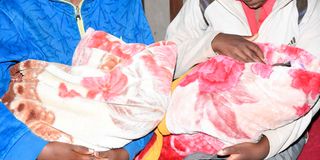
Her family spent an extra week at the facility, scraping together money from relatives and friends. Other mothers walked out with their newborns. Nasimiyu watched them go.
“Watching other mothers walk out of the facility with their newborns while I stayed behind unsure of when I would also leave was traumatic. I would never want to go through this experience again,” she says.
But Nasimiyu’s story is not an exception. It is a pattern, playing out in hospitals across the country, inside a system that launched a programme to fix exactly this problem, yet has not made it work.
At Jaramogi Oginga Odinga Teaching and Referral Hospital (JOOTRH) in Kisumu, a maternity nurse says young mothers have been stuck in wards for up to six weeks as their families hunt for cash.
“The girls are required to pay in cash before being discharged since the national medical cover does not recognise them. Since a number of these teenage mothers come from vulnerable households, they end up being stuck in the wards,” the nurse says, adding that at least 10 girls have been detained at the facility.
The reason is specific. More than three months ago, JOOTRH received communication from SHA to stop using temporary identification numbers for teenage mothers. The facility has been demanding cash.
Those who cannot pay face a credit arrangement: settling part of the fees and promising to pay the rest when they are able. Those from the most vulnerable families are referred to the social work department for an economic assessment and a possible waiver.
“The same also applies to the teen mothers whenever they bring their children to the hospital when they fall sick. They pay out of pocket,” the nurse says.
Hole in heart
Nancy*, 17, learned this the hard way. She rushed her baby to Kombewa Health Facility in February this year after a series of convulsions. After three weeks, the baby was referred to JOOTRH for specialised treatment. The diagnosis was a hole in the heart.
When discharge day came in mid-March, the bill stood at Sh68,000.
“Since my daughter is not yet 18 years old, she was yet to register for SHA. The facility made it clear that the amount had to be paid in cash,” says Nancy’s mother.
Negotiations failed. The family could not raise the money. Faced with no options, Nancy’s mother made a decision that still haunts her: she left.
“My family can barely afford a single healthy meal, let alone raise thousands of shillings to settle my baby’s hospital bills,” says Nancy, fighting back tears.
She spent a month at the facility. Eventually, a well-wisher settled a reduced bill of Sh10,000.
“Whatever I went through at the facility is an experience I would never wish for any other girl. It felt like I was in prison,” she says.
Nancy was defiled at 15. Her mother had left the family to escape domestic violence, and Nancy had taken over raising her younger siblings. A man old enough to be her father took advantage.
“My mother reunited with my father a year later, but it was already late. By that time, I was heavily pregnant,” she says.
She is now waiting to turn 18 so she can get an ID and formally register for SHA. Until then, every hospital visit for her daughter is paid in cash.
Mercy Mwende’s bill was Sh300,000.
The 17-year-old underwent an emergency caesarean section after doctors determined she could not deliver vaginally.
Her baby was born prematurely and immediately transferred to the Neonatal Intensive Care Unit. Five days later, Mercy was rushed back to theatre with internal bleeding.
She spent a month at JOOTRH recovering. By the time she was ready to go home, the bill had accumulated to Sh300,000. Mercy had tried to register using a temporary ID, but the facility said that option was no longer available.
“I only got out of the facility after the bill was waived to Sh100,000,” she says. Two months detained. Two surgeries. A premature baby fighting for survival. And a system that could not find a way to cover her.
A programme that exists on paper
Last year, the government acknowledged the problem and launched a fix.
SHA introduced a health coverage programme specifically designed for teenage mothers, allowing girls aged 13 to 19 to register and receive special identification numbers that would enable them to access maternal care without using their parents’ cover.
Health Cabinet Secretary Aden Duale said at the launch that the policy would ensure teenage mothers could access medical care. It sounded like the answer.
But on the ground, it is not working. Temporary identification numbers, the mechanism through which the programme operates, have been suspended at multiple facilities across Nyanza, Western, Coast, and Rift Valley regions. At Kisumu County Referral Hospital, a maternity nurse says young mothers have been unable to use them since November last year.
“We always inquire if the girl’s parents can pay in cash. Those from vulnerable backgrounds are, however, granted waivers,” she says.
She adds a detail that reveals the scale of the problem: “There are days when we get to discharge tens of teenagers through waivers, and the impact is that at the end of the day, the facility’s income generation does not match its service delivery.”
The nurse describes an unofficial arrangement that has quietly taken hold across multiple counties: using the teenager’s parents’ or caregivers’ SHA cover to clear hospital bills. The Ministry of Health has banned this practice, but facilities say they have been left with no choice but to continue.
“We understand that is fraud, but in desperate situations, we are forced to do it,” says a maternity nurse from the Coast region.
At Kisii Teaching and Referral Hospital, Chief Executive Dr Mariita Oimeke says the facility has continued to use temporary IDs. But when the SHA system goes down, they cannot discharge the young mothers. “On such occasions, we take them back to the wards until the system hitches are sorted out. Those able to pay in cash are also granted an option to do the same,” he says.
The numbers behind the system failure are stark.
The Kenya Demographic Health Survey found that 15 per cent of women aged 15 to 19 have ever been pregnant. The counties leading in teenage pregnancies include Samburu at 50 per cent, West Pokot at 36 per cent, Marsabit at 29 per cent, and Narok at 28 per cent. The Ministry of Health’s latest data shows that 92 newborns and 15 mothers die every day from preventable childbirth complications. That is 33,580 newborn deaths and 5,475 maternal deaths per year.
Teen pregnancies are high-risk pregnancies. Dr Richard Mogeni, a maternal health expert at Moi Teaching and Referral Hospital, says the consequences of excluding these girls from the health system ripple far beyond the ward.
“If the status of SHA continues, any teen who delivers in public health facilities is likely to face serious challenges,” he says, warning that the situation will result in unskilled deliveries, defaulted antenatal visits, and a spike in unsafe abortions.
“Previously, we had Linda Mama, which would allow girls to deliver at public facilities. What we did was to send data to the government for payment,” he says, describing a system that worked before SHA replaced it.
Dr Elizabeth Kuta, a paediatric expert at Aga Khan Hospital Kisumu, adds another dimension: when a mother is detained, her newborn stays too.
“The newborns are likely to be exposed to pneumonia, meningitis, candida, among other infections, which may turn fatal due to their low immunity,” she warns.
A maternity nurse from Western Kenya says the profession is watching the trajectory with dread.
“Our biggest fear is that the practice is likely to impact maternal and child health outcomes, derailing the strides we have made as a country,” she says.
“We have been seeing cases of women showing up for their first ANC visits at eight months. Others show up seeking delivery services, claiming they are unable to pay the six-month upfront money in order to utilise the medical cover,” she adds..
SHA Chief Executive Mercy Mwangangi says the temporary ID programme is still operational.
She says 63,264 teenage mothers have successfully registered and accessed delivery services across all 47 counties since the programme launched in 2025. She adds that 86.7 per cent of services have been delivered in government facilities.
“The SHA continues to work with the Ministry of Health, counties, facilities, and community health structures to improve awareness, registration, and uptake among eligible teenage mothers,” Dr Mwangangi says.
During a recent visit to Kisumu, PS Ouma Oluga said the government has allocated Sh1 billion to cover teenage mothers under SHA.
“We have money to pay for SHA. Registration should be done in public health facilities anywhere across the country,” he said.
“Any teen mother yet to clock 18 years who conceived between 2024 and now should visit a health facility and register to access maternity services,” he added.
The gap between what the government says is available and what nurses, doctors, and detained teenagers say is happening in the wards is vast. The system says it is working.
The girls say they are still waiting to be let out.
Nasimiyu is home now, her daughter healthy. She does not talk about what happened at the hospital often. She is trying to move forward. But she says one thing clearly:
“Watching other mothers walk out of the facility with their newborns while I stayed behind unsure of when I would also leave was traumatic. I would never want to go through the experience again.”
Somewhere tonight, in a ward in Kisumu or Bungoma or Mombasa, another girl is watching other mothers leave.
Names marked with an asterisk have been changed to protect identities.