From bleeding nipples to workplace pressure: Why many mothers abandon exclusive breastfeeding

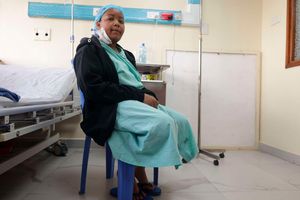
From left: Minzilet Ijai, a mother of two. She found herself confronting a reality shaped by work, low milk supply, exhaustion, and lingering guilt. Petronila Ogalo, a mother of two. Her struggle was never about producing milk but about enduring the pain that came with breastfeeding. Betty Luke. Her biggest fear was that her baby might not survive. At three months, she decided to introduce supplementary food

What you need to know:
- “You start to feel like you’re not doing enough as a mother.” For Minzilet Ijai, Petronila Ogalo, Betty Luke, and Julie Chesong, the journey of breastfeeding was anything but the natural, beautiful experience they had imagined.
"You start to feel like you’re not doing enough as a mother.” This feeling stayed long after Minzilet Ijai stopped breastfeeding her son two months after birth.
Like many mothers, Ijai, a mother of two, had imagined that breastfeeding would follow the advice printed in health booklets and repeated in clinics: exclusive breastfeeding for six months, followed by complementary feeding for up to two years or more.
Instead, she found herself facing a reality shaped by work, low milk supply, exhaustion, and guilt that still haunts her.
“And remember, I still had the rest of my family depending on me,” says Ijai.
This struggle reveals the often unspoken side of one of the most celebrated milestones of motherhood.
Breastfeeding is widely promoted as the best start in life, but many women discover that making it work can be physically painful, emotionally draining, and practically impossible without support, particularly for working mothers.
For Ijai, the difference between her two children remains outstanding. When her first child, a daughter, was born, she was able to stay at home for a year, which was long enough to exclusively breastfeed her for six months before introducing complementary foods. However, her second child arrived under different circumstances.

Bernadette Samura, an experienced midwife and lactation consultant. She says that none of these breastfeeding challenges are unusual.
Ijai says that she naturally produces little breast milk, a problem that worsens once her three-month maternity leave ends.
“Returning to work meant trying to express milk between shifts: waking at 5am, pumping mid-morning and again at lunchtime, then rushing home to be with my baby,” she says.
The routine rarely worked.
“Your mind is not settled. And most of the time, you’re told that to produce milk, your mind has to be settled.”
Within two months, the milk she expressed was no longer enough. Her son was still hungry after every feed, forcing her to introduce formula milk earlier than planned. A month later, she stopped breastfeeding altogether. What followed for her was an overwhelming sense of failure.
“You start to feel like you’re not doing enough as a mum,” she says. “You’re supposed to breastfeed for six months, and there are all these myths surrounding formula.”
Even now, her son is 19 months old, but she sometimes compares him with his older sister who breastfed for more than a year.
“I tell myself, ‘At least your sister breastfed for a whole year. You didn’t get the attention you needed as she did.’”
Before deciding to stop, Ijai says she tried almost everything to boost her milk supply. She experimented with herbal remedies and consulted a lactation specialist, who advised her to keep expressing milk regularly. But after spending nearly two hours pumping only 100 millilitres, she realised the effort was unsustainable.
“I gave up,” she says. “I still had the rest of my family depending on me. I told myself I had I done my best.”
Formula feeding came with its own challenges. At one point, she was buying about six tins a month, each costing around Sh1,600. The turning point came after the family moved from Tanzania to Nairobi. With her husband’s support, she chose to take it easy on herself. “The child is okay, I am okay, and my career hasn’t been ruined because of motherhood,” she says.
Her two younger sisters, who cared for the baby while she was at work, were a great source of reassurance. “Go to work,” they kept telling her. “We’ll take care of the baby. Don’t worry.”
Her son has since met most of his developmental milestones. He began walking last November, though her only remaining concern is his speech. Doctors have advised her to keep monitoring his progress, but she still sometimes wonders if stopping breastfeeding early may have disadvantaged him.
“Sometimes I wish I had done better,” she says. “Maybe it’s because I didn’t feed him properly.”
For Petronila Ogalo, the experience was very different. Her struggle was not about producing milk, but enduring the pain that came with breastfeeding. The first two days after giving birth were uneventful. On the third day, however, breastfeeding became agonising. She remembers the woman she was sharing a hospital room with laughing gently when she asked why it hurt so much.
“This is only the beginning,” the woman told her. “You have to endure it because the baby needs to feed.”
Within a week, her nipples had cracked and the skin had begun to peel. Seeking reassurance, she turned to her mother, who told her the pain was common and would ease eventually.
A ritual
To cope, Petronila developed a ritual. “I would squeeze my thighs, bite my teeth and close my eyes for a few seconds until the pain subsided.”
It took almost a month before feeding became manageable. Encouraged by other mothers, she persevered and breastfed her son for two years and two months.
When her second child was born, she knew what to expect. Although the soreness returned, this time she was mentally prepared. Later, another challenge emerged when the baby began teething and biting during feeds.
Formula never seemed like a realistic option for Petronila. “I couldn’t afford to feed the child on formula,” she says. “Breast milk was the only food my baby had.”
Yet there were moments when she wanted to stop altogether. She remembers dreading every feeding session, when cracked skin caused milk to leak through her clothes.
“This is not the experience I wanted,” she recalls thinking.
One day, she delayed breastfeeding for hours because she was afraid of the pain. When a friend arrived and found the baby crying, she scolded her for avoiding the feed.
Petronila says the incident taught her something many mothers eventually discover: “There are things you’re never told until you experience them.
She grew up without younger siblings or babies around, so everything she learned came through experience. What she valued most, however, was the practical guidance she received after giving birth, how to position the baby correctly, avoid straining her back, and recognise signs of poor attachment.
Unlike Ijai and Petronila, Betty Luke’s ordeal had little to do with milk supply and everything to do with being blamed before anyone checked if that was even the problem.
Discharged on a Monday, she was back at the hospital before dawn on Wednesday because her new-born would not settle.
“She was crying non-stop. She wasn’t breastfeeding; she wasn’t doing anything,” Betty recalls.
Staff turned them away because there were no beds and referred her elsewhere. At the first clinic visit, the nurse discovered that instead of gaining weight, the baby had lost it. What followed was blame rather than help. “They said I wasn’t bonding with the baby, that I hadn’t been feeding her properly,” she says. “Nobody sat down to check if I had enough milk.”
With no experienced relatives nearby, she searched online for answers and tried remedies such as bone soup.
The lowest point came when a neighbour’s baby, just two days older than her daughter, came to visit.
“Our children were almost the same age, but my daughter looked nearly half her size,” says Betty. It really discouraged me. I became bitter. At one point, I even felt she might not survive.”
When her daughter was about three months old, she introduced formula. The baby began gaining weight so noticeably that a nurse who saw her afterwards did not recognise her. But the improvement brought fresh judgement: at her next visit, a nurse accused her of arrogance and neglecting her daughter in favour of work.
To avoid facing the same staff twice, Betty began switching clinics. She introduced solid food at six months. Although her daughter experienced delayed walking, recurrent infections and a low blood count, she is now nearly five and in school. Asked if she still feels guilty about stopping exclusive breastfeeding early, Betty’s answer is simple: no.
First attempt
For Julie Chesong, the challenge began with a physical difficulty she had not expected. After giving birth, her nipples did not draw out enough for her baby to latch properly, no matter how she positioned him. Feeding was a struggle from the very first attempt.
At 19, Julie was a young mother in the village, with little information about breastfeeding challenges and no access to specialised support. She spent the first days trying to make it work, but her baby continued to struggle.
By the eighth day, she stopped breastfeeding altogether. Formula was not an option. She was unemployed and had limited resources, so she could not afford it. Instead, she relied on what she had, mixing maize flour with water, sieving it until soft, and preparing a porridge like feed for her baby.
“I did not know any better at the time,” she says. “I was young, I was in the village, and I had no one to guide me.”
It was at a clinic in the village that she later learned what had made feeding so difficult: inverted nipples, a condition she had never heard of before giving birth.
However, she says she was given little practical help in dealing with it.
“I had just become a mother, and everything was new to me. I did what I thought was best with what I had at that time,” she says.
The experience shaped her early years of motherhood, as she learned to care for her child with little information or support. Her child is now seven, and Julie says she is not planning another baby soon.
“I know more now than I did then. If I ever have another child in future, I would want to be more prepared and seek help earlier,” she says.
Bernadette Samura, an experienced midwife and lactation consultant, says that none of these stories is unusual. She has spent years supporting mothers through hospital care and community home visits, and she says that many women expect breastfeeding to happen naturally, only to discover that it requires skill, patience, and support.
“People think breastfeeding just happens,” she says. “In reality, it’s something mothers have to learn.” It is, she says, closer to being handed a newborn and told to swim:
“You have never been there, and you somehow have to... It’s almost like being thrown in the water and told, now swim.”
Poor latching remains the most common issue she encounters. When a baby latches only onto the nipple instead of taking in enough of the areola, cracked nipples, pain and ineffective feeding often follow.
Posture is another overlooked problem. A mother may spend an hour in one position several times a day without being shown how to protect her neck, shoulders and back. Then there is milk production.
Samura explains that breastfeeding works on a simple principle of supply and demand: the more often a baby feeds and empties the breast, the more milk the body produces. Long separations between mother and baby, especially after returning to work, can interrupt this cycle and reduce supply.
“It becomes a big challenge for working mothers,” she says.
For sore or cracked nipples, she recommends basic emollients rather than anything elaborate; a cream costing about Sh30 or plain Vaseline, instead of pricier scented products that can put a baby off feeding. For babies struggling to latch onto inverted or unusually small nipples, she advises nipple shields. These silicone inserts mimic a normal nipple shape and use suction to draw an inverted nipple outward as the baby feeds. Not every mother needs them, she says, but they can help those who do.
She is particular about what breast milk does for a new-born’s gut, describing it as ‘almost like an antibiotic,’ and points to something as ordinary as a baby’s stool as one of the clearest signs that feeding is going well.
A mother returning to work, she says, should express and leave milk behind to prevent her baby becoming constipated in her absence, a detail she says few mothers are told.
She contrasts this with what she saw working overseas, where hospitals run milk banks that test, store and distribute surplus milk donated by mothers who produce more than their own babies’ need, infrastructure she says Kenya has yet to build.
She acknowledges that lactation support exists locally, but they are uneven. In busy public hospitals, she explains, a single ward might handle about 30 deliveries in six hours with only four or five staff on duty. This leaves little room for individual support beyond the basic checks a postnatal nurse must do before a mother is discharged, often within 24 to 48 hours.
Global problem
The exception, she says, is babies admitted to newborn intensive care, who receive round the clock lactation support, including an occupational therapist working specifically on the baby’s sucking reflex, because hospital weight gain targets demand it.
On the pain commonly reported by new mothers, Samura notes that it should never simply be endured.
“While some tenderness is normal, cracked nipples usually signal poor attachment, and fever, swelling and severe breast pain may indicate mastitis, an infection requiring antibiotics and professional help to clear rather than home remedies,” she says.
She adds that low milk supply is equally real, and calls it “a global problem.” Stress, dehydration, infrequent feeding and poor nutrition can all contribute, and she notes that reaching the fluid intake mothers are often told to aim for, around five litres a day, is a genuinely difficult target for most women to sustain.
She, therefore, advises feeding on demand, particularly through cluster feeding, the phase from around five weeks when babies feed almost hourly during a growth spurt, rather than restricting a baby who appears to want to feed constantly.
“Mothers experiencing supply problems should seek professional advice early since some cases can be helped with prescribed medication or diet, including lactation cookies and adequate fibre and protein, rather than self-diagnosing or giving up,” says Samura. Above all, the midwife believes that mothers deserve more compassion. “Be kind to yourselves and extend a bit of grace,” she says.
She notes that not every breastfeeding journey follows the guidelines, and that a mother’s experience is shaped by work, illness, family circumstances and even biology.
Samura explains that many women who stop breastfeeding earlier than they hoped are not choosing convenience, but responding to circumstances beyond their control.
Still, she believes that practical support could make a significant difference.
“Better workplace facilities for expressing and storing breast milk, stronger community follow-up after delivery and access to trained lactation consultants when problems arise,” she says.
“Even simple interventions, such as teaching mothers how to achieve a proper latch, recognising the early signs of mastitis or helping them to develop a feeding plan before they return to work, can prevent many of the challenges that leave women feeling discouraged.” She urges mothers struggling with sore nipples, low milk supply, or the emotional weight of not meeting their own expectations to seek help early and to remember that breastfeeding does not have to be an all-or-nothing journey. What matters most, she says, is that both mother and baby are healthy.