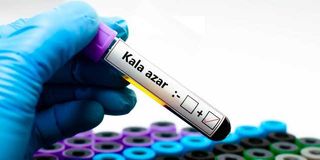
Kemri will conduct the ground-breaking trial at the Chemolingot Kala-azar Centre in Tiaty Central.

Baringo County is set to host the world’s first Kala-azar vaccine trial in a major scientific milestone that could transform the fight against one of the world’s most neglected tropical diseases.
The Kenya Medical Research Institute (Kemri) will conduct the groundbreaking trial at the Chemolingot Kala-azar Centre in Tiaty Central, an area that records some of the highest numbers of infections in Kenya.
The study is expected to place Kenya at the centre of global efforts to combat visceral leishmaniasis, commonly known as Kala-azar, a potentially fatal parasitic disease that remains endemic in parts of Baringo and neighbouring counties.
Disease burden
Speaking during a courtesy call on Baringo Governor Benjamin Cheboi on Tuesday, Kemri Chief Executive Officer Elijah Songok said the county had been selected because of its high disease burden and the need for long-term prevention measures.
“A vaccine is the ultimate solution for controlling Kala-azar, and this programme will ensure that communities in affected areas receive protection against the disease,” said Prof Songok.
Residents from affected communities will participate in the trial, while the Chemolingot facility will be upgraded into a research hub to strengthen disease surveillance, advance scientific knowledge and develop evidence-based interventions.
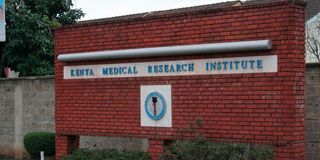
Kemri head office in Nairobi.
Kemri is also planning to establish a clinic in Marigat to improve healthcare services and support residents affected by various diseases.
Beyond Kala-azar, Kemri and the Baringo County Government are expanding collaboration to address other public health challenges, including hepatitis B and snakebites.
According to Prof Songok, Baringo is among Kenya’s hepatitis B hotspots, with prevalence rates exceeding the national average.
Community and hospital-based studies involving more than 3,000 participants found an overall hepatitis B prevalence of 6.3 per cent, while some areas recorded infection rates of more than 10 per cent.
Researchers identified the sharing of injectable and sharp objects, certain cultural practices and family-based transmission as major drivers of infection. Family transmission accounted for about 15 per cent of cases.
Prof Songok said one of the programme’s biggest achievements had been linking nearly 89 per cent of infected individuals to care and treatment.
He added that many patients had achieved sustained viral suppression, while others had cleared the infection following antiviral treatment and follow-up care.
“Research is helping us understand why Baringo continues to experience a high burden of hepatitis B and enabling us to develop targeted interventions that can prevent new infections, improve patient outcomes and ultimately save lives,” he said.
The Kemri chief also announced progress in developing Kenya’s first locally tailored, high-efficacy snake anti-venom.
He noted that Kenya currently depends on imported anti-venoms, many of which are less effective against local snake species because venom composition varies across regions.
To address the challenge, Kemri has established a venom collection and research programme focusing on medically important Kenyan snakes, including puff adders, black mambas and cobras.
The project aims to produce anti-venom specifically designed to neutralise toxins found in Kenyan snake species.
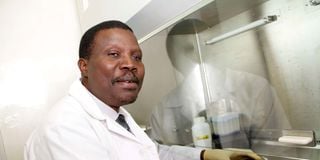
The Kenya Medical Research Institute Director-General Maritim Songok.
According to Prof Songok, the programme has already achieved key milestones, including the characterisation of venom toxicity profiles, development of snakebite diagnostic prototypes and production of targeted antibodies that have shown promising neutralisation capabilities.
“Local production of effective anti-venom will not only save lives but also strengthen Kenya’s health security, reduce treatment costs and build sustainable national manufacturing capacity,” he said.
Governor Cheboi welcomed the partnership, saying scientific research was critical in guiding healthcare planning and policy implementation.
“We have entered into discussions on how we can partner with Kemri to address medical challenges affecting our people, including hepatitis B in areas such as Kerio Valley, Mogotio and Marigat through vaccination, treatment and research,” he said.
The governor said the county would also work closely with Kemri in the management and eventual elimination of Kala-azar, particularly in Tiaty, where the disease continues to affect livelihoods.
He added that Kemri had agreed to support the upgrading of Marigat and Chemolingot hospitals, including laboratory improvements and installation of solar power systems.
Isaiah Matundura, a medic at the Chemolingot Kala-azar Centre, said men and boys remain the most affected because they frequently travel long distances in search of water and pasture, increasing exposure to sand fly bites.
He said poverty had also contributed to transmission, with many residents living in poorly constructed houses or sleeping outdoors, exposing them to sand flies that breed and rest in cracks, termite mounds and anthills.
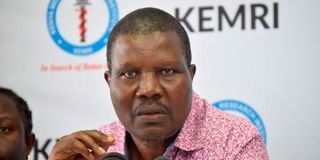
Kenya Medical Research Institute (Kemri) Ag. Director General Prof Elijah Songok during a press briefing at the Kemri Mtwapa offices on October 3, 2024.
Transmission periods
To strengthen disease control, the Baringo County Government, together with partners including Izumi Foundation and Probitas Foundation, established the Chemolingot Kala-azar Centre in 2019. The facility provides diagnostic reagents, medicines and specialised treatment services.
“Managing visceral leishmaniasis is extremely expensive. A patient requires 24 doses of medication, with each dose costing about Sh50,000. The total treatment cost can exceed Sh1 million,” said Mr Matundura.
Since opening, the centre has treated more than 200 patients, with about 98 per cent making a full recovery. During peak transmission periods, particularly in the dry season, it receives between 10 and 15 new cases every month.
Despite challenges, including late presentation of patients and shortages of blood for transfusions, Mr Matundura said the planned vaccine trial offers hope for reducing the disease burden in Baringo and other endemic regions.
Follow our WhatsApp channel for breaking news updates and more stories like this.