Kemri: medicinal plant shows promise against cervical cancer
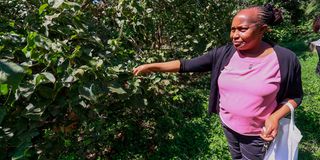
Dr Peris Kariuki, a research scientist at the National Museums of Kenya, shows cancer palliative care plants in Nairobi on January 15, 2026.

What you need to know:
- The plant, locally referred to as mubuu, is commonly used by the Mbeere community in Embu County.
- Apart from cancer, mubuu has been used in traditional medicine to manage dysentery, cholera, wounds and sores.
Scientists at the Kenya Medical Research Institute (Kemri) have confirmed potential anti-cancer properties in a plant traditionally used to manage breast and prostate cancer.
In the findings published in the journal PLOS One, the researchers say the study fills a critical gap and marks the first phase before progressing to animal studies and human clinical trials later.
The plant, scientifically known as Grewia villosa and locally referred to as mubuu, is commonly used by the Mbeere community in Embu County.
Apart from cancer, mubuu has been used in traditional medicine to manage dysentery, cholera, wounds and sores.
According to the study, extracts from the plant inhibit the growth of cervical cancer cells while sparing non-cancerous cells – an indication of selectivity that is desirable in drug development.
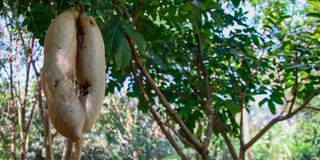
A Kigelia africana plant on display at the Cancer Palliative Care Plants garden at the National Museums of Kenya, Nairobi, on January 15, 2026.
Dr Sospeter Njeru, the principal investigator of the study, told the Daily Nation that the selective activity against cervical cancer cells, combined with the lack of toxicity to normal cells, is an attribute in drug discovery.
“It also works by blocking the migration of cancerous cells, which points to anti-metastatic properties – the potential to stop the spread of the illness to other parts of the body,” he said.
The research team worked closely with members of the local community to source the plant.
The root bark was carefully harvested, packaged and taken to the Centre for Traditional Medicine and Drug Research at Kemri for processing and analysis.
Lab work identified nine compounds in the extract, six of which were found to be partly or wholly associated with anti-cancer activity.
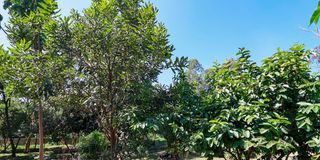
A view of the Cancer Palliative Care Plants garden at the National Museums of Kenya, Nairobi, on January 15, 2026.
To test the compounds, the scientists used a human cervical cancer cell line known as HeLa, alongside non-cancerous cells derived from the renal tissue of the African green monkey.
The tests also assessed safety, with findings indicating no predicted toxicity to normal cells. The initial validation phase took about a year.
"This is the discovery phase. We are not saying we have developed a product that Kenyans can start using. What we have discovered is that we have been sitting on a resource that can be harnessed for drug discovery,” Dr Njeru cautioned.
With additional funding, the scientists plan to isolate specific compounds that demonstrate drug-like properties, upscale production through Kemri’s manufacturing department or partner with pharmaceutical companies.
More functional studies – particularly in animal models – will be required.
If similar results are observed, the research would then progress to human clinical trials.
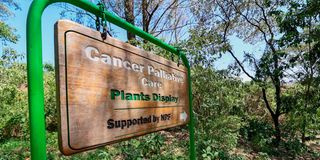
The Cancer Palliative Care Plants garden signage at the National Museums of Kenya, Nairobi, on January 15, 2026.
Potential anti-cancer properties
“After the next phase, we will be able to tell Kenyans if we have developed a local solution derived from our biodiversity,” Dr Njeru said.
“This kind of work encourages me as a Kenyan as it reminds us that even as we seek solutions from elsewhere, we have immense potential in our god-given biodiversity.”
Dr Peris Kariuki, a research scientist with the Cancer Palliative Care Garden at the National Museums of Kenya (NMK), said her work focuses on documenting indigenous knowledge and linking it to research.
Dr Kariuki added that ethnobotany studies how different cultures use indigenous plants, serving as a foundational step in drug discovery.
“Our role is to document plants that communities use as traditional medicine and preserve that knowledge as part of our cultural heritage,” she said.
Dr Peris Kariuki, a research scientist at the National Museums of Kenya, shows cancer palliative care plants in Nairobi on January 15, 2026.
The National Research Fund supported a collaborative project titled “Assessing Indigenous Cancer Palliative Care Approaches for Improved Quality of Life and Enhancing Conservation of Medicinal Plants” from 2018 to 2024.
One outcome of the project was the establishment of the Cancer Palliative Care Plants Display Garden at the NMK headquarters in Nairobi.
The garden now has more than 70 medicinal plant species, forty of which were planted during the project period following research conducted in diverse ecological regions across Kenya.
“We have completed the first phase – identifying and documenting the plants. Other scientists now have a reference point to access these species for further research towards drug discovery and development,” Dr Kariuki said.
During the project, several prioritised plants reportedly used for palliative care were analysed, with results showing potential anti-cancer properties.
Dr Kariuki, however, said medicinal plants face threats – including land-use change, over-harvesting and illegal trade.
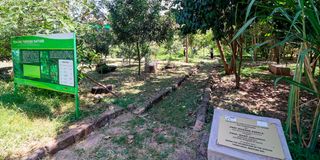
A view of the Cancer Palliative Care Plants garden at the National Museums of Kenya, Nairobi, on January 15, 2026.
She stressed the need for training traditional health practitioners involved in cultivating, processing and administering herbal medicine.
“There must be efforts by stakeholders to develop and preserve traditional medicine for current and future generations,” she said.
Mr Gabriel Mburia, a herbalist, said he has long used extracts from Grewia villosa to manage prostate and breast cancer.
“I learnt this from my grandfather. I used to accompany him to the forest to extract the roots. I now have the knowledge, and have received many testimonials from people I have treated,” he said.
On the sidelines of the Second WHO Global Summit on Traditional Medicine, Health CS Aden Duale said the ministry plans to integrate traditional medicine into conventional healthcare by 2028.