Kenya picked to lead Africa's plastic waste revolution
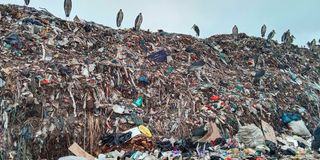
Scavengers at Dandora dumpsite.

What you need to know:
- The country generates approximately 983,000 tonnes of plastic waste annually but only 27 per cent of the waste is collected.
Kenya has received a boost in the fight against plastic waste pollution after it was selected among two African nations to launch a major initiative aimed at eliminating plastic pollution.
The move comes just after the Second Africa Climate Summit in Addis Ababa, where leaders called for inclusive climate solutions.
The Circulate Initiative, a global non-profit organisation, picked Kenya to implement a programme aimed at ensuring plastic waste supply chains support plastic recycling and advance the circular economy.
Dubbed “Responsible Sourcing Initiative (RSI)”, the organisation will partner with Nairobi-based recycler, Mr Green Africa, to implement the project with funding support from The Coca-Cola Foundation and IKEA Foundation.
The RSI aims to address the most pressing human rights issues in the plastics recycling value chain.
Globally, Kenya will be the fourth implementation market for RSI following similar projects in India, Indonesia and Vietnam. After Kenya, the programme will also be implemented in Ethiopia next year.
The project comes at a pivotal moment as the summit calls for inclusive, scalable, and justice-centered climate solutions that create green jobs and protect vulnerable communities.
By embedding responsible sourcing practices into the plastics recycling value chain, the initiative directly supports Africa’s transition to a circular, low-carbon economy.
According to the International Union for Conservation of Nature (IUCN), Kenya generates approximately 983,000 tonnes of plastic waste annually but only 27 per cent of the waste is collected.
Making matters worse, of the 27 per cent waste collected, only eight per cent is recycled, with the remainder disposed of in landfills or dumpsites.
“Our launch in Africa is a significant milestone for the Responsible Sourcing Initiative. As the first regional approach, it allows us to take learnings from our work to date to the broader ecosystem in Africa, across the continent.
“The Kenyan project is the first step towards scaling responsible sourcing practices across Africa aimed at protecting workers who are at the frontlines of the fight against plastic pollution,” said Annerieke Douma, senior director of Programmes at The Circulate Initiative.
Real impact
Carlos Pagoaga, president of The Coca-Cola Foundation added: “Informal waste workers are critical to our efforts to build a more sustainable future and help reduce packaging waste. We are proud to support the Responsible Sourcing Initiative, which demonstrates the power of collective action at scale that aims to create real impact and to ensure the people behind our recycling efforts are recognised and protected.”
As part of the project, select suppliers in the plastic value chain will also be involved in a programme to encourage responsible sourcing practices in the recycled plastics value chain.
The programme – harmonised responsible sourcing framework for recycled plastics – is designed to create a practical approach to improve responsible sourcing practices that can be adopted by all stakeholders.
Launched in 2024, the approach ensures plastic waste supply chains not only support recycled plastics and advance a circular economy, but also respect the rights of informal workers.
It is informed by the perspectives of informal waste sector workers and waste pickers and developed to focus on their needs with the aim of protecting the rights and livelihoods of informal waste sector workers and waste pickers in the value chain.
While there are no official estimates of the number of waste pickers, the Kenya National Waste Pickers Welfare Association reports 46,000 members.
These workers play a critical role in bridging the gap in waste collection services and supplying materials for recycling, and their efforts should be recognised at national and local levels.
However, Ms Douma said that some informal waste sector workers have reported instances of low pay, unsafe working conditions, and poor access to social and financial services.
She pointed out that the baseline assessment in Kenya highlighted the need for a systems-level approach to responsible sourcing, with waste pickers still facing routine discrimination and lacking formal recognition.
“Partnering with the Kenya National Waste Pickers Welfare Association and other groups will be key to harnessing their collective voice and ensuring all solutions are shaped by those on the ground and directly impacted,” she said.
Mr Green Africa Co-founder and chief executive officer Keiran Smith said their technology-driven plastics collection model is designed to integrate informal waste workers into a transparent, inclusive value chain.
“By joining the Responsible Sourcing Initiative, we can expand our network and increase the supply of responsibly sourced recycled plastic in Africa, whilst improving livelihoods and conditions for these workers,” he said.
Mr Green Africa is a Kenya-based recycling company whose model integrates the informal waste sector into its value chain to increase transparency and improve working conditions and income opportunities.
Ms Douma said learnings from the Kenya project will be used to facilitate knowledge exchange among organisations seeking to scale their responsible sourcing practices, known collectively as the Responsible Sourcing Network Africa (RSNA).
Led by The Circulate Initiative, the RSNA will convene brands, recycling companies, informal waste worker associations and subject matter experts across Kenya, Ethiopia, Egypt, Nigeria, Algeria, Djibouti, and Morocco, to provide training in implementing the Harmonised Framework and initiatives to support and inform inclusive policy making at national level.
Globally, the initiative aims to improve the livelihoods of 50,000 informal waste sector workers, secure the commitment of over 50 global brands, investors, recyclers, and aggregators to align with the Harmonised Framework and deliver 100,000 tonnes of responsibly sourced recycled plastic.