PrEP uptake collapses by 80pc as donor funding dries up
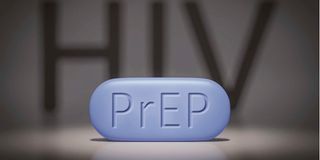
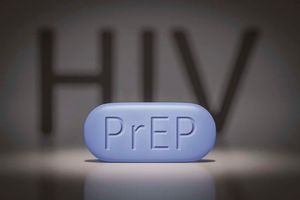
Pill for HIV prevention.

Kenya enrolled 170,551 people on oral Pre-Exposure Prophylaxis (PrEP) in 2022, the highest number the country has ever recorded in a single year. Three years later, that number has fallen to 35,704.
Data from the National Syndemic Diseases Control Council (NSDCC) shows the life-saving daily pill is losing momentum at a time when the country needs it most, with uptake now stalling at 39 per cent. That means the very demographic and geographic groups driving Kenya's epidemic are being left largely unprotected, even though the drug is free.
PrEP is a medication that, taken consistently, reduces the risk of acquiring HIV by up to 99 per cent. Kenya adopted it as part of its national HIV combination prevention strategy in 2016, a landmark decision that acknowledged prevention, not just treatment, had to be central to ending the epidemic.
According to the 2026 Kenya HIV Estimates Report by the NSDCC, Kenya records about 13,936 new HIV infections every year. Women bear a disproportionate burden, with HIV prevalence at 4.3 per cent among women compared to 2.1 per cent among men. Forty-one per cent of new adult infections occur among adolescents and young people aged 15 to 24, exactly the population the prevention pill was designed to protect.
Kenya approved the oral option in 2015 and has since approved four distinct options: oral TDF, the dapivirine vaginal ring, injectable Cabotegravir and injectable Lenacapavir. No other country in East Africa has built a more comprehensive prevention toolkit.
Even so, the country recorded zero oral PrEP initiations in 2016 and 2017. The programme grew slowly, reaching 45,600 cumulative initiations by the end of 2018, before accelerating through the early 2020s as donor funding expanded, community health workers were trained, and peer outreach brought PrEP to populations that facility-based services had never reached.
By the end of 2021, cumulative initiations stood at 127,904. By the end of 2022, they had more than doubled to 298,455, driven by the 170,551 people who started PrEP that year alone. Cumulative oral PrEP initiations now stand at 580,228, according to the Global PrEP Tracker maintained by the Aids Vaccine Advocacy Coalition (Avac), which monitors prevention programme data across countries.
But new initiations then began falling steadily: 139,548 in 2023, 106,521 in 2024, and just 35,704 in 2025.
The decline tracks directly with the restructuring of USAid-funded HIV prevention programming in Kenya under the US Government's America First policy review, which terminated or suspended significant HIV prevention contracts and grants. In Kenya alone, USAid contracts and grants worth Sh108.34 billion were terminated, disrupting community health programmes, peer outreach networks and the support systems that keep people on PrEP once they start.
When funding for those support structures disappears, the pipeline of new initiations dries up, and people already enrolled begin dropping off without the follow-up that retention requires. Every person who should have started in 2025 and did not is a potential new infection, the clearest possible warning of what donor dependency costs when a single government changes its priorities.
High-risk populations
The numbers alone do not capture who PrEP is, and is not, reaching. A study conducted between December 2021 and March 2023 among high-risk populations in Homa Bay and Kericho enrolled 384 participants, all eligible for PrEP under national guidelines. Yet only 68 per cent had even heard of it, 17 per cent had ever taken it, and just five per cent were currently using it.
Among those aware of PrEP but who had never used it, the barriers were consistent: 51 per cent were concerned about side effects from taking a daily medication, and 36 per cent worried about cost. Only 33 per cent did not see themselves as at risk of HIV at all, a figure that should give public health officials pause, given that one in three eligible people in communities with some of the highest HIV prevalence in the country did not believe the intervention was relevant to their lives.
A separate study in western Kenya found that of 275 participants who had heard of PrEP, 74.9 per cent had never taken it. Of the 69 who had, 72.5 per cent had since stopped. Nearly one in three people in high-risk communities in the region had never heard of PrEP at all, an awareness gap that precedes every other barrier, since no one can take a drug they do not know exists.
Young people aged 15 to 19 were more likely than any other age group to report never having taken PrEP, meaning the youngest, most vulnerable and most at-risk are also the least protected.
Kenya has recently expanded its prevention toolkit in ways that could ease the stigma and adherence barriers that have limited oral PrEP. Injectable Cabotegravir, a two-monthly injection offering full HIV protection, was approved in 2024. Injectable Lenacapavir, a six-monthly jab requiring just two injections a year for complete protection, was approved in 2026 and began rolling out in February this year.
About 7,900 people have already received Lenacapavir, drawn from 15 counties in the first phase of the rollout. According to preliminary figures from National Aids and STI Control Programme (Nascop) and LVCT Health, Kenya records the highest uptake of Lenacapavir globally.
Chronic conditions
But the medical injection is currently available in only 15 of Kenya's 47 counties, and the broader rollout is being planned at precisely the moment the funding environment for HIV prevention has contracted sharply.
Dr Barbara Mambo, lead HIV prevention specialist at Nascop, says the stall is driven by a complex mix of human behaviour, shifting individual risk perception, and quiet structural shocks within the health workforce, unlike treatments for chronic conditions, where public health data often assumes a straight line from initiation to indefinite adherence.
"People abandon PrEP because they are not fully aware of their own risk profile," she explains. "PrEP is not given to everybody all the time; it is given to those who have an ongoing risk. As an individual, you have to be able to assess that risk, such as being aware of your partner's sexual status and whether they have other partners. If I am in a trusting marital relationship, I won't put myself on PrEP because I do not feel exposed. But the reality is that many people simply do not know what their true risk profile is."
"When donor funding fluctuates or freezes, it directly shocks the health workforce payroll within the counties. When Pepfar funding was withdrawn, we had commodities and test kits, but some counties were affected because they did not have staff to conduct PrEP testing and administration. Without a healthcare provider to test the patient, the free pill stays on the shelf, and uptake falls."
"We introduced long-acting PrEP earlier this year. Kenya is one of the first countries to have taken on this initiative. It is actually one of our lasting solutions for people dropping in and out of care or forgetting to take their medication," says Dr Mambo.
Follow our WhatsApp channel for breaking news updates and more stories like this.