When the net isn’t enough: Why malaria is creeping back despite high coverage

A woman seated in bednet. Funding gaps, behaviour patterns and weak systems expose limits of relying on mosquito nets alone.

What you need to know:
- Despite widespread mosquito net distribution, low usage and resistance threaten malaria control gains in endemic regions.
- Funding gaps, behaviour patterns and weak systems expose limits of relying on mosquito nets alone.
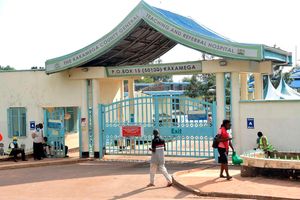
When Winnie Akoth walked to Makongeni Level Four Hospital in Homa Bay town on April 21, 2026, she was not looking for treatment. She was looking for a mosquito net.
Her six-month-old son had developed a fever the previous day, with rashes on his skin. Neither she nor the baby slept under a treated net, and she feared he had contracted malaria. The test came back negative. But Akoth left the hospital without a net.
It was not her first time asking. She had received one during her antenatal visit before she delivered in October, but lost it, washed and stolen from the clothesline. Her name was already in the hospital's records as someone who had been issued a net, so she did not qualify for another.
"I had a mosquito net which I got during my antenatal clinic at the facility, but I washed it and it was stolen from the clothesline," she says. "I am afraid I will contract malaria. Worst of all, my child may get the disease and it is dangerous for him."

A couple with a malaria-infected child.
She has thought of buying one, but the income she has covers only food and rent. At home in Shauri Yako, an informal settlement in Homa Bay Town, she covers herself with a blanket when it is cold. When it gets hot, she and her son sleep exposed.
A few streets away in the same settlement, Stella Atieno is seven months pregnant and due in July. Her condition leaves her unable to perform energy-draining tasks, so she spends much of her day immobile, conserving what little she has. She has a net. Setting it up is the problem. "I use a lot of energy when setting it up," she says. "I prefer sleeping without it."
Read: Beyond awareness: How community action and responsible self-care are changing fight against malaria
Kenya has, on paper, been winning the fight against malaria. In Homa Bay County alone, up to 841,000 insecticide-treated nets were set for distribution in 2023, reaching over 90 per cent of registered households. Malaria prevalence in the county dropped from 17 per cent in 2017 to 3.6 per cent, gains that took years of sustained effort to build.
But with cases now rising, USAid support withdrawn and only an estimated 60 per cent of the population sleeping under a net, those gains are under threat. But as Akoth and Atieno's situations show, getting nets out was never the hard part. What happens after is.
A gap the numbers confirm
According to the 2022 Kenya Demographic and Health Survey, only 50 per cent of Kenyan households have access to insecticide-treated nets. In the lake region, coverage is higher, Homa Bay stands at 74 per cent, Migori at 73 per cent, Siaya at 72 per cent and Kisumu at 62 per cent, but access does not mean use. The same survey found that only 43 per cent of people slept under a net the night it was conducted.
The 2020 Kenya Malaria Indicator Survey found that one in two households owned at least one net, yet only 42 per cent of children under five and 40 per cent of pregnant women had slept under a treated net the night before the survey.
Children under five are especially vulnerable to severe malaria because they have not yet developed acquired immunity. Pregnant women in malaria-endemic areas such as the Lake Victoria region are given Sulfadoxine-Pyrimethamine, commonly known by the brand name Fansidar, as a preventive measure, but the drug is not a substitute for a net.
At Makongeni Hospital, where Akoth came looking for help, officials say they have adequate net stock for women during delivery and antenatal visits. Health records at the facility show 90 positive malaria cases in January, 47 in February and 60 in March, covering both children and adults. Health records and information officer Vivian Adhiambo says the facility sees at least 50 patients a day.
"We attend to at least 50 patients every day who suffer from different ailments," she says. "Some of them have malaria and are always put on medication."
Free nets are issued to women during their first antenatal visit and at delivery, with records kept of every issuance. Special cases allow for a net within the first six months after delivery, for instance, if the delivery facility had a stock out at the time. For Akoth, who received her net at delivery and lost it afterwards, the system offers no second chance.
Malaria control coordinator Philip Mbom is direct about where the county stands on this. "Women get at least two nets during their pregnancy journey, during the first antenatal visit and during delivery," he says. "I do not expect them not to have nets."
For women who lose their nets, he adds, the only option is to wait for the next distribution cycle.
Why nets stay folded
Getting nets into people's hands is not the same as getting them over beds.
Prof Harrysone Atieli, project manager at the International Centre of Excellence for Malaria Research (Icemri) at Tom Mboya University, says the reasons people avoid nets are varied. Some believe mosquitoes only bite during the rainy season, or when they can be heard buzzing in a room, so they put nets away until it rains, not knowing that mosquitoes bite even in dry seasons.
Design matters too. Government nets are blue and square, and Atieli says some households simply do not like them and leave them unused. The government's formula, one net for every two people, works for a couple sharing a bed, but not for a household where children of different ages or genders need their own sleeping space.
"Children are the ones who are greatly affected," he says. "Some are left out, especially when a child was sharing a bed with parents when nets were distributed but now needs their own bed, and the government is yet to plan another distribution round."
In Homa Bay town, community health promoter Millicent Boyi leads a group that reaches out to expectant women, encouraging them to attend prenatal clinics and use their nets properly. Part of her work is basic instruction, how to unpack a new net, leave it under shade for 24 hours before use and anchor its four corners over the bed.
"Every expectant woman must be given a mosquito net when they visit the hospital," she says. "We also teach them how to set it up, it is an important part of using it."
Without that knowledge, Millicent knows, many nets stay folded. And even when nets are used consistently, Prof Atieli notes, they do not provide complete protection, mosquitoes can still bite when someone gets out of bed early in the morning or climbs in late at night, before the net is properly in place.
The right net for the right mosquito
Getting people to use nets is only part of the challenge. The other is whether the nets being distributed can still do what they are supposed to do.
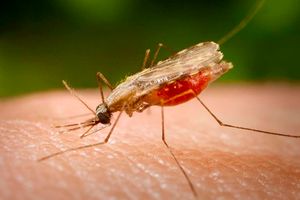
Mosquitoes in the region have been developing resistance to pyrethroids, the insecticides used to treat nets. Atieli traces the problem directly to farming. Chemicals used to control pests and diseases in crops drain into water bodies where mosquitoes breed, and larvae develop resistance before they reach adulthood.
"Most chemicals used in farming have pyrethroids," he says. "When they are drained or leached to water bodies where mosquitoes breed, larvae get exposed to the chemicals and develop resistance to insecticides by the time they reach adult stage."
This means a conventional net, even a new one, may do little more than act as a physical barrier in parts of the region. The 2023 distribution addressed this by providing PBO nets, advanced insecticide-treated nets that combine pyrethroid insecticide with the synergist piperonyl butoxide, designed specifically to work against resistant mosquitoes and offering better protection than conventional nets in high-resistance areas.
At Icemri, researchers study malaria epidemiology, transmission and pathogenesis across different settings, examining net effectiveness and the best combinations of interventions. But the effectiveness of even the most advanced net depends on something more basic, whether the insecticide in it is still active.
Washed out and wearing thin
Government-distributed nets can repel mosquitoes for up to three years, but only if they are cared for correctly. On washing, Mr Mbom says wash with water only, never soap. "We only encourage families to use water when washing nets," he says. "Let them avoid the use of soap."
Soap dilutes the insecticide, shortening the life of the net's protective chemicals. But many households do not know this, and there is currently no recommended insecticide that families can safely add at home to restore or boost a net's strength. Mbom says some additives may not be safe when used, and none are being recommended or distributed.
In the past, households were given a treatment kit called power tab, used during washing to help restore the insecticide. Those kits are no longer available, and no replacement has been put in place. Without re-treatment, many nets become ordinary barriers, capable of blocking a mosquito physically, but no longer killing or repelling it.
"Some nets are only barriers from mosquito bites," Prof Atieli says. "They do not have the power to repel insects the way they should when they still have insecticides."
Families with old, torn nets are being encouraged by community health promoters to repair them rather than discard them. Some households have found other uses for worn-out nets, covering kitchen gardens or using them for fishing. Mbom says that since there is no proper system for disposing of old nets, agricultural use has become common, though he cautions against fishing.
"I believe no one uses brand new nets to cover their vegetables," he says. "I would not recommend them for fishing, however, as the insecticides may harm fish."
Gains under threat
The 2023 distribution campaign, supported by the Global Fund, USAid/President's Malaria Initiative, Amref Kenya and the Kenya Medical Research Institute (Kemri), used digital registration to improve transparency and accuracy and reached over 90 per cent of registered households. The next mass distribution is expected later this year or in early 2027.
In the meantime, Mbom estimates that only about 60 per cent of Homa Bay's population is currently sleeping under a net, a gap he says is likely to worsen the disease burden. The withdrawal of USAid support has slowed down vector control, social behaviour change and surveillance programmes. But the Malaria control official says the county is not waiting. "New interventions are being drafted to ensure malaria is eliminated in the county," he says.
The county government has already partnered with Path to implement the US President's Malaria Initiative, which aims to accelerate malaria elimination through evidence-based strategies, digital tools and community-level interventions.
"Withdrawal of USAid support programmes is likely to affect gains made in the fight against malaria," Mbom says. "People are already disregarding practices meant to fight the disease. The challenge is compounded by lack of support for addressing the problem."
Researchers say nets alone were never enough. Prof Atieli and others are calling for integrated vector management, indoor residual spraying, habitat management, improved ventilation, and timely testing and treatment, as the more sustainable path. A net is one tool, not the whole answer.