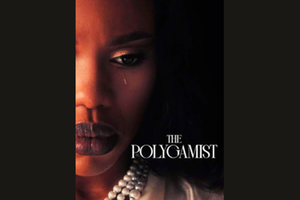
Zimbabwean writer Sue Nyathi is in Nairobi for her first ever visit to Kenya as the Netflix series The Polygamist , based on her 2012 book, continues to awe local fans.
She reveals that had she been faint-hearted, the story might have long been thrown to the dustbin. After enduring countless rejections, she turned to self-publishing, only to face disappointing sales, another reason many would have given up.
Now in her late 40s, she said the inspiration for The Polygamist was sown 25 years ago when she started working.
As a young woman in her 20s, Nyathi stepped out from traditional upbringing into the high-stakes corporate world of Zimbabwe’s capital.
“I started my first job in corporate finance,” she told NTV. “I was living in Harare, immersed in big business. In that world of power, I met a lot of men who were supposedly monogamous, but they were living polygamous lives.”
Zimbabwean author Sue Nyathi who is visiting Kenya. She is the author of ‘The Polygamist’, a novel published in 2012, which was adapted into a popular Netflix series of the same name.
Photo credit: File | Nation Media Group
“I was raised in a very conservative Catholic household: You grow up, you get married, live happily ever after.”
While polygamy was normal on her maternal side, it was traditionally transparent, unlike the corporate secrecy she was now witnessing.
“A lot of these women are married to men who have other wives, and they’re not even aware of them. For me it was like ‘that is a very intriguing story’. And imagine if the wife had to find out, what would that look like? So that’s how the seeds were planted for that story,” she said.
Nearly a decade, and having relocated to South Africa, Nyathi finally found the space to bring the narrative to life.
“You normally start it [the story] in your head, but even if it starts in my head, I don’t write it then,” Nyathi explains regarding her long creative timeline. “The inspiration for The Polygamist came way back in 2001, but I only wrote it in 2010. It was my first book to be published, not written,” she says.
With a completed manuscript in hand, Nyathi spent 2011 attempting to break into the traditional publishing industry with little luck.
“I spent 2011 looking for a publisher,” Nyathi says. “My editor at the time just got rejection after rejection from mainstream publishers. They felt there was no market for that book.”
The South African drama series 'The Polygamist' has gained huge popularity on Netflix.
Photo credit: Pool
Despite approaching roughly 10 different publishers who all passed on the project, Nyathi refused to internalise the rejections as a definitive statement on her writing talent.
In her opinion, reading is subjective and so publishers “can’t necessarily have the entire say on what is good and what is bad”.
Nyathi decided that she could no longer wait for the traditional publishing industry to validate her draft, choosing to take on the massive financial risk herself.
“I was almost 35 then, and I was thinking to myself, ‘Time is moving,’” Nyathi says of her urgency. “And I wanted to see if I really have it in me. And the only way to know is to have the book out in the world, and then people will tell you it’s a good or bad book.”
Self-publishing requires the author to foot the entire bill, and she remembers channelling her salary into the project.
“You take care of editorial, typesetting, layout, proofing, printing, distribution and marketing. It’s on you. So, I had to use my salary and borrow some money from a friend to get this book out there,” she recalls.
The South African drama series 'The Polygamist' is based on Zimbabwean writer Sue Nyathi's 2012 book.
Photo credit: Pool
“It didn’t fly off the shelves,” she admits. “I was relatively unknown.”
“I had just moved to South Africa two years earlier, and I was unknown in that market. And with self-publishing, you have to do a lot of the marketing, which I didn’t have the funds for,” she says.
At one point, she approached a bookshop to ask how many copies had been bought. The answer was “eight”. After printing 500 copies, she felt heartbroken.
“The pace was quite disheartening, and it continued like that for a long time, until 2016 when I was invited to my first literary festival,” says Nyathi.
As The Polygamist slowly built a dedicated following through word of mouth, film industry insiders began to notice its visual, fast-paced potential, leading to years of agonising near-misses.
“From as early as 2013, people always saw an adaptation,” Nyathi says. “I was first approached in 2013 by a South African actress, and she saw an adaptation then...but nothing actually came out of it. It never went into development, and it was shelved.”
“In 2015, a director approached me, and he wanted to do the adaptation. And we optioned the book again, and still nothing came out of it, and then it was shelved again,” she notes.
After four years of slow sales and self-promotion, Nyathi experienced a monumental shift in her writing career when she was invited to a literary gathering. It was called the “Time of the Writer”, and it was held in Durban.
“At that festival, I was put on a platform with NoViolet Bulawayo, who is another author from Zimbabwe,” she recalls.
“I was sharing a spotlight with an author who had made it. And so people are starting to look at this lady next to her: ‘Who is she? What’s her book about?’ And I think suddenly people gained interest and the book also started to pick up,” she says.
“So, I think, post 2016, we started to see an uptick in sales and had a new distributor and the book started to move and book clubs started to get hold of it and more invitations started to come. That would be the turning point for me.”
Energised by the late success of her debut book, and having signed a traditional contract with Pan Macmillan for her second book, The Gold Diggers , Nyathi chose to quit employment.
“That was 2018. I turned 40, and they say life begins at 40,” she says. “It wasn’t an easy decision because there’s something about having a paycheque and the comfort of earning a salary every month.”
However, she finally quit, and she notes that the move allowed her two separate worlds to finally merge into one authentic existence.
“I think I had two personas. I had the corporate world Sue, and then there was the author Sue. So I could just become the creative Sue,” she says of her transition.
Following a productive period of writing and international festival travel, a prominent production house approached Nyathi, marking the third attempt to bring her debut novel to the screen.
That was Stained Glass, who eventually produced the Netflix series.
Stung by previous false starts, her expectations were entirely measured: “I was like 50-50 because I’d walked down that road before. But I think this time it was third time lucky and so it worked”.
To convert the novel into a series, the production house involved 10 writers. Nyathi say she was a bit nervous that the script would distort the novel.
“There was that nervousness, but when I first read the scripts when they finally came out, my heart was at ease because I was reading it like the book,” she recalls. “When you read the book, it’s a page-turner. And I was also reading the script like that.”
The adaptation found its ultimate streaming home, while Nyathi simultaneously pushed her literary boundaries into historical fiction.
“In 2024, they managed to sell the idea to Netflix, who came on board. So that’s how the journey of that [series] happened,” she says.
That same year, she published “An Angel’s Demise”. She now has four books out.
In 2025, the filming of The Polygamist happened, and ended in August of that year.
After the filming, the post-production happened, and for some time she didn’t know when the final product would be out.
“It was only later in May when the trailer came out,” she recalls.
She got to watch the film before its release, and she says she was captivated.
“I watched it in two days; I binge-watched it,” Nyathi laughs. “And I remember watching it and thinking, ‘Did I even write that?’ Because after watching it, I went back and read the book again. And I was like, ‘Yeah, you did write that.’”
About her visit, she said: “It’s my first time in Kenya. It’s my first time in Nairobi. After all the banter on TikTok, I thought, ‘Let me come over and experience Kenyan hospitality.’”