Before the hits, the sold-out shows and the global recognition, there was reggae. Now, after years of musical detours, Benson Mutua, commonly known as Bensoul, is making a return flight to the sounds that first shaped him.
Titled Flight 420 , his latest album is a soulful journey through reggae, dancehall and Afrosoul, fuelled by three colours of the Rastafari flag: red for passion, yellow for joy and green for life. Having earned a Grammy as a songwriter on Burna Boy’s Twice as Tall , the Kenyan singer is now charting a different kind of journey – one that is less about chasing hits and more about finding himself.
He talks about musical homecomings, brotherhood, independence, love and the business of staying true to his sound.
Bensoul performs during the Umoja Splash Festival held on July 6, 2019 at Uhuru Gardens and headlined by Jamaican reggae artiste Jah Cure. PHOTO | FRANCIS NDERITU | NATION MEDIA GROUP
This is an album I have wanted to put out for years. When I started, I sang a lot of reggae and songs about Rastafari. Later, while chasing hits and bangers, I lost touch with my roots. So this album is me flying back to my roots. Every song is a destination to a beautiful story. The album is built on the Rasta colours. Red is passion, yellow is happiness, and green is life. There are sexy songs for passion. There are songs like “Tears of Joy” for happiness. There are songs like “Robin Hood” that speak about our situation in the country.
I want to take people back to my upbringing. I listened to a lot of reggae through my father and the radio, like Lucky Dube and Bob Marley. In high school, we went to many dancehall sessions. Now the album brings my past and my present together. It is someone looking back at where they have been and matching it all nicely.
The album blends Afrosoul, reggae and Caribbean sounds. What inspired this direction?
I feel everything happens in its own time. God needed to take me through different journeys so I could come back, remember what I really wanted to do and build from there. I have always wanted to make a reggae and dancehall album, and all my friends knew it. Some of those songs came out as singles, but never as a project. This time I decided, yeah, now they can have it. There are about five reggae songs on this one. One song has been waiting for seven years.
Right now, I think “Tears of Joy” is doing really well. It is the joy I am always chasing. “Nobody Wins, Nobody Loses”, with Rwandan singer Mike Kayihura, is about soulmates who fight but can never really win or lose, because they are destined for each other. “A Glass of Wine” is growing nicely too. It says that whatever time it is, you will always need a glass of wine to calm down. Then there is “Ghetto”, about where I come from. I was raised in the ghetto, and most of my ghetto friends have crossed over and become very respectable. I want to encourage ghetto youths to come up, cross over and come back to build the ghetto.
Bensoul during a past performance. There are talks he could be exiting Sauti Sol alongside Nviiri when their contract ends.
Photo credit: Bensoul of Sol Generation.
How did the collaboration with Spyro [ Nigerian singer and songwriter] com
Well, Spyro was in Kenya to perform, and that is how I got the chance to meet him in the studio. He is such a kind guy. I am super grateful he left me a verse. I already had a song ready for it, so his verse had a home waiting.
You also brought on board Savara [ Savara Mudigi , a former Sauti Sol band member and Coster Ojwang [ a Luo musician] on ‘Tears of Joy’. What was that experience like?
“ Tears of Joy” is (about) the joy I am always chasing. When you see me crying, do not be sad, because I am crying tears of joy. That song has made me cry out of happiness. That is the feeling we put into the song. The first moment I stepped into my car with it, I felt like a small boy getting a toy.
At the beginning of the year, I put my favourite producers and my favourite musicians in a camp. They came to help me shape the album. Big up Hendrick Sam, Wuod Omollo, and Jaz Beatz, who produced. Big up, Lisa and Jojo. Trevor Magak did the most with recording. Big up my team too.
Being in Sol Generation meant being on top of the table in the country. It was amazing to be an apprentice under my big brothers. I learned a lot about business, music management and the industry. I also got crazy connections. Most of the people I work with today believed in me back then, and I am super grateful to them. That is why I wanted to build a system that can help someone else get their wings, the same way they did for me.
It was understanding that funds run out super fast. So they need to be managed amazingly. Sound was never my struggle, because I have always explored new sounds. What we work on now is rollouts, rehearsals and learning new songs. We also stay in the studio, because staying in the studio brings more songs.
Bensoul on stage during the Maisha Magic Festival held at the KICC grounds on May 4, 2019.
Photo credit: File | Nation
You have since taken different paths from your former colleagues. How do you maintain those friendships outside the music business?
We have built a very symbiotic system. When I am writing or producing, I might call them, and they might call me for their projects. We have places where we meet. We share studios, and we go to parties and clubs owned by some of us. Savara right now is running Soul Social Nairobi, so I am always meeting the crew. That is also a major reason I started a community called Kodong Klan. I have not really lived life any differently. It is a productive competition. If my brother is working hard, I cannot sleep. I need to pull up my socks and get the team running too.
When I left, I had to understand which people I wanted to work with. Luckily, both my managers used to work with me at Sol Generation. So we just transitioned and moved together. Then we started the company, Sudah Nation.
You are also mentoring up-and-coming musicians at Swift Academy. What are some of the challenges young artistes come to you with?
It feels so nice to see that we are in proper good hands. There are many more forums and showcases now. We never had that many when our industry was growing up. But we still need more institutions that teach music business, performance and intellectual property, including the laws on sampling. Many young artists do not even understand how to read their contracts. I feel education is the one thing stopping the industry from growing crazy. They usually ask how I made it. The answer is always the same. I never stopped, and I began. Many of them had not even started posting. Starting is the biggest, biggest win. Then the biggest challenge is not giving up.
Away from music, how is your relationship with Cindy Kipsang shaping this chapter of your life?
Well, like any other human being, I go to work and come back to the relationship. We are in the industry, and we work together. That is life.
Your fashion and hairstyles have become part of your identity. How would you describe your personal style?
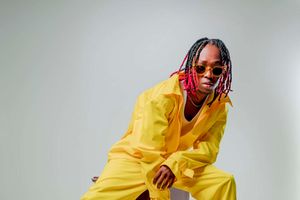
When you roll out an album, it has to be very visual to feel whole. The hairstyles for this album are crazy and futuristic because I need to look like a futuristic artiste. I run so many things at the same time. So many tabs are open in my mind, but I am a master of all those tabs. It is important for an artiste to create a big impact visually. Later, when someone sees it, they will say, "Ah, that reminds me of Sudah." Yes, it is an extension of my personality.
Kenyan artiste Bensoul during a live performance at KICC in Nairobi on March 30, 2025.
Photo credit: Bonface Bogita | Nation Media Group
Having experienced the industry from different angles, what is one thing about the music business you wish you had known earlier?
The hardest lesson, in the business and in life, is that when you are in trouble, no one will come to save you. So get up and write those songs. Get up and go shoot those music videos. Get up and go find that team. Wake up and hustle.
Finally, beyond Flight 420, what should fans expect from Bensoul next?
My next step is taking all this music international. I am also getting ready for the shows and the tour for this album. It is going to be amazing. I cannot wait to hear people singing these songs with me on stage, with my band.