1. What first pulled you towards dance?
My earliest memories are from when my older cousin used to take me to Parklands Baptist Church. I would attend youth sessions with her and watch people dance and practice every Saturday, then perform on Sunday. Being in that environment felt exciting. At home, there was always music playing on the radio or TV. When I first saw artistes like Chris Brown, I was amazed. Later, I started watching dance movies, and I became very interested in how people express themselves through movement. That is when I knew dance was something I wanted to explore.
2. You worked with a crew early on. How did that begin?
The main crew had three people. We started practicing casually, copying moves we saw on TV and creating our own routines. Slowly, we began performing wherever we could: in school events, small community spaces, and informal stages. Seeing people stop to watch us, clap for us, and react to our performances, gave us confidence and pushed us to take dance more seriously. At different stages, we moved on to pursue other paths. But those three were the foundation. That small group taught me teamwork, discipline, and belief in myself, even when we had very little.
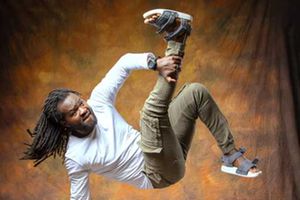
Kevin Githendu, 34, is a key creative force in Kenya’s dance and visual storytelling scene and has choreographed for artistes such as Sauti Sol, Bien, Xenia Manasseh, and Bensoul.
Photo credit: Pool
3. What was your first paid project like?
The first time I ever got paid for dancing was around 2006. It was an Equity Bank gig through a community initiative. It was just me and Bobo performing at a CDF office. We were paid about Sh2,000 each. I had never felt so fulfilled. That moment made me realise dance could actually reward me; not just emotionally but financially as well.
4. Was there a moment when you questioned pursuing dance professionally?
Yes, there was a time I thought my life might go in a completely different direction. I became interested in becoming a pilot after seeing that lifestyle up close. Because of that, I went to campus and studied IT (Information Technology), believing it would lead me there. Funny enough, while on campus, I joined a TV dance competition called “Sakata”. Competing on that platform reminded me where my heart truly was. After finishing campus and trying a nine-to-five internship, I realised that kind of life was not for me. Dance was not just something I did, it was who I was.
5. How did winning “Sakata” with The Band change your choreography journey?
Winning Sakata in 2014 was a major turning point. It was the first East African edition of the competition, and I won after competing three times. That experience taught me patience, resilience, and discipline. Back then, dance required real skill and originality. There were no trends to copy. Sometimes, we had to choreograph on the spot using unfamiliar music. That pressure sharpened my creativity and trained my mind. Those moments shaped the choreographer I am today.
6. How did your approach change after the victory?
We realised competitions could not last forever. We started creating dance concept videos and full music visuals. That is where my love for creative directing grew. I learnt how to carry emotion from the beginning of a song to the end using dance and storytelling.
7. What project do you consider your true breakthrough?
My biggest breakthrough was the Art in Motion show in 2019 at the Kenya National Theatre. This project was very important to me because it was my first major live production where I was fully in charge creatively. I led a team of dancers, auditioned performers, and built the show from scratch. For the first time, people were not just seeing me as a performer, but as a choreographer and creative director. The respect I received from fellow dancers meant everything to me because dancers understand the work, the pressure, and the craft. That show confirmed that I belonged in this space and that my ideas could stand on a big stage.
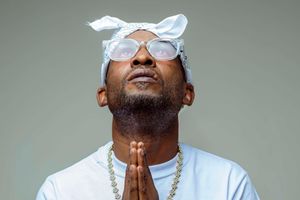
Kevin Githendu, 34, is a key creative force in Kenya’s dance and visual storytelling scene and has choreographed for artistes such as Sauti Sol, Bien, Xenia Manasseh, and Bensoul.
Photo credit: Pool
8. How has your choreography journey with Kenyan artistes been so far?
Over the years, I have worked alongside some of Kenya’s biggest artistes, including Sauti Sol, Bien, and Bensoul. Working with different artistes has pushed me to understand music deeply and adapt my style without losing my identity. Each artiste brings a different sound, emotion, and story, and my role is to translate that into movement that feels honest and powerful.
9. When choosing to work with an artiste, what do you look for?
The music comes first. I prefer approaching artistes myself, because it means I truly love the song. I believe a dancer must love music deeply. I hear and see music differently, and that is what I bring into my work. Even though imposter syndrome exists, I believe in my ability and my style.
10. How did your partnership with Xenia Manasseh begin?
We met through dance classes when she had just returned to Kenya. We started creating casually, just vibing to music. As her career grew, she began calling me for performances. Over time, it became a strong creative partnership. Whenever she needs to dance, she thinks of me first, and I am very grateful.
11. How do you adapt your choreography across different genres?
My style is very lyrical and emotional. I focus on the words and the feeling behind them. I treat music like a character and fully immerse myself in it, the same way an actor would.
12. What can you say about the business side of choreography in Kenya? Does it really pay?
When it comes to money, choreography and dance can be a tough industry. Not everyone appreciates craft the same way, and the work is very subjective. Personally, I am grateful for the journey I have had and I cannot complain. But I understand why many dancers struggle. I believe there is space for everyone. If you find your lane, stay consistent, and respect your craft. With patience and focus, the industry can pay, but it requires resilience and belief in yourself. I believe there is a client for everyone.
13. You mentioned working on a family passion project. What is that about?
My parents recently retired, and we started having conversations about what we could build together. They have resources and life experience, and I bring creativity and vision. We decided to combine our efforts and work on a passion project that focuses on sharing love and creating meaningful experiences for people. For us, it is not about chasing money. It is about creating something that brings joy, peace, and connection. If it grows into something bigger, that would be beautiful, but even if it stays small, it already means a lot to us as a family project built on passion.
14. Has fatherhood changed how you view dance and legacy?
I dance with my daughter, Kwanzaa, and we even have a page together. Dance is a way of building character. Teaching her teaches me patience, and I can already see how dance shapes her rhythm and creativity. It is a beautiful legacy to share.