French President Emmanuel Macron’s recent visit to Kenya produced the kind of images governments usually hope for: celebrated Kenyan figures sharing space with a global leader.
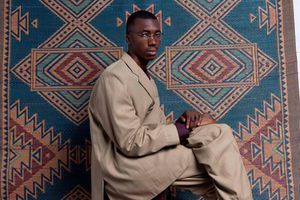
Musician Bien-Aimé Baraza, digital creator Dennis Ombachi and marathon legend Eliud Kipchoge were among the personalities who interacted with him. Moments traditionally viewed as recognition of excellence in arts, culture and sport received swift and deeply divided reactions online.
For many young Africans, particularly millennials and Gen Z audiences, who are increasingly engaged with conversations around colonialism and economic sovereignty, any association with France now carries political weight.
France’s historical and continuing relationships with parts of the African diaspora — from the long-criticised CFA franc system in West Africa to the “independence debt” imposed on Haiti — have fuelled widespread scepticism about its role on the continent. Across social media, critics questioned whether cultural partnerships with France can ever be separated from that broader history.
Beyond the politics, however, another reality is that for decades, French-backed cultural institutions have quietly helped shape Kenya’s creative ecosystem. For generations of Kenyan artists, performers and filmmakers, Alliance Française de Nairobi has been a launchpad. Long before they became household names, members of Sauti Sol performed there. Actors, musicians, dancers, spoken-word artists and filmmakers passed through its stages and training spaces while still trying to find their footing.
Today, the institution hosts more than 400 events annually, many free to the public, ranging from concerts and exhibitions to theatre productions, debates and book launches.
In 2021, with support from the French government, Alliance Française also upgraded cultural infrastructure in spaces including Sarakasi Trust in Nairobi, Swahili Pot in Mombasa, Utamaduni Centre in Lamu, Dunga Hill Camp in Kisumu and Nakuru Players Theatre.
Salim Busuru (fifth from the right), a Kenyan illustrator and co-founder of Avandu, is a leading figure in Kenya’s comics scene. He develops original African webtoons and cross-media adaptations that bridge comics, animation, and games.
Photo credit: Thomas Rajula | Nation
That investment has expanded in recent years through Création Africa, a programme launched in 2024 across 19 African countries, including Kenya, Uganda, Ethiopia, Ghana, Nigeria and South Africa. The initiative aims to strengthen Africa’s creative economy through funding, mentorship, incubation and international exposure, particularly in sectors such as animation, gaming, music, comics, immersive technologies and performing arts.
In Kenya alone, the programme commissioned 12 projects worth €1.2 million (about Sh181 million) in its first year, part of a wider €20 million (Sh3.01 billion) continental fund. According to Alliance Française cultural affairs director Harsita Waters, around 8,000 Kenyan creatives were impacted and 26 productions completed.
Under the Hii Stage Performance and Touring Grant, 11 projects received funding across theatre, stand-up comedy, spoken word, film and music. The works tackled deeply Kenyan themes: depression and suicide, descendants of Mau Mau fighters, political expression, Coast music traditions and East African storytelling.
For many recipients, however, the greatest value was not simply financial support, but validation.
For Sheldon Mutei, co-founder of the stop-motion collective InkSpace Bureau alongside Gift Kyansimere and Kinyeki Karani, the grant transformed what had long felt like an impossible dream into something tangible.
“We’d spent eight years fiddling with clay and surviving on little gigs here and there,” Sheldon says with a laugh. “Our first stop-motion short was honestly very ugly.”
Sheldon came from a fine art background, while Gift specialised in cinematography. Stop-motion became the collision point between sculpture, lighting and storytelling. Sheldon built the puppets while Gift handled cinematography and story development. For years, they created purely out of passion, unsure whether there was even a market for African stop-motion animation. Then came Big Sad Nairobi, supported through Création Africa.
“That changed our perspective completely,” Sheldon says. “We realised this wasn’t just something we loved. We could monetise it, travel with it, enter festivals and compete globally while still owning our intellectual property.”
The exposure opened doors they had never previously imagined. During a trip to Lagos for the Création Africa Forum, Sheldon visited the studio of Nigerian stop-motion animator Esther Kemi Gbadamosi. “It was like heaven for us,” he says. “Seeing somebody from Africa build that kind of studio, travel the world and make award-winning work makes the dream feel real.”
Now InkSpace Bureau hopes to produce an African stop-motion feature film and eventually establish a fully equipped studio capable of training future animators across Kenya and Nigeria.
“The biggest thing we realised,” Sheldon says, “is that our greatest asset is ambition.”
Since 2014, Nairobi Comic Convention, popularly known as NAICCON, has worked to build Kenya’s pop culture ecosystem through gaming, comics, animation, film and technology. Co-founder Ann Danu says the French Embassy has long collaborated with the organisation, but Création Africa felt unusually deliberate in its approach.
“The creative industry hasn’t traditionally received this kind of structured support,” she says. “For years, people still believed success only existed in white-collar professions because there weren’t enough examples in the creative space.”
NAICCON has spent years trying to change that narrative through conventions, game jams, masterclasses and esports tournaments that attract participants from across East and Central Africa. One of its flagship initiatives, She Creates, focused specifically on empowering women within digital art and creative technology spaces.
The organisation has also played a major role in the growth of cosplay culture in Kenya, while its annual Barasa Award, named after late co-founder Brian Barasa, recognises outstanding African comic creators.
“People need to know Africa has talent,” she says. “Not just international audiences, but Africans themselves. We have incredible animators, gamers and creators doing major work. The industry is huge if we pay attention to it.”
For animator Shadrack Munene, founder of JR Animation Studio, the programme forced creatives to think beyond artistry alone. Applying for the grant, he says, meant learning how to position animation not simply as entertainment but as intellectual property with long-term commercial and cultural value. His studio’s project, Boy Boi, initially existed only as a concept. The funding allowed the team to complete a pilot episode at an international production standard while also refining its production pipeline.
“We also received mentorship from French industry veterans,” he says. “That significantly elevated both the project and our studio.”
African video games ambassador and mentor, Brian ‘The Beast’ Diang’a.
Photo credit: Pool
Elsewhere, the programme has extended into esports, a sector still widely misunderstood in much of Africa despite its explosive global growth. Brian Diang’a, better known online as Thee Beast, is an esports athlete, streamer and tournament organiser.
Through Création Africa, he combined gaming tournaments, content creation and mentorship into a project aimed at using gaming as both opportunity and social intervention.
“I grew up in Kibra and lost a lot of friends growing up,” he says quietly. “Out of around 60 of us, maybe three are left. And all three of us were gamers.”
For Brian, gaming became more than entertainment; it became survival. “Gaming kept me grounded,” he says. “It gave me purpose, community and eventually a career.”
Before receiving funding, the programme first exposed him to international gaming ecosystems through events such as Gamers Assembly in France and EVO (The Evolution Championship Series), one of the world’s biggest fighting-game tournaments. Through the initiative, Brian was also able to attend EVO as a coach and facilitate a Kenyan player’s participation abroad, something he says he had felt impossible for years.
“I waited ten years to attend that event,” he says. “Now Kenyan players can see that they belong at that table too.”
Today, he uses social media to tell gamers’ stories, organise tournaments and mentor young people, particularly boys from underserved communities.
“A lot of young people are hopeless right now,” he says. “It’s also time to empower boy child, and most of them are gamers.”
For musician Nile Dawta, whose real name is Juliet Onyach, the programme challenged creatives to think beyond performance and consider social impact. Her funded project centred around Black Woman, a musical and activist initiative inspired partly by an aunt who had once been incarcerated.
“It was about dignity,” she says. “Regardless of someone’s mistakes, they still deserve basic humanity.”
The project toured Mombasa, Nakuru and Kisumu, eventually reaching women’s prisons in each county.
Instead of charging traditional entry fees, audiences were encouraged to donate sanitary pads, underwear and toiletries for incarcerated women. The work reached nearly 800 women.
But Nile says the grant’s biggest lesson was learning how to navigate the world surrounding creativity: financing, accountability, partnerships and institutional language.
“There’s a gap between creatives and the people with money,” she says. “The programme taught me how to communicate my work in ways funders understand.”
That experience later helped her secure an activism fellowship with Swedish civil society organisation ForumCiv, where she trained as what she calls an “art-ivist” — an artist using creative practice for social change.
For many Kenyan creatives, the most significant impact of programmes like Création Africa is not simply money, but access to networks, mentorship, confidence and global ecosystems previously out of reach.
The backlash surrounding Macron’s visit reflects legitimate historical grievances and growing demands for African self-determination. But it also collides with another truth visible across Kenya’s creative industries through these same cultural partnerships.
For the creatives themselves, the question often feels less ideological and more immediate. How do you build sustainable industries, tell African stories at a global scale and fund creative dreams in spaces where support has historically been scarce?
For many of them, the answer, at least for now, has involved taking the opportunities available and turning them into something distinctly their own.