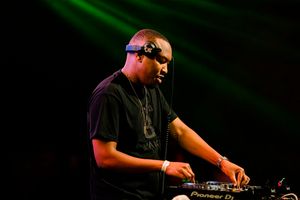
For Tina Ardor, the decks are no longer enough. The Kenyan Afro House deejay is preparing to take her music to the stage in a different form with ‘Ardorn Live’, a hybrid performance combining deejaying, live vocals and a full band at Masshouse on October 3.
It is a significant step for an artiste whose music has travelled beyond Kenya.
Her song “Sumbua”, an Afro House and 3-Step collaboration with deejays and producers Ally Fresh and Mura KE, has become one of her most recognisable tracks.
Released in April 2025, the song tells the raw story of a complicated relationship where love is real, but the person you love can also be a constant “bother”. Its relatable hook has helped turn it into a viral sound, appearing in more than 102K TikTok posts.
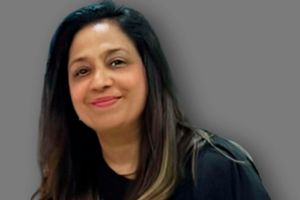
Christina Njeri Mwaura, alias Tina Ardor, is an electronic music DJ and performing artiste.
Photo credit: Pool
Ardor wants to use Ardon Live to tell the story of her journey through music while showing what happens when electronic music is taken off the club decks and rebuilt with live instruments.
The preparations have been intense
Rehearsals initially ran four days a week, with sessions lasting four hours as Ardor and the musicians familiarised themselves with one another and the music.
For the band, there was another challenge: they were learning how to perform House music live for the first time.
The schedule has since shifted to three sessions a week, with longer rehearsals.
As the show approaches, the rehearsals will move back to daytime sessions so she can conserve her energy.
The result will be a three-hour performance featuring drums and percussion, bass guitar, lead guitar, keyboards and trumpet.
Ardor deliberately chose trumpet over saxophone because she feels its sound works particularly well with electronic music.
“I’m performing the songs and music that have been most impactful during their time of release,” she says.
“I realised I have too many songs,” she says, laughing.
She recently asked her followers on X to name their favourite “oontz” classics and found herself trending as people listed songs she had not even planned to perform.
“I’m like, ‘Oops. And I wasn’t planning to play that one. Yikes!’”
For Ardor, however, the show is not simply a personal retrospective. It is also a celebration of how far Kenya’s House music scene has come.
Christina Njeri Mwaura, also known as Tina Ardor, is a DJ and vocalist specialising in the Afro House genre. She is preparing for her first solo show, titled Ardorn, which is set to take place on October 3, 2026.
Photo credit: Pool
She remembers composing pieces for music festivals while in high school and recently realised that what she is doing now is not entirely different — only on a much bigger stage.
“It makes me shiver, obviously. But I’m up to the challenge,” she says.
The idea for Ardorn Live had been in her mind for years, but she was not the person who initially pushed for it to happen this year.
“At first I thought ni story za jaba,” she says. “I was like, not yet.”
“By the time you’re putting out the poster, you’ve committed. You can’t go back.”
The current show is only the first step. Her bigger ambition is to eventually perform with a full orchestra.
One of her major inspirations is South African deejay and producer Black Coffee, whose 2012 album was followed by performances featuring a full orchestra and guest vocalists. She also points to the Red Bull Symphonic series and South African artistes who have incorporated live bands into electronic performances.
The attraction is the change in texture
“We’re so used to the electronic sound in a club. The song doesn’t change, just the effects. But when you introduce that live element, there’s something that just seeps into your bones so perfectly,” she says.
“If I attend a concert and it’s live, in the first 10-15 minutes I will cry,” she says.
That reaction has already found its way into her rehearsals. When the band warms up, the musicians sometimes begin jamming from their Afro Jazz repertoire.
“I was like, ‘How does such beautiful music exist? Whoever created all this beautiful music, God bless them.’ I cried.”
Finding an audience beyond Kenya
The leap from deejay sets to a large live production comes as Ardor’s career has also expanded internationally.
When we last spoke in January 2024, she had hoped to secure more international bookings. Since then, she has performed in the United Kingdom, Amsterdam, Germany, Zimbabwe, France and Zanzibar, with another performance in Rwanda coming after Ardor Live.
Her first major European performance came at Blankets & Wine in Bradford in September 2025, followed by Sondela in London.
Sondela had released her music and, after she told them she was travelling to the UK, offered her a slot at their monthly showcase. Her set was recorded and shared online, where it gained attention on TikTok and Instagram.
She then travelled to Amsterdam Dance Event, or ADE, later that year. Her approach to opportunities can be impulsive.
The trip came with its share of problems. She missed her first gig while still in the air as her visa came out the day before, arrived in cold and rainy weather wearing the wrong clothes and spent part of the trip learning how unprepared she was for European winter.
Christina Njeri Mwaura, also known as Tina Ardor, is a DJ and vocalist specialising in the Afro House genre. She is preparing for her first solo show, titled Ardorn, which is set to take place on October 3, 2026.
Photo credit: Pool
Her favourite experience was still the Sondela performance in London, particularly because of how smoothly the technical side of the hybrid set worked. She remembers doing only five minutes of soundcheck.
That experience showed her what a technically prepared hybrid performance should look like — something she believes Kenya’s promoters and venues still need to develop.
A hybrid set requires much more than a DJ booth. Microphones, monitors, acoustics, sound levels and the technical team all have to work together.
“I’m really trying to teach promoters, if you want me to do a hybrid set, you’ve got to give me these specifics,” she says.
She does not disclose her rates, but says she has separate local, regional and international rates, with costs depending on what she is expected to provide.
Sometimes that means bringing her own engineer. “I have this Kaizen mentality, always, in my craft. I have to be better every day,” she says.
For Ardor, that improvement extends beyond what happens behind the decks. She considers the people around her, her physical and mental state and every part of the production.
“Music is a powerful thing — performing it, singing it, producing it — so I try my best to be in the best shape mentally, spiritually and physically.”
She believes African artistes should not be afraid of their own languages and cultural identities when making music for international audiences.
Mūndūmūka - Live performance with Hendrick Sam
That thinking is present in “Sumbua”, which blends Swahili and Kikuyu to tell a story that came directly from her own experience. In the studio with Ally Fresh and Mura, she tested the hook:
Nataka kukupe, nataka kukupenda, lakini wee ni sumbua.
There was a moment of silence. Then everyone agreed they had something.
The song’s success reinforced her belief that Kenyan music can travel without losing its identity. She points to South African artistes who sing in their own language about things happening around them. Their audiences embraced that music first, and the rest of the world followed.
“Our music should also be able to do that to other markets,” she says. “That we love our music so much it transcends borders.”
She sees the same energy developing within Kenya’s House music community. Artistes such as Dylan-S, DJ Mura, DJ IV, CheffK and Siirski are experimenting with the sound, while producers are turning familiar Kenyan music into House tracks.
The growth, she says, is partly about creating enough activity to push other musicians into action. That is the thinking behind Safari Oontz Collective.
The collective was built around the idea of volume: more collaborations, more studio sessions and more releases.
“It’s only after that collective started, that people started putting out music like mad,” she says. “Every week there’s a release from a couple of guys.”
For Ardor, that momentum matters because a scene becomes sustainable when artistes begin taking their own careers seriously. She has watched the audience for Kenyan House music grow from a small online community into large events. She points to the growing attendance at major events and the arrival of bigger international names in Nairobi as signs of a scene attracting attention.
But she wants the Kenyan artistes themselves to match that growth.
Christina Njeri Mwaura, also known as Tina Ardor, is a DJ and vocalist specialising in the Afro House genre. She is preparing for her first solo show, titled Ardorn, which is set to take place on October 3, 2026.
Photo credit: Pool
The growth also matters to her as a woman working in a space that has historically had barriers for female deejays. She says she is constantly discovering talented female deejays in clubs and is encouraged by more women taking control of the decks.
But she wants the industry to address differences in pay and opportunities between male and female deejays.
She does decline some bookings, she says, especially when a show does not align with what she wants to do. For Ardor, saying no is part of protecting the career she has spent years building.
And now, with Ardor Live, she is asking audiences to see another side of that career. A deejay stepping onto a stage with musicians beside her, turning electronic beats into something physical, emotional and unpredictable.
But for one night, the club set becomes a concert.