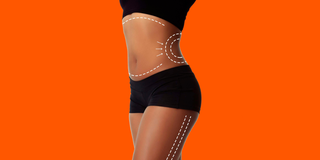
As more women in Kenya embrace cosmetic surgery, such as the Brazilian Butt Lift (BBL), concerns have arisen about how these procedures affect a woman’s ability to conceive and bear children.
Dr Benjamin Wabwire, the head of Plastic and Reconstructive Surgery at Kenyatta National Hospital, says that cosmetic surgical procedures would not negatively impact a woman's ability to conceive or carry a pregnancy, unless the surgery involves the perineal/private area, where scarring might occur during normal delivery.
Additionally, if the surgery involves the breasts, there may be problems with breastfeeding. "If the medical treatments interfere with their hormonal cycles, then the woman may have problems conceiving or carrying a pregnancy to term," he says.
However, Dr Wabwire says that if you undergo body contouring procedures such as liposuction, tummy tucks, or skin tightening using lasers, J-plasma, radiofrequency, or ultrasonic waves before getting pregnant, your body will return to its original shape after pregnancy.
Brazilian butt lift, commonly referred to as BBL, is gaining popularity in Kenya.
Photo credit: File
"Fat is very dynamic, unlike bones and muscles, and depends on personal habits and lifestyle. So, if you gain weight after the procedures, your body will return to its natural shape, not the shape created by the plastic surgeon," he adds.
Dr Wabwire says that a gynaecologist might find it a little more difficult to open the area to reach the uterus for a woman who has undergone a tummy tuck and needs a C-section than for someone who hasn't had the procedure.
The risks of cosmetic procedures include general risks associated with anaesthesia, such as bleeding and blood clots. Women are more prone to developing blood clots than men.
"During liposuction, we use tumescent fluid to constrict the blood vessels so there is less bleeding. One can inject four to eight litres, some of which is absorbed into the bloodstream.”
Dr Wabwire adds that repeated pricking, injecting, and sucking increases the risk of infection because it pushes bacteria under the skin into the fat.
Furthermore, metallic rods or tubes (cannulas) are used during liposuction, and there is a risk that they will pierce the muscle and reach the intestine or other organs. If they enter the abdomen, they can injure or perforate the intestines, stomach, urinary bladder, or liver.
Some people hide their medical history, which increases the risk of complications. Remember, surgical procedures stress the body. For a diabetic, this means the body responds by mobilising sugar reserves, which increases blood sugar levels.
Sometimes, people may have undiagnosed mild bleeding conditions. The procedure can trigger these conditions.
So, when should you try to get pregnant after a cosmetic procedure?
"As long as you have recovered from the procedure and your menstrual cycles are back to normal, you can conceive. However, that will defeat the purpose because the desired results will be completely gone by the time the baby is delivered."