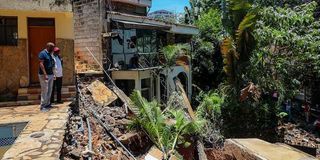
For many families and property owners, the recent floods that claimed more than 50 lives have left more than grief in their wake.
The floods have unleashed a costly trail of destruction as homes and businesses lie in ruin, shining a spotlight on the role of insurance in helping affected families and enterprises rebuild.
The uptake of flood insurance in Kenya is still low, as is the case with many other classes of insurance, despite the increasing incidences of climate change-related risks, meaning that many people and businesses will be on their own or at the mercy of government interventions.
The Kenyan market has seen several insurance products roll out standalone flood covers or enrich existing property covers to include risks such as floods. However, Leonard Chirchir, chief operating officer at Britam General Insurance, says the uptake remains low.
“Only a negligible percentage of homeowners have property insurance. That means when disasters strike, many families suffer losses without any financial protection,” he notes.
Christine Gikunda, principal officer at EIRS Kenya, which is an insurance broker and risk management firm, says the increasing frequency and intensity of floods mean Kenyans should carefully review their policies to confirm whether flooding and storm-related damage are included.
“Given the increasing frequency of heavy rainfall and urban flooding in cities like Nairobi, it is becoming essential for homeowners to reassess their risk exposure,” she says.
“Flood damage is not always automatically included in standard home insurance policies in Kenya. In many cases, it is offered as an extension that must be specifically added to the policy,” she explains.
A bed sits abandoned inside a house filled with thick mud after flash floods swept through Hazina, South B.
Photo credit: Bonface Bogita I Nation Media Group
Many homeowners are also unaware of the variety of property insurance products available in Kenya. According to Chirchir, homeowners’ insurance, commonly known as a domestic package, is one of the most comprehensive covers.
“This protects the structure of the house against risks such as fire, floods, storms, earthquakes and other insured perils,” he says.
The policy may also include sections covering theft, employee injuries, loss of rental income and third-party liability.
Landlord insurance protects rental properties and may compensate property owners for lost rental income if a building becomes uninhabitable after an insured event. Businesses can also take commercial property insurance to protect buildings, equipment and stock from disasters such as floods, fire and burglary.
“These covers help property owners transfer the financial risk of disasters to insurers, ensuring they can recover more quickly when unexpected events occur,” Chirchir says.
Properties located near rivers, drainage channels or historically flood-prone areas face higher risks and should ensure flood protection is clearly included in their insurance cover. However, insurers are noticing this trend and are weighing the option of increasing premiums or locking out customers in very risky locations.
Michael Ndegwa, head of corporate and commercial lines at Sanlam Allianz General Insurance Kenya, said following the significant flood-related losses experienced across the insurance industry in the recent past, insurers are placing increased emphasis on understanding and managing flood exposure.
A general view shows destruction at a residential compound along Likoni Lane off Dennis Pritt Road in Nairobi on March 15, 2026 after heavy overnight rains caused a perimeter wall to collapse.
Photo credit: Lucy Wanjiru | Nation
“At SanlamAllianz General Insurance Kenya, this includes reviewing historical loss data, analysing geographical risk patterns, and strengthening underwriting controls in areas that are more vulnerable to flooding,” said Ndegwa.
“There will likely be a greater shift toward risk-based underwriting, particularly in locations with a history of repeated flood events. This may involve adjusted pricing to reflect flood risk, tailored deductibles in certain cases, and stronger risk-mitigation requirements for properties located in high-risk areas,” he adds.
Ms Gikunda notes that beyond standard coverage, homeowners should consider professional risk assessments and claims support services to help them navigate the complex claims process after disasters.
“These services provide independent expertise and help property owners better understand their policy scope while strengthening their position during the claims process when flood-related losses occur,” she says.
Even as homeowners seek financial protection, experts say the recent floods have also exposed deeper urban planning challenges. Julius Mugun, CEO of National Water Harvesting and Storage Authority (NWHSA), says rapid urban development without proper drainage systems is worsening flooding in many estates.
Printwell Industries Limited's premises on March 9, 2026. The company counts losses running into the millions after last week’s heavy rains caused flooding that submerged heavy printing machinery, paper stock, and printed books.
Photo credit: Bonface Bogita | Nation
“Many urban areas are experiencing rapid development without adequate stormwater management systems. When heavy rainfall occurs, the existing drainage infrastructure cannot handle the volume of water, leading to flooding in estates and major roads,” he says.
Engineer Mugun said proper water harvesting, improved drainage planning and protection of riparian areas are critical in reducing flood risks—something that can help property owners manage their risks and benefit from reduced premiums.
Insurance experts say confusion about what constitutes flood damage often leads to disputes during compensation claims.
“One of the most common misunderstandings is the assumption that any water damage is automatically covered,” says Gikunda.
“For example, a burst pipe inside the house may be covered under standard property insurance. However, flooding caused by external sources such as overflowing rivers or drainage systems may require specific flood cover,” she explains, cautioning those with insurance coverage to avoid underinsurance, a scenario where homeowners insure their property for less than its actual rebuilding cost.
“When property is insured for less than its true value, the compensation received after a loss may not fully cover rebuilding costs,” Gikunda says.
Worth noting is that claims may face delays or rejection if certain policy conditions are not met. Documentation is one of the most critical factors during the claims process.
“Claims may face delays or rejection when there is limited evidence of the damage or when details surrounding the event are unclear,” Gikunda says.
A bridge over the Nairobi River is swept away as floodwaters encroach on land in the Grogan area of downtown Nairobi on Sunday, March 8, 2026. Heavy rainfall on March 6 destroyed vehicles and damaged businesses in the district, which is widely known for automotive workshops and second-hand spare parts.
Photo credit: Dennis Onsongo | Nation Media Group
Homeowners are advised to report incidents immediately, take clear photographs or videos of the damage and keep records of affected items. Insurers also advise property owners against carrying out major repairs before the extent of damage is assessed.
However, insurers also check whether premiums were paid, whether the policy was active and whether the lost items were properly declared when the policy was purchased.