Most Kenyans have little to spend on school fees, clothing or savings as essentials, including food, rent and transport, gobble up the bulk of household expenditures.
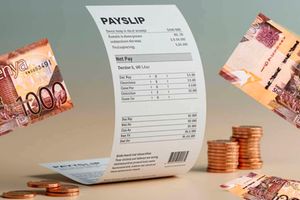
Data sourced largely from the Kenya National Bureau of Statistics (KNBS) reveals the pain of the high cost of living in the capital of Nairobi amid a thinner payslip, which has been swallowed in part by deductions, including pay as you earn, the Housing Levy and the Social Health Insurance Fund.
Most Nairobi households, (70.89 per cent) are classified as low-income represented by an expenditure up to Sh46, 355 a month.
For these households, there is barely Sh10,000 to spread across school fees, clothing, personal care, savings and emergency spending within the month.
Assuming a household with a single earner on Sh50,000 pay, the possible spending is only Sh39,029.40 represented by take-home pay, assuming no further statutory deductions.
Out of this, Sh12,840 is quickly taken away by spending on food.
The KNBS gives food a weighting of 32.9 per cent on average household expenditure, revealing that about one third of income is swallowed up by meals.
The same household will spend Sh5,698 on housing, water and electricity, and a further Sh3,746 on transport and Sh1, 131 on medical bills.
Only Sh11,868 is left after this to spread across other needs, including school fees.
According to the 2023-24 Kenya Housing Survey, also by KNBS, Nairobi has 1,661,533 households, the majority of which have between one and four persons, implying that each unit has about two children.
Nairobians go about their businesses on a busy and crowded street on December 18, 2021.
Photo credit: Jeff Angote | Nation Media Group
Just 7.7 per cent of these households own their homes, revealing that 93.3 per cent or nine in 10 households pay rent, or worse, squat.
The average one-bedroom bungalow will demand Sh13,000 in rent, surpassing KNBS weighting on housing expenditure for a unit with an income of Sh50,000 or less.
A three-bedroom bungalow lies out of reach for most, with the mean rent sitting at Sh65,000 while a three-bedroom flat is equally out of touch with a monthly price tag of Sh30,000.
A one-bedroom flat might be the alternative, but the average rent is still high at Sh8,500. The cheapest option might be a one-bedroom shack, which sets a household back Sh2,500 per month.
Most households in Nairobi at 81 per cent use LPG for cooking, implying high energy costs, with fewer clean cooking alternatives such as electricity and ethanol.
Those priced out of the clean options will mostly turn to charcoal (2.7 per cent of households) but run the risk of collecting more medical bills from emerging respiratory issues.
Nairobi residents with higher incomes are slightly better off, boosted by their spending abilities, but only a few are better off, at least on paper.
About a quarter of Nairobi households or 25.58 per cent fit the middle-income group with spending of between Sh46,356 to Sh184,394 per month.
Residents of Nairobi going about their business in Gikomba Market on September 19, 2021.
Photo credit: Dennis Onsongo | Nation Media Group
Only about 58,818 households or 3.54 per cent sit at the top tier upper-income group, affording an expenditure of over Sh184,395 per month.
A household would need a combined salary/wages well above Sh200,000 a month to enter the upper income class, a reach most people only dream about.