If you have ever rushed to your doctor thinking you had a UTI [urinary tract infection], only to be told it is something else entirely, you are not alone.
Prof Omenge Orang’o confirms he sees this mix-up frequently in his practice.
“I see very many women coming when they have a discharge, and they say, ‘I have a UTI.’” It's not a UTI. People just find it easier to pick UTI,” he says.
Prof. Orang’o, a gynaecologic oncologist, says that understanding the difference between urinary tract infections, vaginal infections, and cervical cancer is not just about getting the terminology right. It could actually save your life.
UTI is strictly an infection of the urinary tract, he says. “From the urethra to the bladder and kidneys. You'll know you have one because the symptoms are pretty unmistakable (and uncomfortable). You’d be running to the bathroom constantly, sometimes just minutes apart. There’s pain either when you start peeing or at the very end. Your lower abdomen aches after you’ve gone. And here’s the kicker: even after you’ve emptied your bladder, you still feel like you need to go back. It's because the bladder is irritated with an infection,” Prof Orang'o explains.
He says that many women experience vaginal discharge, which comes from inside the vagina, and immediately think “UTI.” But these are completely different things happening in completely different places.
The confusion, Prof Orang’o says, makes sense when you think about it. The urethra (where urine exits) and the vaginal opening are neighbours. They are close together, but they are totally separate structures with different functions.
“The discharge comes from inside. That’s vaginitis, not a urinary tract infection,” he clarifies.
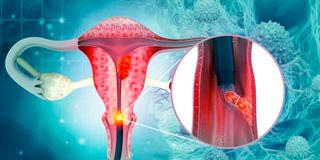
According to the World Health Organisation (WHO), cervical cancer, a highly preventable cancer, is the fourth most common cancer in women globally.
Photo credit: Shutterstock
So, which vaginal discharge is normal, and which one is not?
First, Dr Kireki Omanwa, a consultant obstetrician and gynaecologist, notes that according to the functions of the vagina, the discharge should be there because it is a normal process of protecting the body part.
He adds that a woman’s discharge changes throughout her cycle, and that is completely normal. During your period, there is menstrual flow. Around mid-cycle during ovulation, things get watery and egg-white-like.
“The body is primed at that time for fertilisation. If there is intercourse, that discharge helps the sperm flow to where they are supposed to.”
After ovulation, the discharge becomes thicker and milky, essentially blocking the cervix in case fertilisation happens.
And how do you know when something's actually wrong? Dr Omanwa says that one should pay attention to three key things: smell, colour and consistency.
The smell test: Normal ovulation discharge is clear and does not have a strong odour, but if you are noticing a smell like rotten meat or a distinct fishy odour, that is abnormal.
“The fishy smell is not necessarily attributed to cervical cancer, ” Dr Omanwa clarifies. “There's a certain bacterium that causes the infection, and we can eliminate it by giving a simple antibiotic.”
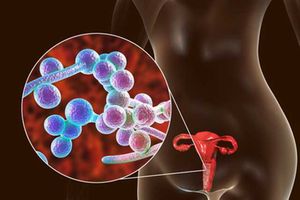
UTI is strictly an infection of the urinary tract.
Photo credit: Shutterstock
The colour: During ovulation, discharge is clear. After ovulation, it is whitish. But if it looks like fermented milk, or if it is bloody, yellowish, or greenish, that suggests infection. Greenish discharge means that you have trichomonas, while yellowish discharge can indicate a hormonal imbalance.
The consistency factor: Abnormally watery discharge with a smell is concerning. Yeast infections produce white, cheese-like discharge and are super common. Sometimes women experience watery discharge or even light spotting during ovulation, which can be normal, but it's worth getting checked to be sure.
He also notes that other symptoms, such as if the vagina is itchy or has a burning feeling, also play a part in enabling the doctor to understand the symptoms better.
There has been a lot of misconception that these symptoms cause cervical cancer, a concern that experts refute.
“None of that causes cancer of the cervix. UTI does not cause cancer of the cervix. That infection in the vagina does not cause cervical cancer,” says Prof Orang'o.
So what causes cancer? “Human Papillomavirus (HPV),” says Prof Orang’o.
“When we get infected with HPV, we get absolutely zero symptoms. You could have HPV right now and have absolutely no idea,” he says.
“We only get to know the result if you ever get cervical cancer,” Prof. Orang'o explains. “Cervical cancer is very silent, no symptoms.”
According to Dr Ahmed Kalebi, a consultant pathologist, there are more than 100 different types of HPV floating around, including the ones that cause genital warts and skin warts. But about 14 of these types are classified as high-risk for cancer.
When these high-risk types infect your cervix, they integrate into the cells and cause them to start multiplying abnormally.
“But it takes a long time before it becomes cancerous, and you won't feel a thing while it's happening,” Dr Kalebi notes. “This slow progression means there's plenty of time for screening to catch problems before they become cancer,” adds Prof. Orang’o.
He adds that it’s estimated that by age 50, 80 per cent of women will have come in contact with HPV.
Research shows that “more than 90 per cent of women, when they engage in sexual activities for the first time within the first three years, 80-90 per cent will get HPV, even if they were virgins and their partners were virgins too.”
Despite being a common virus, Prof Orang’o notes that it can be cleared. “Most people's immune systems naturally clear HPV without any intervention,” he says. “However, those who develop cervical cancer are those who either cannot clear it because they keep getting reinfected with high-risk HPV.”
Dr Kalebi notes that HPV can affect men, too—it can infect the penis and even cause throat cancer.
“In men, you can just wash it off, except for uncircumcised men. Women's cervixes, unfortunately, are particularly vulnerable,” he says.
According to Prof Orang’o, risk factors for cervical cancer basically boil down to anything that increases your exposure to HPV, such as having sex at a young age, having multiple sexual partners, or being with someone who has multiple partners.
But genetics? “Not really. It's still under study,” Prof Orang'o says. Cervical cancer does not typically run in families the way breast cancer sometimes does.
Cervical cancer remains the second most common cancer and top killer among women in Kenya, with an estimated 5,845 new cases and 3,600 deaths annually. Despite the damning figures, there are effective tools to prevent and detect it.
“HPV vaccines are now widely available and have been expanded, and women up to age 45 can get vaccinated if they missed it earlier. In Kenya, vaccines for girls aged nine to 14 years are free, while adults beyond 15 years have to pay.”
Why vaccinate so young? “Research has shown that their immunity can be boosted to the maximum between ages nine and 14,” Dr Kalebi explains. “They're given another four to five years to build immunity, so by the time they become sexually active and get exposed to the virus, they will be able to eliminate the virus quickly.”
Dr Kalebi notes that HPV DNA testing is the gold standard, with over 95 per cent accuracy in detecting cervical abnormalities. Pap smears, while still valuable, are only 50-60 percent accurate.
Internationally, it is recommended that one should get screened five years after becoming sexually active. In Kenya, following WHO guidelines, women aged 30 to 45 should have at least one screening a year.
“And here’s great news: HPV testing is free under the Social Health Authority (SHA),” says Dr Kalebi.