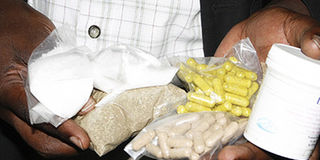
There are hundreds of online adverts promising Kenyan women a way to unblock their fallopian tubes without surgery or conceive without in vitro fertilisation (IVF), with herbal treatment kits selling for as little as Sh45,000.
The sellers claim their remedies offer women struggling to conceive the possibility of restoring fertility through herbs alone.
You should also consult a doctor before taking herbal remedies. Photo | Photosearch
But behind those promises is a medical question with serious consequences: can herbs actually unblock damaged or obstructed fallopian tubes?
Similar remedies, marketed as Ayurvedic or homoeopathic treatments, have also become increasingly common, despite a lack of clinical-trial evidence demonstrating that they can unblock fallopian tubes.
Doctors warn that these herbs can be potentially dangerous. Dr Richard Mogeni, consultant obstetrician and gynaecologist at Moi Teaching and Referral Hospital, says the products misrepresent the biology of tubal blockage.
“Fallopian tubes become blocked by scar tissue, pelvic adhesions or physical damage, often from infections such as pelvic inflammatory disease, sexually transmitted infections, endometriosis or previous surgery,” he explains.
“No oral supplement, herbal tea or topical product can dissolve scar tissue or repair microscopic cilia inside the tubal lumen. Claims that a cleanser can unblock tubes have zero scientific evidence,” he says.
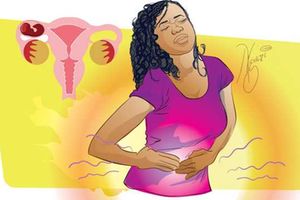
Underlying causes of reduced fertility in women include problems with ovaries, fallopian tubes or the uterus and hormonal disorders.
Photo credit: SHUTTERSTOCK
Dr Mogeni warns that taking these “herbal cleansers” can waste precious time, as women may delay seeking appropriate treatment while hoping the remedies will heal the blockage. He urges those struggling to conceive to consult a fertility specialist promptly.
“They delay critical medical care during a narrow fertility window, especially for women over 35 experiencing natural decline in egg production.”
The obstetrician-gynaecologist adds that the products may pose health risks, including heavy metal toxicity, infections, and overdosing among stressed patients. Beyond physical harm, they expose women to financial exploitation and erode trust in evidence-based care.
Dr John Ong’ech, another obstetrician and gynaecologist, stresses that treatment of blocked fallopian tubes depends entirely on the location and severity of blockage. “Any intervention outside evidence-based management may be harmful,” he says.
The ovaries play a bigger role in fertility’s decline than once thought.
Photo credit: Shutterstock
How to diagnose blocked tubes
Diagnosis typically begins with a hysterosalpingogram, commonly known as HSG, an X-ray using dye to identify blockages. Alternatives include diagnostic laparoscopy, a minimally invasive surgical procedure, or sonosalpingography, an ultrasound-based test. Cleanser sellers offer none of these assessments. Instead, they market a single product regardless of cause or severity.
When a fallopian tube is blocked close to the uterus, doctors can sometimes use a thin tube or catheter to reach the blockage and clear or reopen the fallopian tube.
“These restore patency [when the fallopian tube is open enough for an egg and sperm to pass through] in 70 to 90 per cent of cases, with pregnancy rates ranging from 20 to 60 per cent,” says Dr Ong’ech.
For some blockages, further from the uterus, surgeons can repair the end of the fallopian tube, create a new opening, or remove scar tissue that is blocking or distorting the tube.
“Pregnancy rates range from 20 to 40 per cent depending on severity,” he notes.
When tubal disease is severe, surgery is less successful, and IVF becomes the preferred option to get a child.
“IVF bypasses the tubes completely and offers the highest pregnancy rates for severe bilateral disease,” says Dr Ong’ech. IVF is recommended when both tubes are damaged, when previous surgery has failed, when the woman is over 35, or when a fallopian tube becomes blocked and fills with fluid, usually because of previous infection, inflammation or scarring.
Despite a common assumption that conception is automatic, normal fertility does not guarantee pregnancy in every cycle. Even among healthy couples, the chance of conceiving in any single cycle is only about 20–25 per cent.
Photo credit: Shutterstock
In such cases, current guidance recommends removing the affected tube or sealing it off near the uterus before doing IVF. This prevents fluid from the damaged fallopian tube from flowing back into the uterus and interfering with embryo implantation.
In carefully selected cases, reconstructive surgery may be considered — particularly for women under 35 with good ovarian reserve, mild disease, a fertile partner, or limited access to IVF.
The Pharmacy and Poisons Board has intensified its crackdown on substandard and falsified products. Since early 2025, it has issued dozens of recalls, rapid alerts and pharmacy closures. Separately, the Ministry of Health has warned of rising sales of counterfeit and unregistered products through informal and online channels, including diagnostic kits and treatments marketed directly to consumers. Fertility cleansers typically fall into this regulatory grey zone, sold via social media rather than licensed pharmacies, and bypassing official evaluation.
“Don’t use them. With fertility declining after the mid-30s, time spent on unproven remedies is time that may be difficult to regain,” he says.