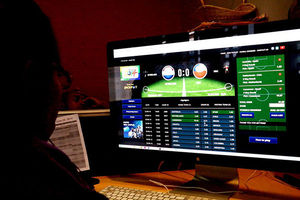
On a recent trip to a sports bar along Ngong Road, I ordered a cider and settled in to watch an English Premier League match between Arsenal and Manchester City.
A cold drink while watching a live match alone is one of my greatest pleasures. For two hours, everything else fades into the background.
But that evening, a group of men arrived for the much-anticipated matchup: Liverpool and Nottingham Forest. We started a conversation before kick-off, chatting about the usual…new players to watch and Arsenal’s chances of lifting the league title.
Arsenal's Jurrien Timber in action with Manchester City's Erling Haaland at Emirates Stadium, London, on September 21, 2025.
Photo credit: Reuters
But one of the men, a Liverpool fan, had placed a combo bet as long as a hospital discharge receipt. Strangely, several of his entries went against his team. Judging by his constant, furious outbursts, every misplaced pass and every missed chance seemed to threaten his bet. I shared uneasy glances with other, equally disturbed patrons. The atmosphere was terrible.
This incident is far from unique. The people at my local have become noticeably louder, more irritable, and obscene. More importantly, they’ve become bad company. Watching sports games on TV these days can feel like sitting among wayward gamblers in a gambling hall. One man is shouting at the screen, another is obsessively analysing the odds, while someone else is visibly depressed over a lost wager. The most interesting part, though, is watching someone root against their own team for the potential payout.
That night, Liverpool won the match. If it weren’t for betting, that fan might have had a lovely moment, high-fiving random people and ordering celebratory shots. Instead, he was in a foul mood after the final whistle. Nowadays, it is not rare for a fan to bet against himself, especially in games where his team is the favourite to win. After all, you win more money if you bet on the underdog.
“Online betting, especially the kind you can do on your phone when the match is still going on, has definitely ruined the experience for me. Today, when you walk into a bar, you see more fans tracking their bets and individual player over and under across multiple games rather than just peacefully watching their teams play,” says Morris Omullo, a diehard football fan.
Two weeks ago, when Arsenal and Man City played for the Carabao cup, I sat with a friend of a friend who had placed a Sh2,000 for Erling Haaland to score first. His bet collapsed before the game was over. The rest of us were still enjoying the match, but his mood was a drag, and we all watched the remainder of the game in silence. This is what watching football has become.
The bar was once a lively meeting point where avid football fans would have light but pleasant conversations. They could proudly reveal their allegiances and bond over their collective wins or losses. But today, the sports bar is becoming a cold gathering point for (mostly) men who seem unable to talk about anything beyond odds, sure bets and betting slips. Online sports betting was sold as a vehicle that would make watching games more exciting, but inside the bar, it has done the opposite.
“It is almost like the match doesn’t count anymore. Many people are angry and want to control the outcome of the game simply because they have placed bets,” says Brian Muigai, another football fan.
Football fans watch the Chan finals match between Madagascar and Morocco along Moi Avenue in Nairobi on August 30, 2025.
Photo credit: Bonface Bogita| Nation Media Group
I first noticed this a few years ago, watching Arsenal (my favourite football team those days). In the final two minutes of the game, it looked like Pierre-Emerick Aubameyang was being handled well physically by the opponent’s defenders, and my team was heading for a loss. My initial reaction to this should have obviously been negative. But since I had the opponent’s defender on my fantasy football roster, I almost felt happy about it. It would help win my fantasy football game that week. Arsenal won, but the conflicted feelings remained. This is the real problem with gambling in sports. It has certainly changed how fans watch and enjoy the sport. But it is not only fans that are affected.
Underperforming players can also feel the heat. In an article on Sports Illustrated in October last year, Detroit Lions player David Montgomery said that during his first season, he was experiencing “suicidal thoughts”, mainly because of harmful messages sent to him by fantasy football managers. Not his own coaches, mind you, or his Lions general manager, but fantasy football managers criticising him because he had a bad game.
Back in the bar, the consequences are less extreme but still visible, and the result is an angrier, awkward environment where real sports lovers may feel out of place. Smartphones have certainly played a role, as they have transformed gambling into a highly interactive, data-driven, and high-intensity activity, thereby changing how fans watch, think about, and enjoy sports.
The sheer volume of betting advertisements and in-bar marketing sometimes relegates the match to the shadows, creating the impression that the result is more important than the match itself and that football exists primarily to promote betting.
Research findings released by the University of Bristol in October 2025 showed more than 27,000 gambling messages across the opening weekend of the English Premier League 2025/26 season. The adverts were observed across TV, radio and social media, with logos seen on pitchside LED hoardings, football shirts and stadium structures.
All this comes with increased focus on statistics, with some fans more engaged in the technicalities of the game. Some fans now arrive armed with data sheets, tracking player injuries, analysing odds in real time, and monitoring multiple matches at once.
“They know all players who are injured, and for how long they will be out, they analyse odds even as the match is going on…in short, the game is no longer just for entertainment,” Morris says.