Seven years ago, piping infrastructure owned by the Export Processing Zone Authority (EPZA) and which supplied fresh water to thousands of Syokimau residents collapsed.
The taps in one of Kenya’s fastest-growing suburb went dry. Thousands of families were left at the mercy of water vendors, whose product has high fluoride levels, which result in a salty tang. There is also the issue of sewerage. The area lacks a sewer line, meaning that some landowners have to hire honeysuckers every so often.
Joseph Maingi, a retired Kenya Defense Forces officer, is among those who built his home in Syokimau in the 1990s. He and other early arrivals had to share the space with wild animals, which were in plenty even in the neighbouring Katani. But they had water.
Today, that wilderness has vanished, replaced by thousands of elegant homes, gated estates, and schools, transforming Syokimau into a thriving middle-class suburb, but water is scarce.
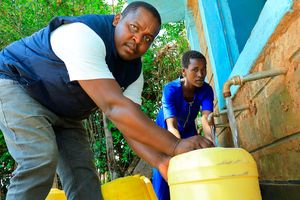
Mr James Kimeu, a water vendor for the last 21 years, ferries jerricans of water to his customers in Syokimau, Machakos County, on September 25 2025.
Photo credit: Stanley Ngotho | Nation Media Group
Syokimau keeps growing and attracting many developers and homeowners, thanks to its proximity to the Nairobi Expressway and prime plots that go for much lower prices compared to other similar suburbs.
Anne Ndwiga, a banker, said getting access to fresh water has been a constant struggle for residents over the years. They last received fresh, piped water in 2018. In some areas, the idle water infrastructure has since been vandalised.
“I can only afford purified fresh water for cooking and drinking only. For other domestic uses, my family is forced to use the salty water which we buy in jerrycans,” she says, “but the water has high levels of fluoride and it has damaged a lot of plumbing infrastructure in many homes.”
James Wainaina, a 52-year-old, owns homes in Syokimau. He says the cost of water and waste management eats into his rental income.
Water piping infrastructure
He spends up to Sh50,000 on borehole water each month, a cost that he has passed on to his tenants.
“Each of my 34 units fetches Sh28,000 monthly for rent. An average of Sh2,000 per unit goes to water supply, not forgetting the tenant has to personally source for fresh water,” he says.
He spends another Sh22,000 each month on emptying his apartments’ septic tank.
“A sewer line is long overdue in Syokimau. Liquid waste management has been a tall order, especially for developers. It's expensive to pay for draining waste, considering most of us are servicing bank loans,” he adds.
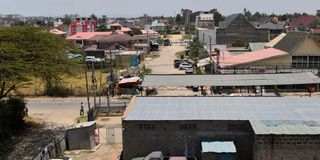
A section of the Syokimau-Katani road in Machakos County on September 25 2025.
Photo credit: Stanley Ngotho | Nation Media Group
Along Katani Road, Simon Meme runs his T-J car wash. He spends Sh30,000 on electricity to pump 10,000 litres of water daily from his private borehole. But it is filled with fluoride, which corrodes car paint and leaves stubborn white stains.
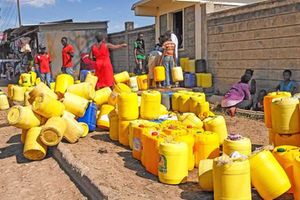
The burden is not only for the middle class. At Kicheko informal settlement, tucked in the periphery of the Syokimau neighborhood, hundreds of residents queue for hours for water from a private outlet. Here, a 20-litre jerrycan of water retails at Sh15. Most casual labourers working in Syokimau live in Kicheko.
But there are beneficiaries. At midday, the sun blazes relentlessly overhead. Water vendors weave through the traffic snarled up along Katani Road, their trucks laden with jerrycans. They are impatience because the unending demand for water keeps them shuttling tirelessly to and from Syokimau all day.
James Kimeu, a water vendor, sits on his three donkey-drawn cart. Selling water to Syokimau residents, he says, has put food on his table for decades.
Mr Kimeu says that the prices, Sh20 per jerrycan, at times double during the dry seasons when most boreholes in the area dry up.
Two years ago, a move by President William Ruto rekindled hope among residents that their long struggle for clean, reliable water might finally come to an end.
On April 14, 2023, Mr Ruto commissioned the Sh2.7 billion Mavoko Drinking Water Supply Project in Mlolongo township. He said the project would ensure the entire area, including Syokimau, would be water secure as it meant providing 12 million litres of fresh water to households each day.
But two years and five months down the line, taps are still dry in Syokimau.
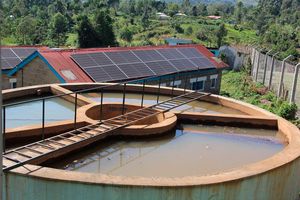
Reservoir tanks at the Sh2.7 billion Mavoko Drinking Water Supply Project in Mlolongo township, Machakos County on September 25, 2025.
Photo credit: Stanley Ngotho | Nation Media Group
On September 25, when the BDLife visited the project, an elevated tank and a mega concrete water reservoir tank next to Aviation Authority headquarters in Mlolongo town had signs of leaking water, signifying they were full to capacity.
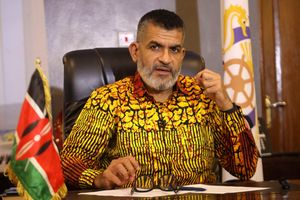
Mohamed Ismail, Syokimau Residents Association chairperson, says the association is in advanced talks with the county government of Machakos to fast-track the water supply. David Kilonzo, the Syokimau location chief, says to solve the water problem, residents can pool funds to aid in building water piping infrastructure.
Analysts worry that while rents and home prices are rising, long-term home values may stagnate or drop if water scarcity becomes chronic. Over the years, the price per acre has grown by 15.8 per cent, now retailing at over Sh33.7 million.