A smartphone, affordable internet and a social media account are often enough to launch a career in content creation.
Millions of Kenyans spend hours scrolling through videos, songs, comedy skits and podcasts created by young people chasing the next viral moment.
A million views. A trending hashtag. A viral TikTok. Thousands of followers gained overnight.
Every day, a new creator breaks through the algorithm, attracting audiences that rival those of traditional media and turning ordinary smartphones into powerful stages for storytelling.
But when the cameras go off and the notifications stop, many creators return to a more familiar reality, including uncertain income, irregular gigs, and the constant pressure to create again simply to stay visible.
It is a cycle that Kerry Amani, an 18-year-old content creator of Amani Systems, exposes as one of the biggest contradictions in Kenya's fast-growing creative economy.
A man records a video using a mobile phone to post on social media platforms.
Speaking to fellow creators during the Creative Economy 101 programme, Amani explained that although digital platforms have made it easier than ever for creators to gain visibility, turning that attention into sustainable businesses remains an uphill battle.
"Every viral post creates value. The platform wins, the brand wins, the audience wins," he said, "but what about the creator?"
He challenges a creative economy that celebrates visibility but has yet to consistently reward the people generating it.
"The issue is not that we lack talent or audiences. We have both.” Amani explained. “The challenge is turning that attention into businesses that can sustain creators beyond the next viral moment."
For most creators, Kenya's creative economy is not short on talent or audiences.
Instead, the rapid growth of digital platforms has created unprecedented visibility for creators. However, many still struggle to turn that reach into sustainable businesses.
“The real problem is that creators are mastering the art of attracting attention,” he argued, “without learning how to convert that attention into businesses.”
He recalled meeting people with audiences far larger than his own who had never explored recurring revenue, digital products or subscription-based communities.
"The problem was not audience growth. The audiences were growing, but their businesses were not.” He recalled. “What the creative economy is lacking in Africa is a conversion problem. The gap is commercial knowledge."
Over the past decade, barriers to entry have collapsed.
A smartphone, affordable internet and a social media account are often enough to launch a career in content creation.
Musicians release music directly to streaming platforms.
Photographers market their work online. Filmmakers distribute content digitally while comedians and influencers build audiences that stretch beyond national borders.
Yet, some creators argue that accessibility has not necessarily translated into prosperity.
They continue to navigate irregular income, unpredictable algorithms, inconsistent brand partnerships, and limited monetisation opportunities.
Viola Karuri, sound engineer, producer, and vocalist, explained that online success often proves fleeting, requiring creators to constantly produce fresh content just to remain visible.
"For a lot of us, it is not about being a star," she said, "it is about earning a living doing what you love."
Viola Karuri is a sound engineer, producer and vocalist.
Creativity is a profession that still fights for legitimacy, Karuri emphasised, beginning within families where artistic careers are frequently viewed as risky compared to traditional professions.
Karuri recalled that whenever she filled out official forms listing occupations, professions such as accountants, engineers, teachers and doctors were included, but creatives were often left with no option but to tick the box marked ‘Other.’
"That is where creatives we have been belonging, in that other box." She noted.
The symbolism, she argued, reflects how society continues to undervalue creative work despite relying on it every day.
The music people stream on their morning commute. The films watched over weekends. The advertisements convincing consumers what to buy.
The social media content that increasingly shapes public conversations.
All are products of creative labour. Yet many of those producing that labour remain financially vulnerable.
"I need to create to be relevant. I need to be relevant to get work. I need to get work to earn a living. I need this money that I'm earning to create." She explained.
Unlike salaried professions, creators must continually invest in equipment, production, marketing and distribution simply to remain competitive.
“Talent alone can help someone survive.” She said. "But why survive when we can thrive?"
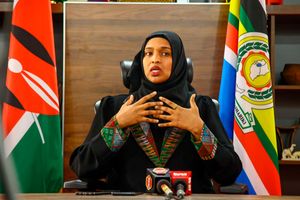
Kenya Film Commission CEO Timothy Owase.
Timothy Owase, CEO, the Kenya Film Commission (KFC) challenged creators to rethink how they view their work.
"Let us, as creators, look at our creativity as real business," he said. "When we forget to appreciate that we are in a business ecosystem, then we may fail."
Owase believes the creative economy has moved beyond entertainment to become a strategic economic sector capable of creating jobs, stimulating innovation, strengthening tourism and projecting African stories to global audiences.
"The creative economy is the new oil.” He argued. “If creativity is indeed Kenya's ‘new oil,’ why do so many creators still struggle to earn predictable incomes?”
According to Owase, creators frequently cite limited access to finance, weak intellectual property protection, poor contract negotiation skills, limited business training and fragmented market opportunities as barriers to growth.
“Many understand how to create compelling content.” He explained. “Far fewer understand licensing, taxation, investment, branding, financial planning or scaling creative enterprises.”
Mike Burns, one of the partners argued that the biggest shift begins with changing how creators see themselves.
"This programme helps achieve commercialisation, or at least seeing yourself as a business," he explained. "When you see yourself as a business, you look at your finances differently. You look at your marketing differently. You look at your growth differently."
The curriculum moves beyond artistic talent to include intellectual property, infrastructure, business strategy, partnerships and policy, recognising that sustainable creative careers require far more than creativity alone.
“Kenya already possesses much of what is needed.” Burns argued. “What remains missing is coordination.”
Rather than building entirely new systems, he said, the country needs stronger collaboration among government, universities, investors, and the private sector to unlock existing opportunities.
Owase illustrated the changing attitudes toward creative careers through the story of a young man who excelled academically but refused to follow his parents in pursuing medicine.
Instead, he pursued storytelling.
His parents initially sought professional advice, hoping to persuade him to change his mind. Eventually, they relented, allowing him to study filmmaking in Los Angeles.
Years later, he graduated at the top of his class and secured employment that exceeded his parents' expectations.
“For generations, artistic careers were often viewed as unstable alternatives to professions such as medicine, law or engineering.” He explained.
“Today, digital platforms have expanded opportunities, allowing creators to reach audiences that would have been unimaginable a decade ago.”
According to Amani, the next phase of Kenya's creative economy may depend less on producing more creators than on producing creators who understand contracts, ownership, investment and long-term business strategy.
“It is a future that requires a fundamental shift in thinking.” Amani said. “For years, young creatives have fought for a seat at tables designed by others.”
Amani says the focus should shift from seeking a seat at someone else's table to building one of their own.
"Africa does not need more creators," Amani urged. "It needs more creator CEOs."
Follow our WhatsApp channel for breaking news updates and more stories like this.