An infection that’s not a worry

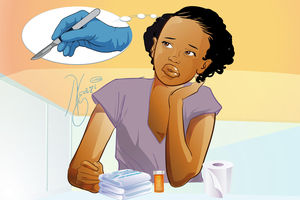
Be wary of wearing tight, synthetic underwear. This also provides a favourable environment for candidiasis to thrive. Finally, be careful how you clean yourself after passing urine. PHOTO | FILE

What you need to know:
- Well, science has shown that the fungus that causes candidiasis lingers around the vagina all the time and strikes when the environment is conducive for it to thrive. Pregnancy provides a suitable environment. Hormonal changes make the pH of the vagina turn from alkaline to acidic.
- In addition, the sugar content and moisture levels of the cells around the vagina increase. These changes encourage the survival and multiplication of Candida.
- More common however is the use of antibiotics. The vagina has normal bacteria that maintain its pH and keep off the fungus. When broad spectrum antibiotics are used, they kill these useful bacteria. As a result, the vaginal environment changes and causes the fungus to thrive.
Dorcus had missed work for two days when she came to the sexology clinic. Although she felt severely itchy in her private parts, that was not why she came. She had missed work because she was in shock at the thought of having an unfaithful husband; she was actually sliding into depression.
“I have kept myself pure all these years and I thought I would get a faithful man; see what he has done to me!” she exclaimed. Dorcus had only been married two years and she was four months pregnant with her first baby. Her marriage had been blissful, and getting pregnant was the icing on the cake. Then this.
Although she was happy about the pregnancy, her libido had reduced significantly since. As such, the frequency of sex with her husband reduced drastically. Dorcus was afraid that this could cause her husband to look elsewhere for satisfaction. Her fears became palpable when she developed the vaginal itchiness and a discharge. She concluded that her husband was not only cheating on her, but had also picked up a sexually transmitted disease and passed it on to her.


I examined Dorcus; the surroundings of her vagina were inflamed, with signs of continuous scratching. These findings were typical of vaginal candidiasis, a common fungal infection in women. I took a swab for laboratory confirmation to get as accurate a diagnosis as possible. Results of the test confirmed fungal infection by Candida albicans, the commonest cause of vaginal candidiasis.
“So my fears are confirmed. I have an infection!” Dorcus exclaimed, looking devastated. I realised I needed to put her straight. It was obvious Dorcus did not know much about vaginal candidiasis.
Up to 75 per cent of women in reproductive age get candidiasis at least once in their lifetime. Some women even get repeated episodes. What is important to know is that it is not sexually transmitted.
MANY CAUSES
“Are you kidding me? I do not trust this!” Dorcus said.
Well, science has shown that the fungus that causes candidiasis lingers around the vagina all the time and strikes when the environment is conducive for it to thrive. Pregnancy provides a suitable environment. Hormonal changes make the pH of the vagina turn from alkaline to acidic. In addition, the sugar content and moisture levels of the cells around the vagina increase. These changes encourage the survival and multiplication of Candida. When the fungus grows in plenty, symptoms occur. Similar changes to the vaginal environment can happen with some contraceptive pills, and so some women may have increased incidences of candidiasis when using them.
Secondly, the fungus thrives when the immunity of the body is low. This could be due to diseases such as diabetes, cancer or HIV. It could also be due to stress or malnutrition. The result is that the immune system fails to contain the lingering Candida fungus.
More common however is the use of antibiotics. The vagina has normal bacteria that maintain its pH and keep off the fungus. When broad spectrum antibiotics are used, they kill these useful bacteria. As a result, the vaginal environment changes and causes the fungus to thrive.
Further, if you are fond of douching or using perfumed soaps and detergents to clean the vagina then you also risk getting candidiasis. These practices kill the normal bacteria and leave the vaginal area prone to candidiasis.
“But doctor, how do you expect a woman to remain clean?” Dorcus interrupted. “I douche quite a lot and wash with soap.” Well, pregnancy, douching and using detergents and perfumed soaps to clean the vagina are all risk factors for vaginal candidiasis.
Be wary of wearing tight, synthetic underwear. This also provides a favourable environment for candidiasis to thrive. Finally, be careful how you clean yourself after passing urine. The way to do it is to clean from up going down and not from the anus coming up. Some women move germs from the anus and into the vagina by cleaning themselves the wrong way and end up with candidiasis and other infections.
Dorcus was also screened for diabetes and HIV. These were both negative. We concluded that her candidiasis was due to the pregnancy, douching and using soap to clean the vagina. As she took her prescription she looked at me straight in the eye and smiled.
“The most important thing you have done is to reassure me that I do not have an STD,” she said, and then she hurriedly walked out of the consultation room as if she had just survived a disaster.