Export of horticultural produce, including fruits, vegetables and flowers, will attract a levy of 0.25 percent under proposed regulations aimed at promoting, developing and regulating the industry to meet international standards on product quality and food safety.
The levy, calculated on the customs value of exported horticultural produce and avocado crude oil, could put upward pressure on the prices of Kenyan produce in overseas markets, including avocados, mangoes, pineapples, French beans and snow peas.
“There shall be a levy, based on the customs value imposed on all horticultural produce and avocado crude oil destined for export at the rate of 0.25 per cent of the customs value,” reads the draft Crops (Horticultural Crops) (Amendment) Regulations, 2026.
The regulations also propose graduated levies on imported horticultural produce, with finished products attracting a four percent charge on import value, compared with two percent for fresh produce and raw materials. The higher charge on processed imports is intended to encourage local value addition.
The levies will be remitted to the Agriculture and Food Authority (AFA). Businesses that fail to pay on time face interest of 25 percent for the first month or part of a month, followed by 12 percent compound interest for every subsequent month or part thereof.
The proposals revive provisions contained in the 2014 horticultural regulations, but introduce a broader framework for controlling production, handling, processing and trade.
The export levy could affect one of Kenya’s leading foreign exchange earners. Based on horticultural exports valued at Sh189.9 billion last year, the government would have collected approximately Sh475 million from the proposed 0.25 percent charge, assuming the entire export value was eligible and subject to the levy.
The proposed import charges would also affect traders bringing finished horticultural products such as fruit juices, tomato paste, preserved fruits and canned vegetables into Kenya.
Fresh produce imported includes apples, oranges, grapes, onions and garlic. Kenya imported apples worth approximately Sh1.56 billion in 2025, alongside oranges valued at Sh794 million and grapes worth Sh747 million, according to UN Comtrade data.
Beyond the levies, the draft introduces new compliance requirements across the value chain.
Dealers, exporters, importers, processors and packhouse operators will face registration or licensing requirements, while growers and dealers must maintain records showing where produce originates.
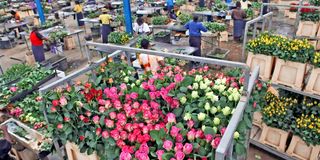
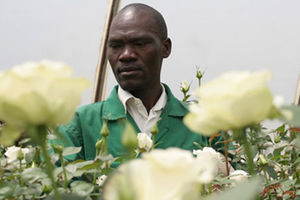
Horticulture crops in a Greenhouse.
Photo credit: File
Dealers will also be required to adopt an AFA-approved traceability system and establish procedures for withdrawing or recalling produce that poses food safety risks.
The proposals introduce an industry pricing committee, comprising representatives of growers, exporters, processors, marketing agents and government, to recommend pricing formulas based on prevailing market rates and supply and demand. Grower-dealer agreements will also have to be submitted to AFA.
Other requirements include the use of registered pesticides, potable water in post-harvest handling, regular inspections of handling facilities and transport vehicles, and packaging branded “Produce of Kenya”.
Non-compliant produce may be seized, detained or destroyed, while exporters using forged documents risk a one-year suspension.
The new rules would add to the costs of operating in the sector. The proposed annual fees include Sh5,000 for dealer registration, Sh5,000 for packhouse registration, Sh10,000 for an export licence and Sh10,000 for an importer licence.
A horticultural produce processing licence would also cost Sh10,000 annually. Nursery and mother-block inspection is set at Sh1,000 per site annually, while a maturity inspection report costs Sh1,000 per inspection.
Registration of a nursery operator or mother block for the export market is Sh5,000 annually. The schedule does not specify a separate fee for importer registration.
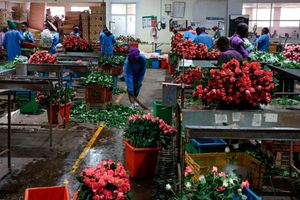
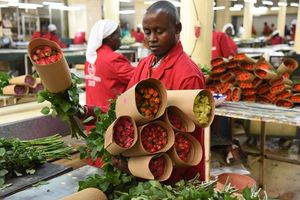
Workers prepare roses for export to the European markets at the Maridadi Flowers warehouse in Naivasha, in this past photo.
Photo credit: File | Nation Media Group
Europe remains a key destination for Kenyan horticultural produce, with the Netherlands, the United Kingdom and France among the leading markets.
Germany, Switzerland, Belgium and Sweden are also important destinations. The Netherlands is particularly significant as a distribution hub for avocados and a major market for cut flowers.
Listed agricultural firm Kakuzi is among Kenya’s leading horticultural exporters, with avocados a key product.
In the year ended December 31, 2025, the Murang’a-based company harvested avocados valued at Sh2.14 billion, a 26 percent increase from Sh1.7 billion the previous year.
The company has historically supplied European retailers including Sainsbury’s and Lidl. Tesco was also among its UK retail customers before suspending its relationship with the Kenyan exporter in 2020.
Kakuzi is exploring export opportunities for avocado products, including long-life avocado, frozen avocado pulp and crude avocado oil, as it seeks to extend shelf life and capture additional value.
The regulations have been prepared by the Cabinet Secretary for Agriculture and Livestock Development in consultation with AFA and county governments.