The making of the feminine leave policy at the Kenya Wine Agencies Limited (Kwal) began with a question that most organisations never stop to ask: What are we not seeing?
For Lina Githuka, managing director of Kwal, that question has shaped nearly a decade of quiet, deliberate transformation. It is the same question that recently thrust her company into the national spotlight.
On World Menstrual Hygiene Day, Kwal announced a new Feminine Leave Policy, one paid day off per month for employees experiencing health challenges related to menstruation, perimenopause, and menopause. The policy grants 12 days of paid leave annually, separate from sick or annual leave, with no doctor's note required.
“It is the acknowledgement that a woman going through these challenges needs time to reset and come back feeling more wholesome,” Lina noted during an interview with Nation Lifestyle , after a morning of calls that have not stopped since the news of the feminine leave broke. Her phone has been blowing up with messages from women across the country.
“The reality is, most women show up to work even when they are in discomfort. But are they really being productive? We know the answer to that.”
For Lina, this policy is not a sudden act of generosity. It is the latest chapter in a career defined by listening to what people actually need.
Her own journey began far from the corner office. She started as a graduate trainee at Unilever, cutting her teeth in brand marketing. Ten years later, she moved through brand management at BAT and landed in London as an international brand manager.
Then came a consumer director role in South Africa, which is also where she became a mother. After maternity leave, she expressed interest in the commercial side of the business and got it, working with key accounts in South Africa’s organised retail market.
“I left knowing I was going to come back,” she says. “It was about getting a global perspective, being trained and exposed, to then add value to my home market.”
At BAT, she was earmarked early as a potential marketing director for East and Central Africa.
“I became the first female and first local to hold that role. But two and a half years in, my daughter needed more time with me yet I was travelling constantly.”
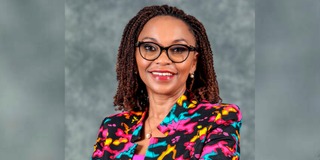
Lina Githuka is the Managing Director at the Kenya Wine Agencies Limited (Kwal).
Photo credit: Pool
So she did something that many high-flying executives rarely do. She negotiated an exit and took a six-month sabbatical.
Four months into her sabbatical, a former colleague told her that Kwal was looking for a commercial director. She threw herself into the ring. They didn’t quite agree on terms at first, so she took a risk.
“I joined as a commercial consultant, but stayed as the commercial director six months later. Probably the best decision I ever made.”
In November 2018, she was appointed managing director — again, the first female and first local to lead the organisation. Since then, she has overseen a remarkable transformation.
Kwal outgrew its old Industrial Area site, so Lina led a Sh5.5 billion investment to build a greenfield factory in Tatu City, relocating staff and operations.
At the same time, following Distel’s acquisition by Heineken, Kwal became part of the global Heineken family in 2023. Heineken now owns a 55 per cent stake in Kwal.
“It has been an amazing story of growth on different levels,” she says.
But the physical move was only half the story. Lina’s real focus has been culture. In 2019, she launched the Kwal Women’s Chat Lounge.
“I found women here with a lot of potential who needed empowerment. We wanted them to find their wings.”
The lounge evolved into mentorship programmes, leadership training, and eventually the Ela Lidera Women in Leadership Programme, which has now graduated 45 women managers.
Then came the policies that include a lactation room in 2019, an enhanced maternity policy in 2021, moving from three months to four months, and extending to surrogacy, adoption, and even stillbirth. Paternity leave increased to three weeks. Defined working hours were introduced, allowing employees to start two hours early or two hours late.
“We are constantly reviewing our policies to make them more progressive,” she noted proudly.
And for men? In 2020, Kwal launched the Bro-Code; a safe space for men to talk about mental health, stress, and the pressures that Covid brought to the fore.
“Men, unlike women, don't talk openly about their issues,” Lina shared.
“We looked at women’s health holistically,” Lina explained. “From entry-level to senior managers, women are constantly going through different reproductive stages; menstruation, perimenopause, menopause and this speaks to everyone in their life cycle.”
The policy is anchored purely on trust and no medical certificate required. Just inform your line manager, request the leave online, and stay home.
“We are leaning on our principles of accountability, respect, and dignity,” she said. “We will take all line managers through training to extend grace and no judgement.”
She admits that since they went public with the feminine leave policy announcement, the response has been overwhelming and positive.
“I had a male employee come to me and say thank you, because he has two daughters and he sees what they go through. He said, ‘This is the kind of organisation I would love my daughters to work for.’”
On challenges, Lina is the quick to admit that leadership today is harder than ever.
“The biggest challenge is leading through uncertainty,” she says. “I took over in November 2018. I had maybe a year and a half of stability, then Covid. It feels like my whole tenure here has been evolving.”
She has learned to stay calm, to surround herself with the right people, to listen more, and to lead with empathy. “I’ve also learned to ask for help when I need it,” she says.