There was a time when everything about Mr Nice was nice.
He had money — and plenty of it, fame that opened doors, swagger that turned heads, and demand that kept his phone ringing. Even beautiful women seemed to orbit his world, all competing for a slice of his attention.
Lucas, the man behind the Mr Nice persona, wasn't just living the dream. He was the dream.
He had his moment in the showbiz world, then ‘disappeared’, settling in Kenya because he’s never felt cherished and treasured back home in Tanzania.
“For clarity, I have never had an alias. Contrary to what many people think, my real name is Lucas Nice Mukenda.
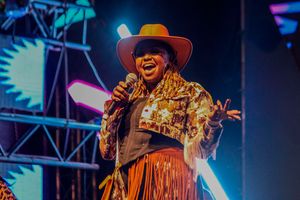
Tanzanian music icon Lucas Mkenda, popularly known as Mr Nice performs at a concert in Nairobi.
Photo credit: Pool
I began doing music in 1997, and people only got to know me in 2002.
I did not stop doing music; I took a break. I wasn’t doing music to become a slave to it, as if I can’t survive without it. Even if it's something you love to do, don't allow yourself to be a slave to it. You have to be content with yourself. Artistes like Rick Ross drop one single in five years.
Look at Nameless (David Mathenge), another classic example. There’s a time for everything. We had our time when we camped every day in studios, recording and releasing music back to back. Now it’s time to take a back seat and enjoy the fruits of that labour.
I started music in the era of cassette tapes, then came compact discs. In the 2000s, my albums would sell over 300,000 copies. Those were record numbers back then. Depending on how well an album was received, I could make between Tsh300 million and Tsh500 million (Sh13 million to Sh32 million at the then exchange rate).
At my peak, I would charge Sh500,000 for stadium shows. There was a time I had eight shows in Comoros, and for each show I earned Sh150,000, which in total was Sh1.2 million back then. Those were crazy figures at the time.
I learnt how to negotiate for good deals from my mother, who was a businesswoman. She ran six curio shops in Zanzibar before she passed on, and I would help run the business. So my music success wasn’t the first time I was handling good money. I was already making a decent living from my mother’s business.
No, I never went broke. As I said, I took a break to enjoy life. I wasn’t meant to be a slave to music. . That’s why, even after not performing for many years, I can still afford a comfortable, affluent lifestyle. I still live well.
What I have learnt with life is that you can have money and still live a miserable life. And you can live a good life without much money. What really matters is the discipline of life. I am content with what I have.
Tanzanian music icon Lucas Mkenda, popularly known as Mr Nice, reflects on fame, fortune, and life beyond the stage.
Photo credit: Pool
I remember while on the one long month Comoros tour, I received a last-minute offer to perform in the US. The deal was too good to turn down, but the timing made it impossible to book a flight to the US and return in time to continue the Comoros tour. So I hired a private jet. What followed was a media backlash.
Suddenly, Tanzanian media was full of stories about how I was wasting money and living too lavishly. It’s funny because today, the same media celebrate artistes for chartering private jets for shows.
I think it’s high time people stop asking why I relocated to Kenya. Kenya has always been my home. It’s where I received so many flowers for my music, and it’s also where I built a family.
I don’t like talking too much about my family. They prefer their privacy. They say they are not the celebrity.
My wife is a Kenyan doctor. We have three children aged 24, 20, and 16. She had a child from a previous relationship, then we had two. My wife and children are based in Melbourne, Australia. I visit them, but I don’t like living in Europe, that's why I am always here.