In 2010, Phyllis Wangui was on a fast track to success as a legal officer in the banking industry. A top student, she scored an A minus before pursuing a Bachelor of Laws at the University of Nairobi, where she consistently appeared on the Dean’s List.
“When you’re on the Dean’s List, your names are sent to all the top law firms and organisations that are hiring. And the problem was having too many choices,” she says.
She graduated in 2006 and joined Dr Gibson Kamau Kuria, inspired by his passion for justice and human rights. Although she had been active in student constitutional reforms, she chose the corporate path after admission to the bar in 2007.
In 2008, a friend working at the newly established Gulf African Bank submitted her CV. She was interviewed and offered a job the same day.
The transition was demanding. With no banking or work experience, she became second in command in the legal department, helping develop the bank’s credit lending policies. The role accelerated her career but also came with relentless pressure.
“I was working myself to burnout,” she recalls, describing being on call almost constantly.
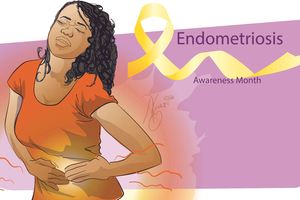
Two years later, her health deteriorated. She developed severe pain that was eventually diagnosed as endometriosis.
“Outwardly, I had a very successful career. But behind the scenes, I had to deal with managing a very chronic disease.”
“I was embarrassed to even talk about it. Periods were not things you would keep bringing up at work.”
At the time, awareness of endometriosis was limited. Colleagues questioned whether she was exaggerating, while she struggled with pain that sometimes occurred even outside the menstruation period.
“There is a stigma around it,” she says, noting that many young girls with the condition are wrongly labelled lazy or dramatic.
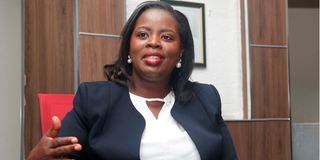
Phyllis Wangui Kamau.
Photo credit: Evans Habil | Nation Media Group
Doctors initially struggled to identify the cause of her constant pain. She was even tested for ectopic pregnancy before a doctor diagnosed endometriosis. She was relieved it had a name. But she also learnt it was a lifelong condition with no cure. One of her inspirations was the late media personality Lorna Irungu, who openly shared her battle with lupus.
“At some point, Lorna learnt how to manage Lupus and she went on to build a very strong career and a family,” says Phyllis.
Lorna encouraged patients to find excellent doctors, build a strong support system and maintain a positive attitude. Phyllis took that advice seriously. Her family became her greatest source of strength, including her father, who embraced learning about a condition that many families rarely discuss.
She underwent surgery, hormonal therapy and other treatments, but the pain persisted. Eventually, she could no longer balance the demands of banking with her health.
“I couldn’t do it anymore. I was always tired, sick, in pain.”
Without fully explaining her condition to her employer, she resigned from the bank in August 2010. She returned to her parents’ home to recover. Treatment was expensive, costing between Sh30,000 and Sh50,000 per month, expenses her parents covered because she no longer had insurance.
After a year of recuperation, she joined Span Image as a legal officer. The position paid about a third of her previous salary but offered flexibility that allowed her to manage her health.
“I wanted a job where if I’d say I’m not turning up tomorrow, I’d be understood.” Much of her income went towards treatment while doctors recommended further surgeries. She immersed herself in research, becoming so knowledgeable that one doctor jokingly asked what Google was telling her before consultations.
She also transformed her lifestyle, changing her diet and taking supplements while eliminating foods she believed worsened her symptoms.
Her advice to anyone living with a chronic illness is to work closely with doctors and develop a long-term management plan.
She also credits gynaecological and pain specialist Prof Kamau Koigi with helping her manage the condition between 2012 and 2014. As the pain became manageable, her confidence returned.
In 2013, she joined East African Breweries Limited as legal counsel before being recruited later that year by Safaricom as government relations manager.
She describes Safaricom under the late Bob Collymore as one of the most supportive employers she experienced.
“This was an employer that understood life-work balance, young professionals, and women.”
Facilities such as a breastfeeding room, crèche, workplace medical consultations and a company gym created an environment where employees could thrive without shame.
Phyllis Wangui Kamau during an interview at Nation Center in Nairobi on June 10,2026
Photo credit: Evans Habil | Nation Media Group
“Sometimes, what you need to do is just exercise to help with pain management.”
She notes that endometriosis affects every woman differently, recalling conversations with the late Njambi Koikai, who reminded her that dietary changes do not work for everyone.
In 2019, Phyllis joined Visa as Director of Government Engagement for East Africa, overseeing government affairs across 11 countries. Within three years, she was promoted to Senior Director of Government Sales and Head of Visa Government Solutions for Sub Saharan Africa, establishing the company’s public sector sales structure across the continent. Her work earned her the prestigious Visa Infinite Circle award, recognising top global talent, along with a two-week holiday in Hawaii.
Despite her corporate success, she increasingly felt called to serve her community.
Having experienced the advantages of quality healthcare through well paying jobs, she often wondered how women in rural areas coped with endometriosis, infertility and other reproductive health conditions without access to specialists.
Towards the end of February 2026, she resigned from Visa to focus on the Phyllis Kioi Foundation and her campaign for Kiambu County Woman Representative.
Drawing from her own experience, she wants to champion reproductive health, including access to treatment for endometriosis, fibroids, infertility and IVF, which she says remain beyond the reach of many women.
“As a mother and someone who has lived through significant reproductive health challenges, this is deeply personal to me.”