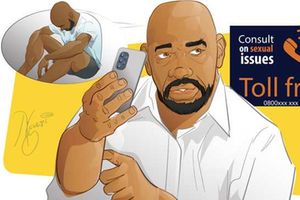
The sad story of Joan is one worth narrating because it is packed with lessons that may be of help to many people with spouses suffering mental health problems. Joan called me last week and reported that Andrew, a man she abandoned a month ago, had committed suicide.
“I wish I listened to you,” she lamented.“This death will haunt me forever.”
Joan and Andrew had been married for nine years and had two children. They came to the Sexology Clinic for the first time when they were in their seventh year of marriage. Andrew, at that time, had suffered repeated bouts of erection failure. The relationship was going through a crisis. Joan complained that other than being unable to have sex, Andrew no longer cared for the family. He was aloof and had resigned from his job for no good reason.
After a full assessment, I concluded that Andrew had a mental illness. I referred him to a psychiatrist for review as I managed his erection problem. It is important to note that sex suffers when mental illness strikes a relationship.
It is therefore common for Sexology Clinic to be the first point of call when one becomes mentally ill. In fact, years ago, before adequate scientific studies showed otherwise, sex problems were treated by psychiatrists because they were believed to be psychiatric problems.
The psychiatrist confirmed that Andrew had bipolar mood disorder. This required long term treatment. It was the beginning of a long journey for the couple.
A long the way, Andrew suffered side effects of medication. Sometimes he abandoned treatment. His condition worsened. Joan gave up and walked out of the marriage.
“Already, I have the full responsibility of taking care of the children alone,” she said in justifying her action. “He is a burden I cannot live with; his condition has made me sick, I cannot cope.”
Many couples are likely to find themselves in Joan’s situation as one out of four Kenyans have some form of mental illness. It is important to prepare and handle the situation well when it strikes.
When the problem strikes, you need to understand the diagnosis and how it is managed. You need to know that you are part and parcel of the illness by virtue of the fact that you are the next of kin. Know that there will be times when the person may even lack insight of themselves depending on the kind of illness. At such times you must fully take responsibility for their wellbeing. Remember that it is the illness that is taking a toll on them, and it is not the person becoming a nuisance. They may even talk to you badly and be unappreciative. It is the illness, not the person.
You will also need support from a professional. It can be difficult to cope with the emotional and psychological stress that the illness brings to the family. Professional support keeps you going.
Remember that mental health problems are highly stigmatised. People label the sick, sometimes calling them sinful and cursed. Be prepared for such. Your role is to ensure that dignity and respect for the person is maintained. Privacy is key and it is expected that you will not discuss unnecessary details with every Tom, Dick and Harry.
Many times, financial difficulties will compound the situation. Most people with mental health problems can be productive and continue providing for the family. In a few cases, however, the person may be out of work and so the financial burden falls on the spouse.
Side effects of medicines can also be problematic. Some medicines can make the person sleep too much. Others may cause weight gain while others make the person feel sicker. The patient can even refuse to comply with treatment.
“That’s the reason I got fed up with Andrew,” Joan interjected. “I was tired of begging him to use his medicine.”
While being the care-giver-spouse, your view of the person you loved can easily change. People forget that it is the illness interfering with the good person they loved, that the irrationality and unreasonable behaviour, including being ungrateful, arrogant and sometimes insulting are all manifestations of the illness rather than the person being willingly troublesome. Good thing is that there are many good days which can be celebrated. Some mental illnesses can be completely managed or even healed with time. Patience is therefore key.
“I wish I had exercised patience, maybe he wouldn’t have died,” Joan said, crying uncontrollably.
Well, it is a difficult experience living with a spouse with mental illness. Divorcing them may however not be the solution. The best is to put your best foot forward in supporting their treatment.