When Hellen Otieno got her firstborn son, she was not only caught up with the struggles of first-time motherhood, but also of pursuing her career in education. She was barely 20 but had made an agreement with her husband that starting a family early and being young parents would not pause their higher education and career journeys.
Fortunately, her mother-in-law agreed to take care of the baby while she was studying. That, she says, lessened their worries as a couple since the baby was being taken care of by someone they both trusted and had experienced first-hand parenting skills.
“God came through, because I was actually young, a mother and a student. So, when I was going to school, my mother-in-law was taking care of the baby in a good way that I used to admire; until the baby started recognising her as his mother. I had to accept it because I would only be home one month with the baby, then four months away in school,” she tells Parenting .
As the baby continued to grow, Hellen adjusted her motherhood skills. She strictly followed her mother-in-law’s menu and schedule when feeding the baby. And that, she says, worked well.
“My mother-in-law played a very key role in raising my firstborn. I did not do a lot of snacking because that short time during school holidays I wanted to feed my baby very well and bond with him by ensuring that I prepared all his meals in time as guided by my mother-in-law before leaving for another school semester,” she recalls.
Hellen Otieno, a mother of three, says that snacks are her children's favourite meal.
Photo credit: Pool
But being away from her child for her studies lessened the bond between them. Her son had grown, could play, walk and run. She had really hoped to see him run towards her as she walked through the gate.
“On my way home from school I used to think of what to give my baby when he ran to me, and the first thing that used to come to my mind was yoghurt. I wanted to win him over when he saw me, so I used to take something attractive. It was nothing but a snack. Sometimes, I used to buy strawberries because I would pass through Kisumu town where there were strawberries in abundance,” she explains.
Hellen eventually completed her course and graduated. She was then caught up between balancing motherhood and her career. She and her husband moved to Migori town so that she could be closer to her workplace; a teaching job at a private school. The job was more demanding, her family was also growing and that saw her shopping for more snacks.
“I prefer going with my sons to the supermarket when shopping, but at times, I ask them what snacks I can buy for them. I have to budget for the snacks,” says the mother of three.
“Their preferences are totally different. My firstborn, for example, loves smokies and samosas so much, unlike the second born who likes crunchy snacks like crisps, cookies, popcorn and biscuits. My youngest child just joined reception class this term and he enjoys his older siblings’ snacks,” she observes.
fries
Photo credit: Shutterstock
“Snack is a very big challenge to my children because that is their favourite meal. Any moment I give them that snack, their appetite for food goes away and food remains as served on their plates. The last two will not even taste it. They say, ‘Mummy, I am full,’ and that is it,” Hellen tells Parenting.
This realisation has made her to gradually start limiting snacks for her children. It has been easier especially now that she is a teacher at a government-run school, therefore there is no pressure of working till very late in the evening and during holidays.
“I try to avoid giving them snacks towards the main meal because it denies them the interest of eating food that I have spent so much time preparing in the kitchen. I would rather keep them busy doing their homework or ask them to take a shower instead as I prepare the meal very fast. By the time they are finished I am also ready with meals on the table so that they can eat to their satisfaction,” Hellen says.
Over weekends and school holidays, when they spend more time at home, she also involves them in making fresh fruit juice as a snack rather than taking ready-made juice that forms part of her supermarket shopping.
“My babies really love juice made at home. They will suggest flavours like strawberry, orange, avocado or banana juice. That motivates me to buy more fruits. When I am blending, they hang around me as they wait and enjoy the fresh juice as I take the rest to the fridge.”
Her efforts extend far beyond her kitchen.
Doing away with some snacks, she says, is one step at a time.
But even with these efforts, she says there is still a bigger challenge.
“The smokie business is booming, and the youth here love it because it makes them a lot of profit. It is becoming hard to control children from buying them, especially for us living next to the shopping centre. One smokie is only Sh20 and anytime you send a child to buy something, they will interact with the sellers.”
Judy Kihumba, a mother of three, says it is impossible to stop her children from taking junk snacks.
Photo credit: Pool
A few hundred kilometres away in Nairobi, Judy Kihumba, another mother of three, also struggles with stopping her children from eating certain snacks sold around the neighbourhood where her family lives.Parenting.
These junk snacks, she says, also find their way into her kitchen.
While Judy would love to avoid wheat and sugary snacks, she says that the options are limited.
But the challenge goes far beyond the house.
Both Hellen and Judy say that the schools their children attend offer main meals during breakfast and lunch times for all learners. They also confirm that teachers do not allow learners in the respective schools to carry snacks to school.
For Judy, that distance between school and home offers her a chance to buy snacks for her school going children who are currently in grades 5 and 1.
“In the morning, I carry something small for them before we get to class so that they can be a bit full before they go to class. They snack again on what I have carried for them at 4pm in the evening when I pick them. It is not possible to stop giving my children snacks,” Judy says, adding,
“On average, they wake up early, whether they are going to school or not. They take breakfast, around 10 am, they snack before lunch, then they snack again before dinner and after dinner before they go to sleep, they havesomething,” she says.
Judy often has conversations with her children on how they can have healthy snacks. Occasionally, she offers them fruits, ground nuts, sweet potatoes and yams. She also adds pumpkin and sunflower seeds in her children’s yoghurt, which they also enjoy taking as a snack. However, doing away with wheat products has remained a constant struggle.
“What I have tried to avoid in my house but have not succeeded is bread. It is like a main snack since there is always bread on the table. Junk food is a concern because as much as I want my children to eat less wheat and sweets, sometimes it is the only available thing,” Judy explains.
In Nairobi’s Kasarani, we meet, *Wanjiru* who has been operating a retail shop for over 10 years in the area.
During this period, her now 13 and 10-year-old children, spent most of their time in the shop during their formative years. As a result, they prefer eating the unhealthy snacks she sells over meals she prepares for them.
“Whenever I stop them, they cry. During meals they hardly eat,” she tells Parenting .
Her retail shop is strategically located within residential areas where parents send their children to buy groceries from. Although she also sells food stuffs, snacks like chocolate-coated biscuits, instant juice powder, ready to drink juices in small bottles, sweets, lollipops, chewing gums, and cakes are part of the snacks in her shop that most children frequently buy.
“A bag of ‘wauwau’ has six dozen and I sell the whole of it within a day because children love it. A packet of those small bottled juices only has 12 bottles and sometimes 12 children come and they buy all of them at once,” she says.
Dr Peter Mokaya, a Nutritionist, who is also the director and CEO of Organic Consumers Alliance, describes snacks like juice, soda, energy drinks, biscuits, chips, sweets, bread, cakes, crackers, and some forms of dried potato crisps as examples of unhealthy snacks because of their highly processed sugar content.
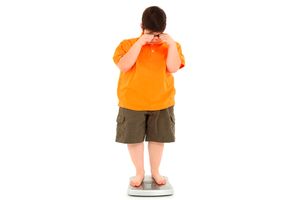
“Most of these snacks are full of sugars, so they give the body the impression of fullness. When you do this snacking in between the three meals, you are actually deceiving the body that it has all the nutrients it requires, and sends signals from the stomach to the brain that you are not hungry. So, these kids end up being overweight but undernourished,” says Dr Mokaya.
The public health physician notes that various research shows that consuming snacks full of sugars with low levels of proteins, vitamins and other nutrients that the body requires to function optimally result in a lack of appetite by children during time for major meals. But after a while, they feel hungry.
“That is a trend we should discourage because it manifests as obesity, tiredness, fatigue and, in the long run, very severe chronic diseases start manifesting in young children and adolescents which was not the case before,” Dr Mokaya notes.
He adds, “You can see when all these snacking businesses started, obesity levels, and overweight issues also started to manifest in schools. Big issues from small things. Minimise and cut them out altogether. Remember that a meal should be a healthy diet: carbohydrate, protein, vitamin, healthy fat.”
Many parents or adults all too often pack for their children snacks that consist of just calories from additives and preservatives in fat-laden chips, cookies or soda.
Photo credit: FIle | Nation
“The answer is yes. If a child is given a healthy, balanced meal of breakfast, lunch and supper, you can completely do away with snacks. In between, they need to take water. It is the medium within which all these nutrients like protein, carbohydrates, fats, vitamins and so on operate. Without water, the human body will burn out and actually stop functioning,” says Dr Mokaya.
When it comes to ensuring that children take enough water, he says that they should have at least half a litre to one litre of drinking water between the meals, while ensuring that they take three meals a day because of their high metabolic requirement. When they get home after school, he emphasises that children should only have a light meal in the evening between 6pm and 7pm. Not later than 7pm.
“The heavier carbohydrate meal should be during the lunch time for kids who do not go for afternoon class. But for those who go for afternoon class, they can have a moderate combination of proteins, carbohydrates and vitamins. Research has shown that a heavy meal in the evening called supper or dinner is not compatible with healthy outcomes,” explains Dr Mokaya.
Asked why it is advisable to feed children an early light evening meal, Dr Mokaya said, “Their bodies require a period of rest of between 16-18 hours before the next meal. The longer the resting period is, the healthier the body is able to function during its active period, which normally is between the hours of 7 o’clock in the morning to 7 o’clock in the evening.”