As Kenya commemorates the 10th anniversary of the passing of William Ronkorua ole Ntimama, there is no better moment, with the benefit of hindsight, to offer a balanced retrospective of the man who bestrode the Maa political and cultural landscape like a colossus.
After all, this was the man who, for a quarter of a century, the Maa of Kenya and Tanzania came to regard as their unrivalled Leader, Spokesman, advocate and ultimately community father figure.
As we reflect on the man and his legacy, it’s worth noting that 10 years after the death of Ntimama, who was a cabinet minister and prominent politician during Daniel arap Moi’s presidency, there has been no successful claimant to the “throne”.
Indeed, the 10th anniversary is being marked against the backdrop of a collective nostalgia, a wistful longing for a more certain past by a community struggling to find its bearings in a fast-changing world.
The rise of Ntimama to Maasai political supremacy was itself complex, intriguing and unlikely. For a start, the Maasai socio-political system has traditionally been more republican than monarchical, often inclined to less central government, favouring core personal freedoms and age group autonomy rather than a system built around an all-powerful King.
Secondly, the Maa Nation has always been largely devolved, with the 25 or so sub-nations operating semi-autonomously with their own leaders. It was, therefore, no mean feat that Ole Ntimama succeeded in rallying this independent minded, diffuse, republican and often intransigent nation around himself. The secret possibly lay partially in his uncanny political instincts; but mostly in his consistency of speech and deed which ultimately earned him the trust of his people.
Moreover, Ntimama knew his people as well as they knew him. Having grown up among them, he gained a mastery of their psychology and ways, making it easier for him to blend in yet emerge as their blade among the boys.
Ntimama went to school largely in what was then the Maasai Reserve. He became a school teacher in the then Narok District. For 20 years, he navigated the choppy waters of County Council politics as clerk and later Chairman of Narok County Council for a record three terms. In fact, besides short absences as a student in Kahuhia in Murang’a and as a District Officer in Baringo, William Ole Ntimama lived all his life among the Maasai people.
He built himself through mastery of the grassroots, working through the recognised leadership structures, and building consensus through endless consultations with his Motonyi home becoming a beehive of comings and goings to his very end. This constant need for consultation and seeking community direction through public resolutions led to the famous Suswa Meetings, which invariably ended with a Suswa Declaration. In the manner of the ancient Greeks of Athens, Suswa became the People’s Assembly and its declarations a people’s Hansard setting out the way forward on the key issues of the day.
Former President Daniel arap Moi (left) chats with former Cabinet minister William ole Ntimama (right) as former Attorney- General Amos Wako watches in May, 1994.
Photo credit: File | Nation Media Group
For Ntimama to rise, Justus Kandet Ole Tipis had to fall. And that was not easy. The cigar-smoking, whiskey-loving, moustachioed Justus Ole Tipis had become an institution unto himself. He had, after all, built deep networks with the Jomo Kenyatta system. And having been at the Legislative Council (Legco) with Daniel Arap Moi in the 1957contest for Member of Legco for Rift Valley, Moi, as President, preferred the familiar Ole Tipis by his side. So, when William Ole Ntimama attempted to oust Tipis in 1983, the KANU machine came to the rescue and harassed Ntimama out of that contest despite Ntimama being Narok KANU Branch Chairman.
For fear of a backlash, however, the government subsequently assuaged Maasai frustration by appointing Ntimama the Chairman of the then powerful Kanya Farmers Association (KFA) headquartered in Nakuru. This stint in Nakuru became a blessing in disguise. Although Ole Tipis persisted in blocking the rise of Ntimama, his KFA chairmanship gave Ntimama a unique opportunity to court the Moi power brokers who all happened to be members of the Kenya Farmers Association. By 1988, Ntimama had achieved some reluctant accommodation in the outer sanctums of KANU.
Whereas Ntimama was already KANU District Chairman for Narok, Ole Tipis was the National Treasurer and sat at the National Executive Council with all the big boys. However, in the 1988 General Elections, Ntimama displaced Ole Tipis and was immediately appointed to Cabinet and also inherited the KANU National Treasurer seat from Ole Tipis. As it turned out, four years previously, Stanley Shapashina Oloitopitip of Kajiado had fallen out with Moi and had been stripped of all public positions. Therefore, Ntimama burst into the national limelight when the stars were aligned and having beaten a powerful Minister of State in the Office of the President.
Following that election, Ntimama was appointed Minister for a colourless Ministry of Marketing and Supplies. But not to be deterred by titles and names of ministries, Ntimama wasted no time and proceeded with fervour to court the Maasai political realm, eventually scaling up to its pinnacle and stamping enduring moral authority over it. In sum, a combination of his stature as a senior Cabinet Minister, his continued advocacy of key community concerns even while in government, and the sheer force of his personality and presence conspired to make him first among equals and, with time, the unchallenged supremo.
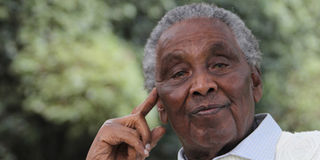
Former Cabinet minister William ole Ntimama.
Photo credit: File | Nation Media Group
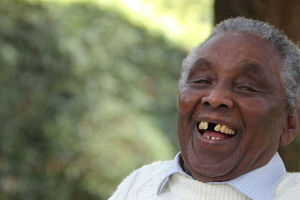
Three personal attributes earned William Ole Ntimama the love and adoration of the majority of the Maasai people. For one, he was an easy going person with a signature laughter that brightened up the gloomiest of situations.
Secondly, for a nation which reveres fearlessness, Ntimama was their man. He spoke his mind, spat fire and brimstone when necessary and sometimes dramatised his readiness for war by turning up in warrior regalia. In short, he was the epitome of the Warrior King.
Thirdly, Ntimama was eloquent in both English and the Maasai language and spoke in deliberate poetry and lyricism. Indeed, when Ntimama rose to speak in Parliament, he cut the figure of Winston Churchill in poise and ebullience. His speeches will probably resonate for years to come.
In the 25 years that he dominated Maasai politics, Ntimama’s speeches and actions had clear and consistent thematic threads.
Ntimama believed that the territorial integrity of a geographical space called Maasailand was critical and an existential imperative to be protected by sweat and blood. Translation: A nation without land of its own is a myth and grand fallacy. Ntimama’s preoccupation with the politics of land must be seen in this context for fair evaluation.
The Mau forest question, which many found either boring or emotive, must equally be contextualised as Ntimama’s fight for the sustainability of the Maasai way of life. Without the Mau Water Tower, downstream pastoralism was dead. The fight for Mau was an existential imperative that guaranteed the very existence of his people. He paid the ultimate political price for it when he lost the 2013 elections.
Few people remember, however, that besides the land question, Ntimama chose two other themes as the purpose of his life. Ntimama believed in the political self-determination of the Maasai people. Without apology, he fought for the right of his people to elect their own leaders and to choose a political path in full concomitance with their values and desired destiny. He often equated the Maasai with their historical cousins, the Jews, for their similar trials and tribulations.
Not much has also often been said about Ole Ntimama’s desire that the Maasai grow their numbers by having more children. Under the Western liberal democracy of one man, one vote, Ntimama understood that for as long as the Maasai were numerically weak, their voice would also be weak. And so he traversed Maasailand preaching a no-birth-control policy called inkalare. Two milk teeth and you are ready for the next child. The baby boom in Maasailand today can largely be attributed to the inkalare policy.
Eventually, when history is written, Ntimama will be remembered as one of the greatest of his generation. A man who, in the context of his era, served his people as best he could without fear or favour. Whatever his weaknesses, his fervour and selflessness were beyond reproach. The baton will pass to where it may, but his place in the annals of Maasai political history is secure.
For this, today’s 10th anniversary event is a fitting tribute to a people’s warrior who was present at the battle front when it mattered most; unflinching, unselfish, and a dare-it-all.