One day, my friend and I were walking around the city looking for work. We went from one agency to another, especially those that sent people to Gulf countries, hoping for any kind of job. We were tired, desperate, and willing to try anything.
We ended up along Nairobi's Bishara Street, where we met a man named Robert. He said he ran an agency, Global Phase, which was sending Kenyans to Russia for unskilled jobs, like packaging.
He assured us that we would not pay a single shilling because the Kenyan and Russian governments were collaborating. It sounded official and safe.
Service members of the 65th Separate Mechanized Brigade of the Ukrainian Armed Forces during their first military drill as recruits, near a frontline, amid Russia's attack on Ukraine, Zaporizhzhia region, Ukraine, December 12, 2025.
Photo credit: Andriy Andriyenko | Reuters
Later, we were told to attend medical checkups at Universal Health Clinic near City Hall. My friend and I went together, instructed to say we had been referred by Festus and Global Phase. The clinic conducted the tests and said the agency would cover the costs. At the time, I didn’t question it. I was too desperate.
Shortly after, a woman from Mustafa called to confirm that my results had been received and were fine. She asked us to visit the office to see people already departing. Watching others fly to Russia daily made it feel real—it made me believe the opportunity was genuine.
Once our visas arrived, it was finally time to travel. I was flying with Turkish Airlines, and by May, more people were being recruited, forcing the agency to expedite departures. The arrangements were poorly organised. Before leaving, we were booked into an Airbnb. The aim was to isolate us from outsiders. They provided alcohol, entertainment, and everything was paid for. My flight was at 3 am, Sunday, May 14, 2025.
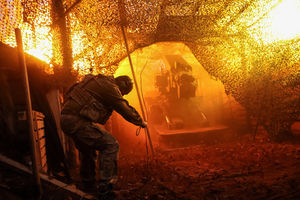
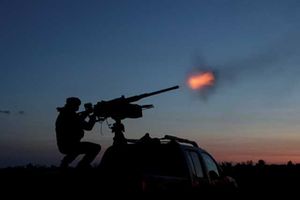
A Ukrainian serviceman fires a Bohdana self-propelled howitzer towards Russian troops near Kostiantynivka town, Ukraine on November 29, 2025.
Photo credit: Reuters
That night, I spoke to my mother, telling her I had secured a job in Russia. She was overjoyed. For the first time, I felt I had succeeded. She prayed for me and gave her blessings.
We left on May 14, 2025. In Turkey, we slept at the airport awaiting our connecting flight. Upon arrival in Russia at 8am, everything changed. At the airport, I realised we had entered on visit visas, contrary to promises that they would be converted into work permits. I trusted that the government would manage the paperwork while we waited.
We were rushed through in groups; confusion and fear filled the air. No one was allowed to pause or ask questions. A man collected us, speaking no English. He demanded our passports and return tickets, reminding us, “You don’t talk. You don’t ask questions.”
We were taken to a bank in St Petersburg to open accounts without explanation. Later, I discovered standing orders had been placed, allowing others to access my money without consent. From there, we travelled three hours to a remote area and were confined to an abandoned house. Kenyan SIM cards were inactive, and the Russian SIMs were only for accessing the bank accounts.
The man who picked us began showing war videos, declaring we were soldiers. I had never touched a gun. He said the Kenyan agency had been paid 1.5 million rubles and that everything had been decided. The next morning, we were taken to a military camp and forced to sign contracts in Russian, with no explanation. We were told that if we died, our families would be compensated. That was the first indication this was not employment—it was preparation for war.At the camp, many recruits had lost limbs.
A medical team existed, but only as a formality, not to provide care. Training began immediately, lasting just five days for me. I cried every day. I was moved into an infantry unit and trained as a soldier, transferred through Kursk, Rostov, and back to St. Petersburg. While in Rostov, we were armed. I had been a civilian all my life, yet was transformed into a soldier in days because of urgent demand.
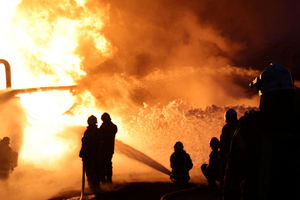
Firefighters work at the site of a Russian missile and drone strike, amid Russia's attack on Ukraine, in Odesa, Ukraine December 13, 2025.
Photo credit: Nina Liashonok | Reuters
We were promised payments: first $10,000, then 800,000 rubles, then two payments of 200,000 rubles. When we attempted to withdraw the money, there was nothing. Sanctions and deception ensured we remained trapped.
Soon, we were transported to Shebekinah, at the Russia-Ukraine border. Only 27 of us were sent forward; 25 did not survive. I recall the crossing vividly: dangerous terrain, waterlogged fields, mud, exhaustion. Bodies littered the ground. Missiles and explosions filled the air. I was hit by a missile, using a dead body to shield myself. My friend died in front of me. Survival meant crawling, rolling, praying, and enduring without food, water, or rest.
Commanders repeatedly sent me back to the frontline. To survive, I drank my urine, endured worsening injuries, and clung to hope. I contacted the Kenyan Embassy in Moscow. They visited but could not intervene. Eventually, a female soldier guarding me allowed me two hours to escape after I fabricated a story about sending money to a sick child.
I reached the Kenyan Embassy, where I was hidden and placed on a plane home with a temporary passport. The moment I boarded, I knelt and thanked God. I returned injured, requiring surgery, unemployed, and carrying the pain and trauma of war. I survived, but the war remains with me every day.”