The Consumers Federation of Kenya (Cofek) has lost its bid to compel disclosure of government’s stake and other public commitments in the proposed Sh2.2 trillion Dangote Lamu oil refinery, after a tribunal ruled the investment is not a Public Private Partnership (PPP) project.
The Public Private Partnership Petition Committee dismissed the petition, saying Cofek had not proved the refinery was a PPP or identified a reviewable decision.
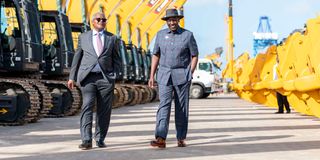
Cofek filed the petition on September 30, 2026, the day President William Ruto and Dangote Group president Aliko Dangote led the groundbreaking ceremony in Mokowe, Lamu County.
It asked the committee to establish whether the project was subject to the PPP Act and compel the release of approval and transaction records.
The Milimani Law Courts in Nairobi.
Photo credit: Francis Nderitu | Nation Media Group
The federation sought feasibility studies, risk assessments, public participation records and agreements setting out Kenya’s proposed equity and shareholder rights, among other documents to confirm the project’s statutory status and compliance.
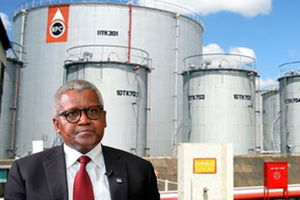
The refinery’s construction is expected to take 40 months, with commissioning targeted for early 2030. The $16 billion (Sh2.2 trillion) integrated industrial complex is designed to process up to 700,000 barrels of crude oil daily and produce fuel for Kenya and other regional markets.
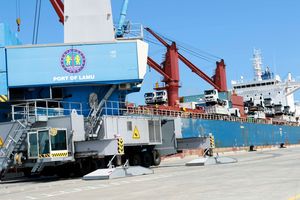
It will also include a 1,000-megawatt power plant, fertiliser and chemical manufacturing facilities, as well as storage tanks, pipelines and marine infrastructure.
A central issue in Cofek’s petition was an alleged Sh21.5 billion seed capital by the government through the National Infrastructure Fund and a proposed 10 per cent Kenyan stake said to be worth $500 million (Sh64.9 billion).
Cofek asked Treasury to disclose the valuation, funding source and amounts committed or disbursed.
It also sought details of public land, port access and possible government guarantees. It wanted the committee to order the government to release documents showing how the public stake will be valued, financed and acquired.
However, Treasury Cabinet Secretary John Mbadi told the committee that “discussions on possible Government participation in the Project are ongoing”.
He said the refinery was being developed, financed, owned and operated by the promoter, which would carry the commercial risk. He said there was “no concession term, no handback, no reversion of the project to the State”.
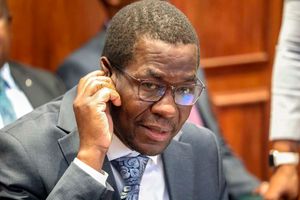
National Treasury Cabinet Secretary John Mbadi during a press briefing at Sarova Imperial Hotel in Kisumu on September 16, 2026.
Photo credit: Alex Odhiambo | Nation Media Group
Mr Mbadi said government support included statutory incentives such as special economic zone status and tax benefits.
“If the government decides to take an equity interest in the project that interest will be an investment in a private company, and shall be regulated by the laws on public investment and not the PPP Act,” said the CS.
For its part, Dangote Refinery said it was not developing the project for the government and had not received an equity contribution or similar public funding.
Its representative, Peter Lazarus, said the refinery would remain a private asset and land matters fell under land and special economic zone laws, not the PPP Act.
“The project is not a public private partnership. There is no arrangement for the project to be transferred to the State or any public body,” he said.
In the ruling, the committee said government equity alone would not turn a private project into a PPP. The law requires a private party to perform a public function for a contracting authority, receive a benefit, bear specified risks and transfer the facility to the authority.
Cofek, the committee said, had not proved those elements. “The petitioner did not provide such evidence but instead sought disclosure that may or may not have proved the project is a PPP,” it ruled. It faulted Cofek for not producing the reports it relied on.
The committee said the PPP Act provides for publication of project lists, feasibility studies and tender results. Cofek admitted it had not pursued those provisions before filing the petition.
“The Petitioner has not shown that the alleged public announcements, which remain unproved, are decisions under the PPP Act. The PPP Act is inapplicable to the dispute and there is no reviewable decision for the Petition Committee to find as urged by the Petitioner,” said the committee chaired by Stephen Odhiambo.
Other members were Dr Leonard Kinyulusi, Eunice Daristu, Nicodemus Musyoka, Dr Brian Mutie and Eric Thige.
The National Infrastructure Fund (NIF) said it had made no decision on the refinery and any investment would be subject to its law and investment policy.
“In conclusion, the Petition Committee finds that the Petitioner has not proved that the Project is a public private partnership, and that it does not have the jurisdiction to hear and determine the matter,” the tribunal ruled.