Confusion has engulfed Kenya’s rice importation programme after two High Courts issued seemingly contradictory orders regarding the release of consignments from the port, leaving customs officials, importers, local farmer, and consumers entangled in a deepening legal dispute.
The High Court in Nairobi has ordered the Kenya Revenue Authority (KRA) to immediately clear all duty-free rice shipments, just days after the High Court in Kerugoya directed the same agency to detain a 55,000-tonne consignment worth Sh5.5 billion.
The Nairobi order dated January 20, 2026 compels KRA and its officers to facilitate the clearance, release, and customs entry of all Grade 1 milled white rice imported under duty-free Gazette Notices No.10353 and No.262, issued by the National Treasury in 2025 and 2026.
Justice Bahati Mwamuye, presiding over the case filed by Victor Okoth Onunga on January 19, 2026, framed the matter as touching on national food security and the constitutional right to freedom from hunger. The court issued interim mandatory conservatory orders pending a full hearing of Mr Okoth's petition.
The court ordered release of all pending and incoming shipments of Grade 1 milled white rice that have been imported or are to be imported into Kenya under the duty-free exemption and importation window pursuant to the two Gazette notices.
These directives came shortly after Justice Edward Muriithi of the Kerugoya High Court ordered KRA to detain rice consignments at the Port of Mombasa, citing alleged violations of earlier conservatory orders that had capped duty-free imports.
"The two orders are in direct operational conflict—they concern identical subject matter, command opposite actions, and their implementation produces irreversible consequences," says lawyer Andrew Muge, representing petitioners in the Kerugoya case filed in July 2025. He has since sought suspension of the Nairobi orders due to the confusion they have caused.
At stake in Kerugoya is the protection of local Kenyan farmers and the domestic rice market from what petitioners describe as illegal imports that could depress prices and leave stocks unsold.
Meanwhile, the Nairobi case hinges on national food security and the government’s constitutional obligation to ensure Kenyans have access to affordable food.
The Kerugoya petition specifically targets approximately 55,000 metric tonnes of rice imported last month by four companies and valued at Sh5.5 billion.
Farmers mill their rice at Golden Grain Rice Millers in Mwea on December 18, 2025, highlighting the growing role of private mills in improving market access and value addition for local rice farmers.
Photo credit: Joseph Kanyi | Nation Media Group
Lawyer Muge argues, "The Nairobi court orders command KRA to release rice that the Kerugoya Court has ordered detained. They authorize importation that the Kerugoya Court has expressly prohibited."
Central to the dispute are two Gazette Notices issued in December 2025 and January 2026, which Kerugoya petitioners allege were introduced to circumvent an August 2025 court order placing rice imports under judicial oversight.
Petitioners, led by Kirinyaga Senator Kamau Murango, accuse the National Treasury and customs officials of extending the import window from December 2025 to May 2026 without judicial approval.
They seek contempt charges against Treasury Cabinet Secretary John Mbadi, KRA Commissioner General Humphrey Watanga, and senior customs officials.
KRA, however, denies flouting court orders. In a sworn affidavit, customs officer Caroline Njoroge stated that the authority had "scrupulously complied" with the August 2025 orders by allowing "precisely 250,000 metric tonnes of duty-free rice, and no more."
She argued that subsequent actions were based on a new legal framework following the expiry of the initial Gazette Notice on December 31, 2025.
The Nairobi case has further complicated KRA’s position. Victor Okoth Onunga’s constitutional petition compelled the court to order immediate clearance of rice imports under the contested Gazette Notices, provided inspection requirements were met.
Mr Okoth cited Kenya’s acute food shortages driven by drought, declining production, and soaring prices, arguing that delays were worsening demurrage costs and food deterioration at the port.
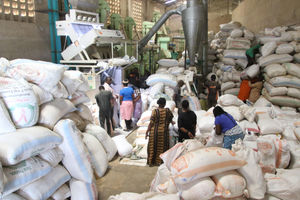
Workers at the National Cereals and Produce Board-Nanyuki Depot offload bags of rice and beans.
Photo credit: File | Nation Media Group
"Millions of Kenyans from low-income households have been adversely affected by food shortages,” he states, accusing the state of failing to take timely and effective measures to guarantee access to adequate food.
Describing himself as a concerned citizen, the petitioner rice, maize and wheat prices have “skyrocketed,” making essentials unaffordable for millions of households.
He argues that the matter touches on Article 43 of the Constitution, which guarantees freedom from hunger and the right to adequate food.
Importers caught in the legal crossfire warn of severe financial losses. Njema Commodities Ltd, which imported 40,000 tonnes worth Sh1.93 billion, says it risks defaulting on contracts and estimates potential losses at $15 million.
While the government insists imports are necessary to bridge Kenya’s rice deficit—with domestic production meeting less than 20 per cent of demand—Kerugoya petitioners argue that local farmers still hold unsold stocks and accuse officials of bypassing judicial oversight.
With rice shipments stranded, farmers anxious, and KRA facing dual contempt risks, Kenya’s rice importation crisis remains mired in legal uncertainty until the courts resolve the conflict.
The Kerugoya case is scheduled for further proceedings on January 28 while the Nairobi case will be mentioned on February 11.