Wicknell Chivayo was Zimbabwean and Liswati.
But going by the company he kept, and flaunted on his social media pages, his citizenship was besides the point.
He easily bypassed appointment protocols, long lines and the required deep connections usually needed to walk into State Houses and their equivalents to see Presidents.
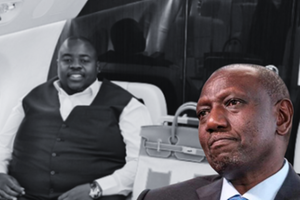
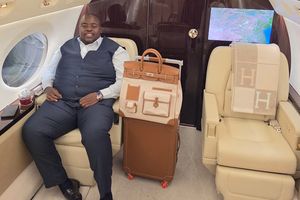
There were the Rolls-Royces and Range Rovers, private jet and helicopters, wads of cash, luxury watches and designer clothes.
There were also photographs with presidents, kings and other powerful political and business figures across Africa, alongside astonishing gifts of expensive cars and hundreds of thousands of dollars that he routinely announced on social media.
Then there was the other Wicknell Chivayo, the businessman whose government-linked contracts, political connections, criminal past and extravagant lifestyle made him a deeply polarising figure in Zimbabwe and beyond.
To his admirers, he was a self-made businessman and philanthropist who had risen from humble beginnings and used his wealth to help others.
To his critics, he was a symbol of the nexus between political power, government contracts and unexplained wealth, with some opposition figures portraying him as a beneficiary of a system in which politically connected businessmen could prosper from public resources.
For senior political leaders, however, Chivayo was often presented differently, as a successful entrepreneur, philanthropist and influential businessman who moved comfortably in the highest political circles.
That complicated legacy came to an abrupt end on September 30 when Chivayo, 43, his wife Lucy “Lulu” Muteke and other passengers died after their helicopter crashed in rural Marondera, Mashonaland East, east of Harare.
His death brought to a close the extraordinary public story of a man who had spent much of his adult life moving between courtrooms, boardrooms, churches, luxury hotels and State Houses.
Long before Presidents were driving him to helicopters, Chivayo had already encountered the criminal justice system.
In 2005, he was sentenced by the High Court to five years in prison after being convicted in a money-laundering case involving R837,000 (Sh6.6million).
Two years of the sentence were conditionally suspended, leaving him to serve an effective three years at Chikurubi Maximum Security Prison. He pleaded not guilty and continued fighting the conviction after serving his sentence. The conviction was eventually overturned on appeal.
Chivayo later founded Intratrek Zimbabwe, an energy and infrastructure company that won a major contract connected to the proposed 100MW Gwanda solar project.
The project became one of the defining controversies of his business career. Chivayo and Intratrek were charged with fraud and contravening foreign-exchange-control regulations in connection with the Zimbabwe Power Company contract.
In March 2019, however, the High Court quashed the charges and ordered the acquittal of Chivayo and Intratrek. The Prosecutor-General subsequently sought leave to appeal.
The legal battles did not end the questions about his wealth and business dealings. Instead, they followed him into the world of politics.
Chivayo's extraordinary access to political leaders became one of the most visible aspects of his public life.
In Zimbabwe, he was closely associated with President Emmerson Mnangagwa and the ruling establishment.
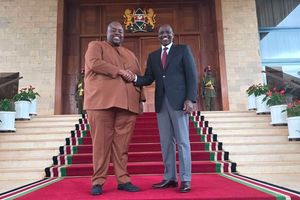
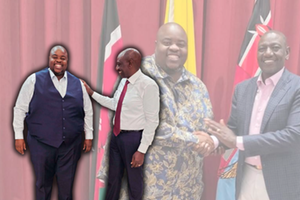
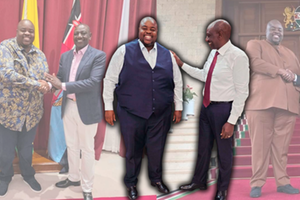
Zimbabwean entrepreneur and regional investor the late Wicknell Chivayo when he paid a distinguished courtesy call on President William Ruto. He died on a Wednesday evening in a chopper crash in Marondera, Zimbabwe.
Photo credit: Pool
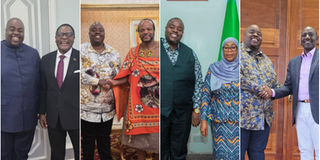
He also cultivated relationships with leaders elsewhere in Africa, including Tanzania's President Samia Suluhu Hassan, South Africa's Cyril Ramaphosa, Eswatini's King Mswati III, Nigeria’s Bola Tinubu, Zambia’s Hakainde Hichelima, Mozambique’s Daniel Chapo, Malawi’s Peter Mutharika and Kenya's President William Ruto.
President Ruto was the first of those leaders to send his condolences to Chivayo’s family and admirers through social media platform X.
His relationship with Mr Ruto became particularly prominent in Kenya. Chivayo made several visits to Kenya and was photographed with the President at State House and other locations.
In August, after attending the traditional engagement ceremony of President Ruto's daughter Charlene at the family's Intonna Heritage Farm in Kilgoris, Narok County, Chivayo recorded a video showing Mr Ruto personally driving him towards his helicopter.
Chivayo insisted that his relationship with the Kenyan President was personal and based on faith, respect and mentorship, and denied that he had used the relationship to obtain tenders or other favours.
The late businessman Wicknell Chivayo with Zimbabwean President Emmerson Mnangagwa.
Photo credit: Courtesy | X/WicknellChivayo
For critics, however, such encounters raised questions about how businessmen acquire extraordinary access to political leaders and whether such relationships can blur the line between business, influence and political power.
If his political connections made him controversial, his philanthropy made him famous.
Chivayo turned giving into a public spectacle, buying luxury vehicles for musicians, church leaders, friends, lawyers and others who had caught his attention.
He gave away Toyota Land Cruisers, Range Rovers, Ford Rangers and other expensive vehicles, alongside huge amounts of cash.
For President Mnangagwa's 83rd birthday, he presented ten Toyota Land Cruisers and ambulances.
He said his generosity was rooted in his faith and his own experience of growing up without financial privilege. Critics questioned the source of his wealth and whether such conspicuous philanthropy could create political influence.
Always, Chivayo maintained that giving was simply his way of appreciating people.
That philosophy was visible in his final social-media post, published at about 9.20 am on the morning of his death. He announced that longtime legal associates would receive a 2026 Lexus GX 550 valued at US$220,000 (Sh28.5 million), a Range Rover Sport Autobiography and hundreds of thousands of dollars in cash.
He said the gifts were meant to recognise relationships that had survived decades, including his relationship with lawyer Wilson Tatenda Manase, whom he said had known him since 1998 when he was still renting a single room.
Hours later, he was dead.
The late Zimbabwean businessman Wicknell Chivayo with Ugandan President Yoweri Museveni.
Photo credit: Courtesy | X/WicknellChivayo
Chivayo's relationship with Sonja Madzikanda, with whom he had two children, eventually collapsed and became one of the most closely followed private disputes surrounding the businessman.
Madzikanda pursued legal claims concerning their relationship, children, maintenance and property, and the dispute spilled into public view.
In April 2026, the High Court approved a consent arrangement under which Chivayo agreed to pay five million US dollars (about Sh630million) in maintenance of their children.
The court heard that some US$2.2 million (Sh285 million) had already been invested, while the remaining US$2.8 million (Sh363 million) was to be paid within 30 days.
Madzikanda was granted primary residence of the children, while Chivayo retained parental rights and structured access.
The broader dispute continued, including litigation in South Africa over property and assets linked to Chivayo. An anti-dissipation order affected some of those assets, including restrictions concerning his private jet.
The personal battle contrasted sharply with the public image of a businessman who could announce seven-figure gifts and surround himself with luxury.
Chivayo eventually moved on. In March 2025, he married Lucy “Lulu” Muteke in ceremonies that included traditional and religious celebrations. Lulu would become part of his final chapter.
Chivayo's life resists a simple description. He was a businessman who built companies and secured major infrastructure contracts.
He was a former prisoner whose early conviction later became part of a successful legal challenge. He was a litigant who fought criminal charges and emerged from the Intratrek case with the charges against him quashed.
He was a father whose children's welfare became the subject of a multi-million dollar court settlement, a husband whose first relationship descended into a bitter legal dispute, and later the husband of Lucy Muteke.
The late Zimbabwean businessman Wicknell Chivayo with President Cyril Ramaphosa of South Africa.
Photo credit: Courtesy | X/WicknellChivayo
He was also a philanthropist who gave away luxury vehicles and vast sums of money, and a businessman who moved with remarkable ease among presidents, kings and senior African officials.
To some, he represented the politically connected businessman, a figure who became enormously wealthy while enjoying access to the continent's most powerful leaders.
Some opposition voices accused him of benefiting from public contracts and political patronage, with allegations ranging from tender manipulation to influence-peddling and money laundering.
Chivayo repeatedly denied wrongdoing, and the allegations should not be presented as facts.
To those at the highest levels of African politics, however, he was a savvy businessman, philanthropist and friend.
He could be celebrated as a generous benefactor in one room and denounced as a symbol of political privilege in another.
He could emerge from court having defeated criminal charges while still carrying the stigma of an earlier conviction. He could be photographed giving away a luxury vehicle worth hundreds of thousands of dollars while facing questions about the origins of his fortune.
Then, on September 30, the movement stopped.
In death, as in life, the arguments over Wicknell Chivayo refuse to disappear. Posts on social media continue to show this. To some, he was a controversial businessman whose extraordinary rise demanded scrutiny.
To others he was a public looter, a symbol of a political and economic order that rewarded proximity to power.
To those at the highest levels of African politics, he was a savvy businessman, philanthropist and friend.
And to the thousands who followed his extravagant social-media life, he was the man who seemed to have money to give, presidents to meet, cars to buy and another extraordinary story to tell every day.
Until September 30, when there was no next story. Save for obituaries and, perhaps, the succession process which will entail which members of his family get what slice of Wicknell Chivayo’s wealth.