The Judiciary is increasingly reshaping how elections are run, placing the Independent Electoral and Boundaries Commission (IEBC) under sustained constitutional scrutiny.
Since the hotly contested 2022 General Election, a series of court rulings have clarified the rules governing election management, including the security of voters.
Judges have interpreted the Constitution, scrutinised IEBC decisions and warned that electoral processes must strictly meet constitutional standards.
One of the clearest signals came in a recent High Court case arising from election-related violence in Kilifi County, where the court used a criminal trial to address the broader problem of violence during elections.
In the case involving three suspects, the High Court acquitted them of a murder charge stemming from election-related violence during the 2017 General Election after finding that the prosecution had failed to prove they inflicted the fatal injuries on the victim.
The case concerned the killing of Nicodemus Karima Shikahili at Kaoyeni village in Kilifi County on the eve of the 2017 General Election.
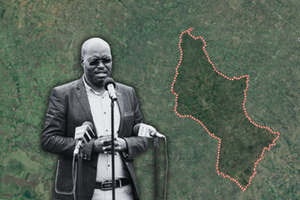
The accused were Rama Lenga, Felix Mwangovi and James Mwamuye. Prosecutors told the court that the three were associated with rival political camps during the election.
Mr Beja was alleged to have been the chief campaign agent of the late Malindi MP Mustaffa Idd. Mr Mwangovi was contesting a Member of County Assembly seat while Mr Charo worked as a driver.
Although the accused were acquitted, the judge used the ruling to highlight the wider threat posed by electoral violence.
The court warned that election-related violence continues to undermine Kenya’s democratic process and called for preventive action by state institutions.
It urged state agencies, including the National Police Service and the electoral commission, to take proactive measures to prevent violence during elections.
The judge observed that preventing electoral violence is a shared responsibility between institutions responsible for election management and those responsible for maintaining security.
The court stressed that security agencies must work closely with electoral officials to ensure that elections are conducted peacefully and that voters are protected.
The judge also observed that criminal prosecutions alone cannot solve the recurring problem of electoral violence and called for coordinated strategies to prevent such incidents in future elections.
The ruling attracted attention because courts rarely issue broader institutional recommendations in criminal trials.
It also highlighted how the judiciary is increasingly linking election-related crimes to the wider integrity of the electoral process.
The Kilifi decision reflects a broader pattern emerging from the courts, where judges have increasingly interpreted constitutional provisions governing elections and the operations of the electoral commission.
In another recent decision, the Supreme Court clarified how the electoral body should operate when it lacks commissioners.
Independent Electoral and Boundaries Commission (IEBC) Chair Erastus Edung (centre, podium) joined by fellow commissioners briefs media at the commission offices on January 27, 2026.
Photo credit: Francis Nderitu | Nation Media Group
The court said the IEBC cannot undertake core constitutional electoral functions when it has no commissioners in office.
In its advisory opinion, the judges ruled that while the commission’s secretariat may continue performing administrative duties, it cannot replace the commission itself in exercising constitutional mandates.
The court said that in the absence of commissioners or the required quorum, the IEBC is constitutionally incapable of undertaking key electoral functions such as boundary delimitation and other constitutional processes.
The judges explained that the secretariat may perform administrative and operational duties within the framework of the law, but cannot make policy or constitutional decisions reserved for commissioners.
“In the absence of commissioners or the requisite quorum of commissioners, IEBC is constitutionally incapacitated from undertaking… delimitation of electoral boundaries and other constitutionally mandated electoral processes," the apex court told the commission.
Another major intervention came from the Supreme Court during the determination of the presidential election petition filed after the August 2022 General Election.
In upholding the election of President William Ruto, the court provided a detailed interpretation of the constitutional principles governing elections.
The judges emphasised that the electoral commission must operate as a corporate institution when carrying out its constitutional mandate.
“The Commission is a constitutional body and must carry out its mandate within the framework set by the Constitution and the law,” the court observed.
The judges also reaffirmed the constitutional principles guiding elections in Kenya, noting that the Constitution requires elections to be free, fair, transparent and accountable.
They further emphasised that the electoral process must comply with Articles 81 and 86 of the Constitution, which set standards for the conduct of elections.
That decision set the framework for how lower courts would later approach election disputes across the country.
Following the presidential petition, election courts examined dozens of challenges to parliamentary, gubernatorial and county assembly election results.
The cases raised issues ranging from violence at polling stations to disputes over tallying and the handling of election materials.
In several rulings, courts reiterated that the integrity of an election depends on strict compliance with constitutional and statutory requirements.
In a petition challenging the Kitutu Chache South parliamentary election results, the High Court examined claims that violence and intimidation had affected the electoral process.
The court stressed that elections must be conducted in an environment where voters and candidates can participate freely.
The judge observed that electoral violence or intimidation undermines the credibility of the vote and can affect the validity of an election. The court also criticised the conduct of some election officials.
"It must be noted that the IEBC is vested with a vital mandate which must be executed in a manner that inspires confidence in the electorate. More so in a jittery society that is filled with suspicion and mistrust throughout the entire electoral process,” the court said.
The judge added that actions by election officials had contributed to mistrust and suspicion during the electoral process.
Kenyan voters wait in line to cast their ballots on August 9, 2022.
Photo credit: File | Nation Media Group
Courts have repeatedly warned that violence or intimidation during elections undermines democratic choice.
Judges have emphasised that elections must reflect the will of the people and that any interference with voters compromises the legitimacy of the process.
Courts have stressed that police officers deployed during elections must remain neutral and focus on protecting voters and election officials.
Security officers, judges said, must maintain order without interfering with voting or intimidating voters.
Their role is to safeguard the electoral process while allowing citizens to exercise their democratic rights freely.
Election petitions have also led courts to examine the conduct of electoral officials and the management of polling stations and tallying centres.
In a 2023 ruling, the High Court reminded election officials of their constitutional responsibility.
“Election officials must demonstrate the highest level of integrity and professionalism,” the court said.
The judge emphasised that electoral officials must strictly comply with constitutional and statutory requirements when handling election results.
The court also stressed that transparency and accuracy in tallying results are essential to maintaining public confidence in elections.
Failure to meet these standards, the court warned, risks eroding trust in the electoral system.
Elsewhere in Nairobi, the High Court examined claims that the Starehe Constituency parliamentary election had been marred by violence and intimidation.
The court reviewed evidence alleging that confrontations disrupted tallying at the constituency tallying centre and that crowds besieged the venue during the counting process.
The case raised questions about the ability of election authorities and security agencies to maintain order during the results process.
Beyond election petitions, constitutional cases have also required courts to interpret the limits of the electoral commission’s powers and the obligations of state agencies during political campaigns.
One High Court ruling emphasised that both the Electoral Commission and security agencies must protect freedoms guaranteed by the Constitution.
“The right to participate in political activities is fundamental in a democratic society,” the court said.
State agencies, the ruling added, must ensure that citizens are able to participate in political processes without intimidation.
Legal analysts say the growing number of rulings reflects the judiciary’s determination to enforce constitutional standards in the electoral process.
Under the Constitution, the IEBC is mandated to conduct and supervise elections.
However, courts retain the authority to review the commission’s actions when disputes arise.
Since 2022, courts have repeatedly emphasised that elections must not only be conducted but must also meet constitutional standards of credibility, transparency and accountability.
For the electoral commission and security agencies, the message from the courts is increasingly clear that independence in managing elections does not shield institutions from accountability.
Instead, courts have signalled that the credibility of future elections will depend on strict adherence to constitutional principles and the protection of voters.