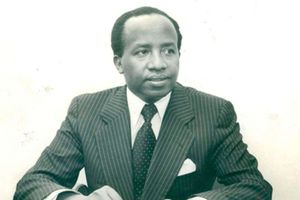
Defence PS Patrick Mariru.

The High Court has ordered the Inspector-General of Police to execute a warrant of arrest against Defence Principal Secretary Patrick Mariru over failure to enforce an earlier order tied to a Sh25.4 million compensation for former soldiers.
The court ruled that the National Police Service must apprehend PS Mariru after military police officers allegedly frustrated attempts to serve the Officer-in-Charge of the Military Police at the DoD Headquarters with the court papers.
This marks a dramatic turn in a 13-year legal battle pitting 10 aging torture victims against the Ministry of Defence over unpaid compensation related to the 1982 coup attempt.

Scenes in Nairobi in August 1982, in the aftermath of the coup attempt. Police and soldiers subjected civilians to thorough security checks.
At the heart of this legal showdown lies a painful chapter of Kenya's history - the brutal crackdown following the failed military coup.
The 10 former air force officers, now elderly men bearing physical and psychological scars, survived arbitrary arrests, incommunicado detention, and systematic torture during President Daniel arap Moi's regime.
The warrant stems from contempt of court proceedings initiated by the former soldiers pursuing payment of Sh25.4 million in compensation for unlawful detention and torture over the failed coup.
The case traces back to 2012 when they sued the Attorney General and the PS Ministry of Defence over violation of the rights by the State.
They described themselves as “victims of arbitrary arrest, unlawful and incommunicado detention without trial, torture, cruel, inhuman and degrading treatment and/or punishment between August 1, 1982 and March 1983”.
On May 29, 2016 the High Court awarded them Sh20.2 million in form of damages together with the costs of the petition and interests at court rates.
The following year in March the full amount was assessed and decreed at Sh25.4 million by the High Court Deputy Registrar and a Certificate of Order against the Government was issued.
However, what began as a straightforward compensation claim transformed into a decade-long test of whether Kenya's Judiciary could enforce its rulings against powerful state actors.
The Ministry of Defence's resistance took multiple forms. Initially, officials claimed inability to pay due to lack of parliamentary budget allocation - an argument the court demolished in a March 2019 ruling.
In that verdict the court noted the ministry's statutory obligation under Section 21(3) of the Government Proceedings Act remained unaffected by budgetary processes.
The court subsequently issued an order compelling the Principal Secretary of the Ministry of Defence to effect payment of the decretal sum. PS Mariru joined the Ministry in 2023.
Liable for non-compliance
In July 2024, the court found him personally liable for non-compliance, and the judge issued arrest warrants to be executed by military police - a decision reflecting both legal protocol and diplomatic sensitivity given Mr Mariru's security sector position.
The order was to be executed by the Officer-in-Charge of the Military Police at the Department of Defence (DoD) Headquarters.
PS Mariru was required in court for mitigation and sentencing over the alleged disobedience of order to pay the ex-soldiers their dues.
However, the court bailiff was unable to effect personal service upon the Officer-in-Charge of the Military Police at the DoD Headquarters, after being frustrated and directed from one office to another.

Milimani Law Courts in Nairobi.
Court documents reveal that the court bailiffs were repeatedly redirected within Defence Headquarters before resorting to mailing the warrant—which was ignored.
Following the frustrations, the petitioners returned to court asking for a review of the order and have the execution of the arrest warrant directed to the Inspector-General of the National Police Service or any police officer serving under the IG.
The judge heard that the petitioners could not have anticipated that the DoD officers would frustrate execution of a court process duly issued by the court.
In the ruling, the judge emphasised that unenforced court orders erode public trust in the justice system.
“Roadblocks must not stand in the way of executing court directives,” he stated, referencing past judicial precedents affirming courts’ residual powers to ensure compliance.
“Orders that are issued by the court, which cannot be executed erode the authority and dignity of the court. This must be discouraged,” stated the judge, in the case that exposes Kenya's growing crisis of unimplemented court awards against government entities.
In court’s view, allowing the application was aimed to ensure that the former soldiers do not remain with the barren order in their hands.
The judge further noted that PS Mariru had not contested the debt claims nor challenged the contempt finding. The court said allowing the petitioners’ application was a positive step towards upholding, promoting and fulfilling access to justice under Article 48 of the Constitution.
In their application, the petitioners argued that the evasion undermined judicial authority, citing constitutional provisions granting police powers to enforce court orders.
They relied on Article 245(2)(b) of the Constitution, which vests in the Inspector General independent command over the National Police Service, and on sections 49(6) and 51(1)(b) of the National Police Service Act, which empower every police officer to serve or execute warrants lawfully issued by a court.
This case's resolution will reverberate beyond the courtroom. Treasury previously conceded multiple similar unpaid judgments burden government finances, with the Defence Ministry alone admitting to Sh4 billion in pending decrees during earlier proceedings.
As police prepare to execute Kenya's most high-profile arrest warrant against a sitting security chief, legal observers warn of potential constitutional friction.
Follow our WhatsApp channel for breaking news updates and more stories like this.