The Ethics and Anti-Corruption Commission (EACC) has investigated and completed 58 graft-related cases and forwarded the files to the Director of Public Prosecutions (DPP), but only 12 have so far been cleared for prosecution.
An analysis of the latest EACC quarterly report covering July 1 to September 30 reveals that the majority of cases, many involving large sums of public funds, were either recommended for closure, returned for further investigations or are still awaiting a response from the DPP.
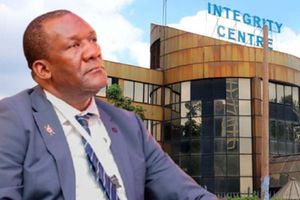
Integrity Centre that hosts Ethics and Anti-Corruption Commission (EACC) offices in Nairobi.
Photo credit: File | Nation Media Group
“The DPP has approved 12 cases for prosecution and returned 20 files for further investigations. The DPP recommended closure of four files. Only 20 files are awaiting advice,” the report states.
The cases involve county and national government officials—including current and former governors—and highlight pervasive issues such as embezzlement, conflict of interest, procurement irregularities, money laundering and unexplained wealth. Other corrupt practices include misappropriation of public funds and the use of junior staff as conduits for stolen money.
The revelations have once again drawn public scrutiny of the DPP, with concerns over perceived delays in handling high-profile corruption cases and the low number of actual prosecutions. In the last quarter, the DPP approved only four out of 44 cases received during the period.
This has raised concerns about systemic delays in delivering justice, especially in high-profile corruption matters. The office of the DPP has in the past defended its actions, stating that prosecutions can only proceed if cases pass the necessary prosecutorial tests, and that cases lacking sufficient evidence are not pursued to avoid abuse of the legal process.
Forgery of academic certificates
Interestingly, most cases approved for prosecution involve minor offences by junior officers, such as forgery of academic certificates and bribery. For instance, charges have been approved against a Nairobi City Water and Sewerage Company employee who used a forged Kenya Certificate of Secondary Education to secure employment as an artisan.
The other cases are that of an Office of the Auditor-General employee who forged certificates to gain employment as a driver, another Nairobi Water firm employee who used a forged ICT diploma to secure a post, two employees of the Kenya Medical Training College who used fake certificates to secure employment and a DCI officer in Kilungu, Makueni County, for receiving a Sh40,000 bribe.
The DPP also approved charges for the Kisumu City Manager, who is facing abuse of office and forgery charges for facilitating a bank employee’s travel to a forum intended only for Kisumu county officials.
Among the high-profile cases approved for prosecution are embezzlement of Sh70.2 million by a former Bungoma governor and senior county officials and the Bomet governor accused of receiving Sh2.7 million from six companies trading with the county.
Bomet Governor Hillary Barchok.
Photo credit: Vitalis Kimutai | Nation Media Group
Among the 20 files returned for further investigation are procurement irregularities in Kiambu County, involving more than Sh1.4 billion. There’s also alleged conflict of interest and unlawful acquisition of public property by a former Kiambu governor, who is accused of influencing the award of tenders totalling Sh1.24 billion.
There is also the investigation into procurement irregularities at Moi University, involving a Sh1.1 billion tender for a library project awarded to Dinesh Construction. Another case is that of Rongai MP Paul Chebor who is under investigation for forging academic certificates to enrol for a Bachelor’s degree at Mount Kenya University.
Cases recommended for closure include irregular procurement of medical insurance for Laikipia County officers worth Sh112 million and embezzlement of Sh138 million at the West Kano Scheme through the Kenya National Trading Corporation.