An audit on schools and learners conducted recently by the Ministry of Education shows that more than 500,000 learners’ data is “unaccounted for”, exposing weaknesses in the National Education Management Information System (NEMIS) that could have cost taxpayers billions of shillings.
The faulty enrolment data means that genuine learners have also missed out on adequate funding as available resources are shared out among learners, including the non-existent ones.
A copy of the report seen by the Nation shows that 547,637 learners were removed from funding-eligible records, a 4.7 per cent drop from initial NEMIS enrolment figures, leaving over half a million learners ‘unaccounted for’ at the time of reporting.
On Friday, Education Cabinet Secretary Julius Ogamba told the Nation that the report we are referring to is incomplete and that he would release the comprehensive one on Monday next week.
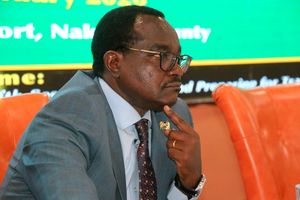
Education CS Julius Ogamba, when he appeared before MPs during the 2026 Legislative Retreat for Members of the National Assembly, at Lake Naivasha Resort in Naivasha, Nakuru County, on January 28, 2026.
Photo credit: Boniface Mwangi | Nation Media Group
A total of 54,388 schools were initially enlisted for funding in Third Term of 2025, with a reported enrolment of 11,616,457 learners. However, the verification exercise ordered by Mr Ogamba confirmed 53,015 schools with a verified enrolment of 11,068,820 learners, representing 97.9 percent of the originally enlisted institutions.
Overall, the verification revealed a variance of 547,637 learners, translating to a 4.7 percent reduction in enrolment compared to the initial records.
“The findings indicated that the NEMIS system had challenges, such as limited functionalities in regard to learner movement (transfers, dropouts, deaths, etc), which may have given inaccurate enrolment data. The Ministry should undertake a comprehensive system audit of NEMIS,” reads the report titled, Report on School Data Verification.
Mr Ogamba said that the document had not been signed and therefore could not be relied upon as an official position of the ministry, insisting that it did not reflect the government’s findings or policy on the matter.
The Nation got the report from trusted sources in the ministry who verified its contents and data. They, however, provided the information in confidence as they are not authorized to speak publicly before the document is officially released.
The verification also highlighted challenges within NEMIS, including limited functionalities for tracking learner movements such as transfers, dropouts, and deaths, which may have contributed to inaccurate enrolment data.
Additionally, the exercise found that roles and responsibilities for data management officers were unclear from headquarters to the school level, affecting accountability. Some schools also lacked trained personnel capable of interpreting NEMIS records and submitting accurate data through the Kobo toolbox, prompting calls for enhanced ICT training for key education officers.
Basic Education Principal Secretary Julius Bitok.
Photo credit: File | Nation Media Group
The audit of school records has revealed a discrepancy of 87,730 learners, raising concerns about the existence of “ghost learners” in the system. While the Ministry of Education had initially projected 3.35 million students across 9,550 schools, verification showed that only 3.26 million learners in 9,540 schools were eligible for government funding.
“The findings of the verification exercise established that there were incomplete school submissions, such as failure to capture learner identifiers by Heads of Institutions which hindered full validation. The Ministry, therefore, should develop an Education Management Information System (EMIS) that utilizes learner biometrics,” read the audit.
According to the audit, 26 schools were found to be non-operational, meaning they are currently not functioning or providing educational services due to issues such as closures, lack of staff, or inadequate facilities.
“The verification exercise has so far cleared 53,015 schools for capitation, covering a total of 11,028,861 learners. While most schools complied, 181 submitted data in formats not specified, 24 schools have yet to submit, 495 schools had invalid assessment numbers, and 406 schools had valid assessment numbers matched to different KNEC centre codes. Currently, 11 schools are still being verified and 26 are Non–Operational Schools,” reads the audit.
The verification revealed notable trends across the education levels. Primary schools recorded the largest decline in enrolment compared to what had been previously reported, suggesting that a significant number of learner records could not be verified.
Junior schools, on the other hand, showed a substantial increase in enrolment, possibly reflecting migration from primary schools under the Competency-Based Curriculum or reclassification of learners. Secondary schools experienced a slight decrease in enrolment, largely due to records that were invalid or duplicated and therefore excluded.
“The verification exercise targeted 23,911 public primary schools with an enrolment of 5,833175 in the previous NEMIS capitation, 20,927 junior schools with an enrolment of 2,430,398, and 9550 secondary schools with an enrollment of 3352884.”
“At the time of report compilation, the verification had covered 22988 public primary schools with an enrolment of 4,817,694, 20,487 junior schools with enrolment of 2,951,517, and 9,540 secondary schools with an enrolment of 3,259,650, and the relevant special needs institutions totaling 717 across all levels with an enrolment of 42547,” it added.
Special needs institutions, while a small portion of the total, remained an important focus to ensure inclusion in funding.
The exercise also highlighted several systemic and operational challenges. Many schools submitted data with errors or missing identifiers, and the reliance on manual uploads into the national system increased the risk of mistakes.
Connectivity issues, especially in rural areas, further slowed timely submissions. The schools still pending verification pose a risk to their capitation funding and indicate the need for additional follow-up, including possible physical verification.
“The total number of targeted institutions was 54,388 public basic education institutions, and the ones verified were 53,015. The difference of 1373 institutions constitute schools that are pending verification due to either submission of incomplete data sets, submission in wrong formats, invalid KNEC assessment numbers and center codes, schools below the threshold, and non-operational schools,” it read.