Hello

Your subscription is almost coming to an end. Don’t miss out on the great content on Nation.Africa

Ready to continue your informative journey with us?

Hello

Your premium access has ended, but the best of Nation.Africa is still within reach. Renew now to unlock exclusive stories and in-depth features.

Reclaim your full access. Click below to renew.

Geoffrey Monari
Caption for the landscape image:

194,000 varsity students in limbo over Helb

Scroll down to read the article

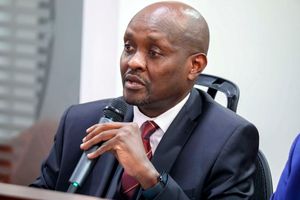
Higher Education Loans Board Chief Executive Officer Geoffrey Monari on May 14, 2025. 

Photo credit: Dennis Onsongo | Nation Media Group

Uncertainty hangs over thousands of incoming first-year university students as some institutions prepare to reopen next Monday.

Some of the 194,372 students fear reporting without a single shilling for upkeep, while others are considering skipping opening day altogether.

Institutions, including the University of Nairobi, Jomo Kenyatta University of Agriculture and Technology, Kenyatta University, Maseno University, Multimedia University and Kibabii University are scheduled to reopen between August 18 and 25.

This comes as the Ministry of Education last evening said the Higher Education Loans Board (Helb) had awarded loans to 136,634 first-time eligible applicants.

“All students who have submitted their loan applications are advised to confirm their upkeep loan award status from their Helb student portal website, and liaise with their respective university administration offices for fee payment schedules,” Cabinet Secretary Julius Migos said in a statement.

Julius Ogamba

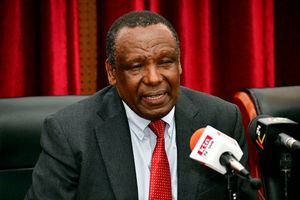
Education Cabinet Secretary Julius Migos Ogamba during the opening ceremony of the National Retreat for Chairpersons of Public Universities Councils in Mombasa on June 13, 2025.

Photo credit: Kevin Odit | Nation Media Group

Following the government directive to lower the cost of university programmes, Mr Ogamba said, fees payable by students per semester “will range from Sh5,814 to Sh75,000”, the variation depending on the student’s level of need and the cost of the programme.

Helb Chief Executive Officer Geoffrey Monari insisted that the disbursement process was on schedule.

“We shall disburse based on the opening dates from next week,” he said.

Still, students who spoke to the Nation said they are in limbo, unable to plan for fees, transport, or essentials.

For Elvis Odhiambo, earning a place at Garissa University has quickly turned into despair.

The 24-year-old from Homa Bay County scored a B– in the 2024 KCSE, securing admission to pursue a Bachelor of Education in Science course after three attempts at the national exam. With reporting day just a week away, Elvis says he has no school fees—and no means to travel from Homa Bay to Garissa.

“I can’t join because there’s no money. I applied for Helb, but nothing has come through. My father has told me to look for Jua Kali work because we cannot afford Sh119, 000 per year, plus the transport is too expensive. I’ve worked too hard to get here. I was hoping the loan would come in early to at least cover transport and essentials,” he said.

Under the new funding model, university students are placed in five financial need bands, determining the share of government scholarships and loans they receive.

Band 1 students, considered most vulnerable, get a 70 per cent scholarship on the cost of the course and 25 per cent loan.

Their households contribute 5 per cent. They get an annual upkeep loan of Sh60, 000. Band 5 students, deemed less needy, receive 30 per cent scholarship, 30 per cent loan, and a Sh40, 000 upkeep loan.

“I was overjoyed when I received my admission letter to Kaimosi Friends University to pursue a Bachelor of Arts in Education. For years, I had dreamed of this moment—the chance to build a career, uplift my family, and make my mark. But that dream is now clouded with worry.

“My fee stands at over Sh100,000, and with just days to go before reporting, the funds I was relying on have yet to be disbursed. I am unable to prepare for opening, uncertain whether I will even go. The pressure is suffocating. I keep thinking about the sacrifices my family has made ... I don’t want to be left behind, or worse, watch this once-in-a-lifetime opportunity slip away simply because of delays I have no control over,” said Lidya Cherop.

Helb offices

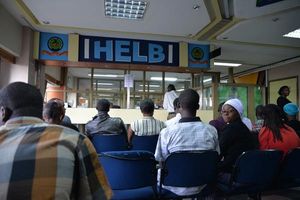
The Higher Education Loans Board offices in Nairobi. 

Photo credit: File | Nation Media Group

For Velton Mboga, who secured admission to The East African University for a Bachelor of Education degree, the uncertainty is crushing.

“The fee is Sh55,000 per semester, and that’s a huge burden for my parents. My father is a retired teacher, and we’re barely managing. I’ve applied for Helb, but we don’t even know how much, if anything, it will cover. It’s overwhelming not knowing if it will come in time,” he said.

On his social media pages, Mr Monari defended the new funding model, urging all stakeholders to back the changes.

“Now, more than ever, we cannot afford to bury our heads in the sand or remain stuck in systems that no longer serve us. To do so is to jeopardise the future of higher education in Kenya and the generations that depend on it,” he said.

In the 2024-2025 financial year, Mr Monari said Helb disbursed Sh36.5 billion in loans and Sh16.9 billion in scholarships to 702,000 learners. Since 1974, the government has disbursed Sh179 billion to over 1.7 million Kenyans.

“By June 2025, the entire Sh53.4 billion had been disbursed to 702,000 learners. Yes, there’s still a funding gap—and we’re actively engaging the National Treasury and our partners to close it. But the progress so far? It’s real, and it’s something to be proud of,” he said.

Geoffrey Monari

Higher Education Loans Board Chief Executive Officer Geoffrey Monari on May 14, 2025. 

Photo credit: Dennis Onsongo | Nation Media Group

The CEO acknowledged that implementing change in the sector has been difficult but argued that the old model was unsustainable.

“We are no longer funding in the dark. We are no longer pretending all students are the same. We are no longer imagining that universities can survive on broken promises,” he said.

“This model gives us a chance to promote equity, to protect the poor, to reward merit, to rebuild public trust, and to sustain quality,” he said.

But Kenya Universities Staff Union Secretary-General Charles Mukhwaya criticised the government over the rollout of the new funding model, warning that it risks throwing both students and universities into a financial crisis.

He said that while the model is student-centred and designed so that “money follows the student”, the reality is that universities have been instructed to admit students now and wait for capitation later.

“The same thing is happening with students—they are coming in without upkeep and hoping money will follow them. That is our biggest fear, given that the government’s priorities, in my view, seem to be upside down. It’s like the government is not giving education the concern it deserves,” he said.

Dr Mukhwaya compared the situation to past crises in basic education, where schools were forced to close early for holidays because funds arrived late.

“Students will come to university without any money, and universities themselves will not have received capitation to receive these students or to carry out academic programmes as expected.

"Education is a constitutional duty of the government, so we urge them to expedite capitation to universities and ensure students also get Helb funds on time,” he said.

He criticized the “let them report and the money will come later” approach, saying it would not help the sector to grow.

While addressing Parliament, Treasury Cabinet Secretary John Mbadi assured lawmakers that the government had prioritised funding for Helb, allocating Sh37.9 billion in the 2024/2025 financial year.

“To demonstrate the government’s commitment to this initiative, this allocation has been enhanced to Sh41.2 billion in the 2025/26 Budget,” Mr Mbadi said.